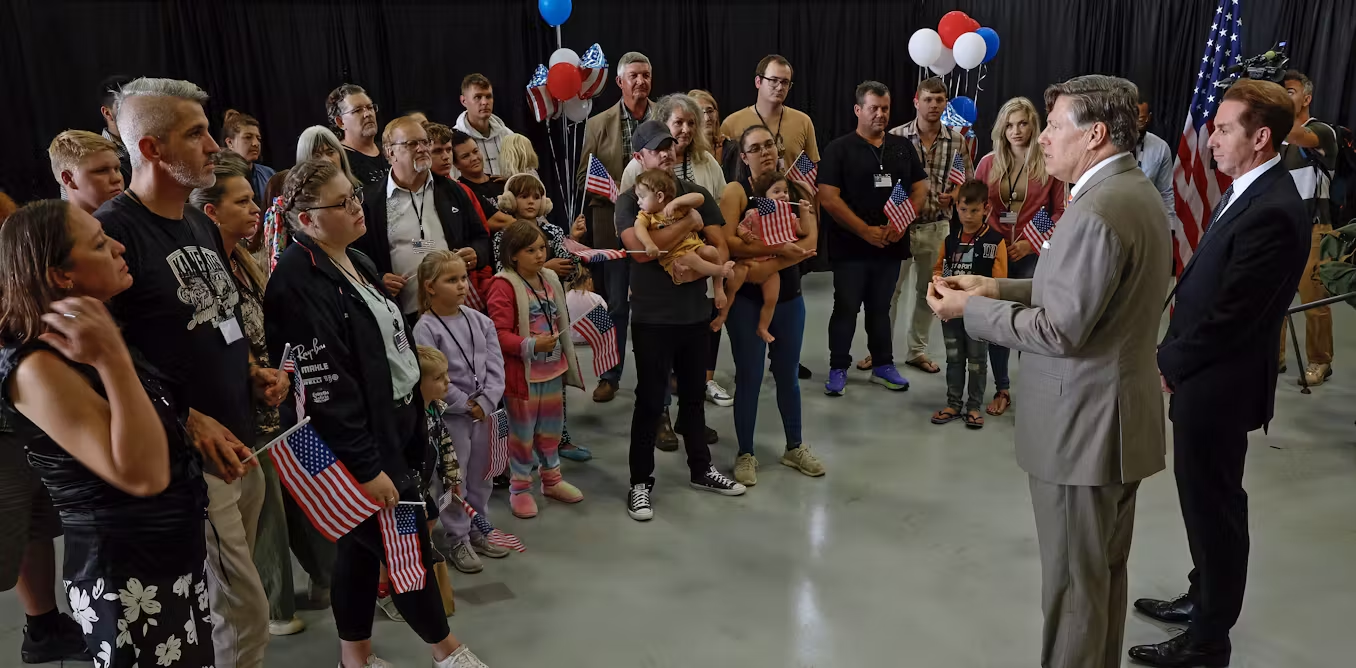
WASHINGTON — In a highly contentious expansion of its immigration policies, the administration has declared an “emergency refugee situation” in South Africa, moving to admit an additional 10,000 white Afrikaners into the United States.
According to an official State Department proposal submitted to Congress, the administration plans to more than double the nation’s total refugee cap for the current fiscal year, raising the ceiling from an all-time low of 7,500 up to 17,500. The newly added 10,000 slots will be explicitly reserved for South Africa’s white minority, a group the administration asserts is facing severe racial persecution and institutional hostility.
The Strategic Reallocation of Refugee Aid
The expansion of the white South African refugee program marks an unprecedented structural shift in American asylum policy. While the broader U.S. refugee program remains effectively frozen for individuals fleeing active war zones in nations such as Afghanistan, Sudan, and the Democratic Republic of the Congo, the administration is prioritizing Afrikaners under the premise of acute cultural and physical targeting.
The State Department estimated that processing and resettling the additional 10,000 applicants will cost approximately $100 million. In its formal emergency notice, the agency cited “escalating hostility” from the South African government, highlighting inflammatory rhetoric from local political factions and a highly publicized December raid by South African authorities on a U.S. refugee processing hub.
“This escalating hostility heightens the risks to Afrikaners in South Africa, who are already subject to far-reaching government-sponsored race-based discrimination,” the State Department notice asserted.
A Deepening Diplomatic Fracture
The implementation of the white South African refugee program has pushed relations between Washington and Pretoria to a modern nadir. South African President Cyril Ramaphosa and his administration have furiously rejected the White House’s claims, labeling the U.S. policy as explicitly “racist” and rooted in far-right conspiracy theories regarding an alleged “white genocide.”
International watchdogs and human rights organizations have pointed out that while South Africa grapples with severe systemic challenges—including a staggering 48% unemployment rate among the Black majority versus 12% among the white minority—the high crime rates and farm homicides impact South Africans of all racial backgrounds. Critics also note that recent South African land reform laws, which the U.S. cited as discriminatory, do not contain race-based language and aim to rectify historical inequities left behind by the apartheid system.
The Current Fiscal Year Refugee Landscape
- The Cap Revisions: The entry limit was slashed from over 100,000 down to 7,500 upon the administration’s return to office, before this week’s emergency bump to 17,500.
- Demographic Breakdown: Of the 6,069 refugees officially admitted to the U.S. between October and May, 6,066 originated from South Africa, representing over 99% of all admissions.
- Assimilation Justification: Administration officials have defended the singular focus on Afrikaners by publicly stating the demographic can be “easily assimilated into our country.”
| Metric | Original Policy (FY 2026) | New Emergency Proposal | Impacted Demographics |
| Total Refugee Cap | 7,500 | 17,500 | 10,000 slot increase |
| Allocated Funding | Baseline Budget | +$100 Million | Dedicated to processing and resettlement |
| Target Population | Universal Applicants | Afrikaner Minority | Diverted exclusively to white South Africans |
The Future Outlook: Congressional Review and Legal Standoffs
Under federal law, the executive branch must formally consult with Congress before modifying national refugee ceilings. However, legal experts note that this consultation has historically acted as a procedural formality, meaning the expansion is positioned to take effect almost immediately upon executive signature.
The long-term geopolitical fallout is expected to intensify. The administration has already boycotted the G20 summit in Johannesburg, uninvited South Africa from upcoming domestic summits, and heavily slashed foreign aid to the country. As thousands of additional Afrikaners prepare for resettlement across the United States, Washington is signaling a permanent departure from traditional humanitarian metrics, anchoring its immigration framework firmly within ideological and demographic alignment.
Trendsetter Tribune