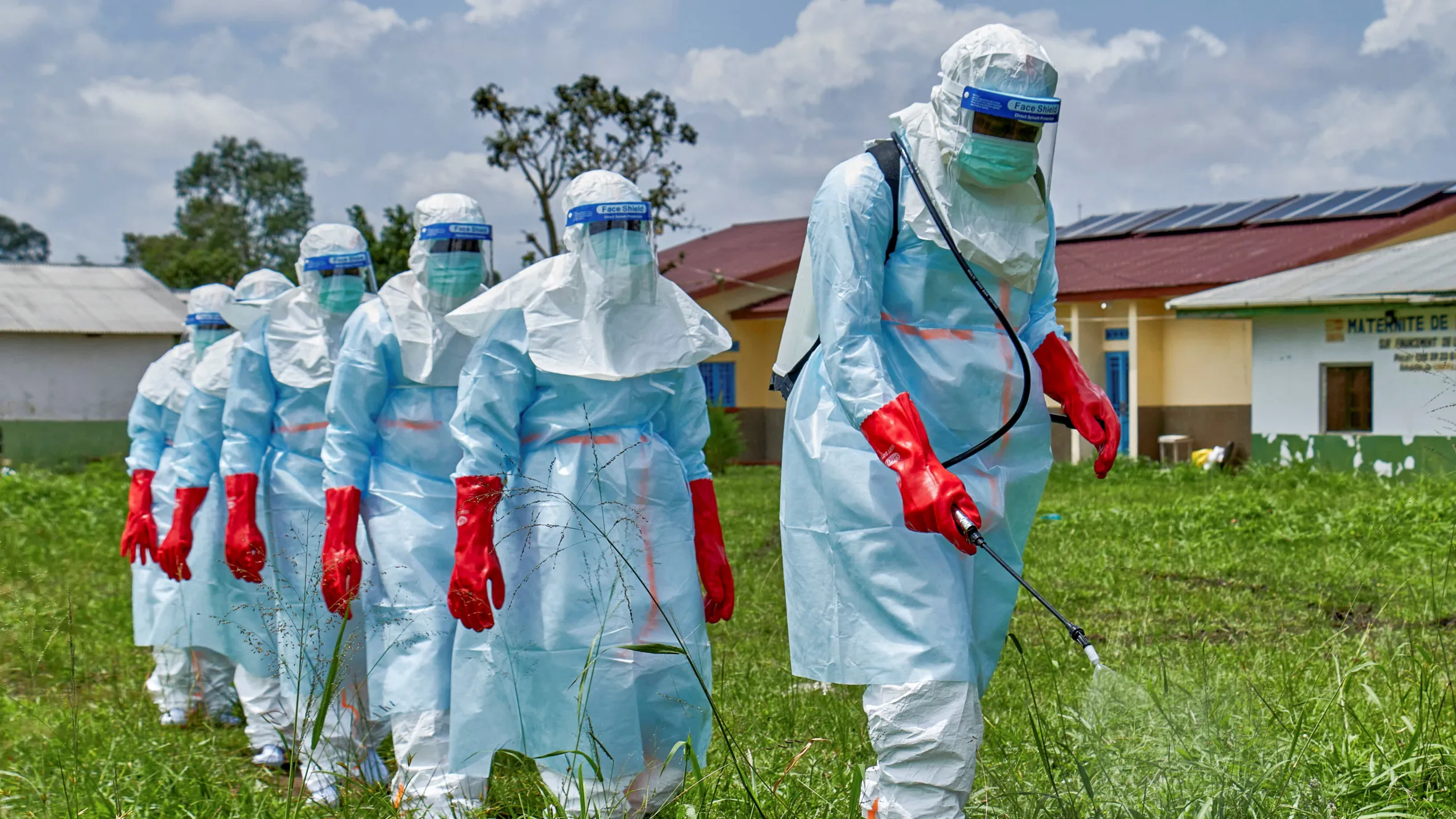
The line separating a contained health crisis from an out-of-control epidemic is often thin, but in the northeastern Democratic Republic of Congo (DRC), it has completely broken down.
When local clinics and major provincial hospitals begin turning away bleeding patients because every isolation bed is occupied, the response structure is no longer managing an outbreak—it is chasing it.
Following the official declaration of an Ebola outbreak in Ituri province, the situation on the ground has rapidly deteriorated into a systemic nightmare. With hundreds of suspected cases and a death toll mounting daily across North Kivu, South Kivu, and across the border into Kampala, Uganda, the World Health Organization (WHO) has declared a Public Health Emergency of International Concern. But the statistics hide a far more terrifying reality facing frontline health workers: this is not the Ebola the world thinks it knows.
The Bundibugyo Blindspot
For the last decade, global health agencies have pointed to Ebola as a rare success story in rapid medical advancement. The devastating 2014 West Africa outbreak and subsequent epidemics in the DRC spurred the development of highly effective tools—specifically the Ervebo vaccine and targeted monoclonal antibody treatments.
But those medical miracles were engineered exclusively for the Zaire strain of the virus.
The crisis unfolding right now is driven by the Bundibugyo virus, a distinct and rare species of Ebola.
There is no approved vaccine and no authorized therapeutic treatment for the Bundibugyo strain.
The clinical reality of this blindspot is catastrophic. Doctors and nurses working in makeshift isolation tents are stripped of their modern toolkit, forced to rely strictly on supportive care—intravenous fluids, oxygen, and symptom management. The scientific safety net that saved thousands of lives in recent years does not exist for this virus.
Why the System Overwhelmed Instantly
The rapid collapse of local medical capacity is a direct result of an epidemiological perfect storm. Initial detection was severely delayed because frontline diagnostic tests in the regional hub of Bunia were tuned to screen for the common Zaire strain. Because those initial tests returned false negatives, early patients were mixed into general wards or sent home, silently amplifying the chain of transmission.
Furthermore, the operational landscape makes traditional containment strategies nearly impossible:
| Containment Challenge | Impact on the 2026 Outbreak |
| Densely Populated Mining Hubs | Epicenters like Mongbwalu and Bunia feature highly transient, mobile populations, fast-tracking the virus into urban corridors. |
| Active Conflict Zones | Ongoing regional insecurity drastically limits the ability of rapid response teams to conduct thorough contact tracing. |
| The Funeral Vector | Early transmission exploded after a traditional funeral where a contaminated coffin was opened and replaced by family members. |
By the time the national laboratory in Kinshasa officially identified the Bundibugyo strain, the virus had already established a foothold in major transit hubs. It quickly jumped provincial borders to Goma and crossed international lines into Uganda, where patients have already hit intensive care units.
Coercion vs. Community Trust
With medical countermeasures months away, international agencies like Médecins Sans Frontières (MSF) are warning that physical infrastructure is only half the battle. Building more isolation wards will matter very little if the population refuses to enter them.
The immediate temptation for centralized governments during a hemorrhagic fever outbreak is to deploy security forces to enforce rigid quarantines and mandate safe burials. However, field experts argue that heavy-handed, coercive tactics will backfire catastrophically.
If communities perceive health facilities as places where loved ones are taken to die in isolation, the outbreak will go underground. Sick individuals will avoid clinics, families will hide bodies, and the virus will spread completely unmonitored through informal networks.
Containment right now relies entirely on grassroots diplomacy—convincing village leaders, churches, and local healers to voluntarily alter funeral practices and report early symptoms. But as long as the “facilities full” signs remain hung on clinic doors, earning that trust remains a brutal uphill climb.
Trendsetter Tribune