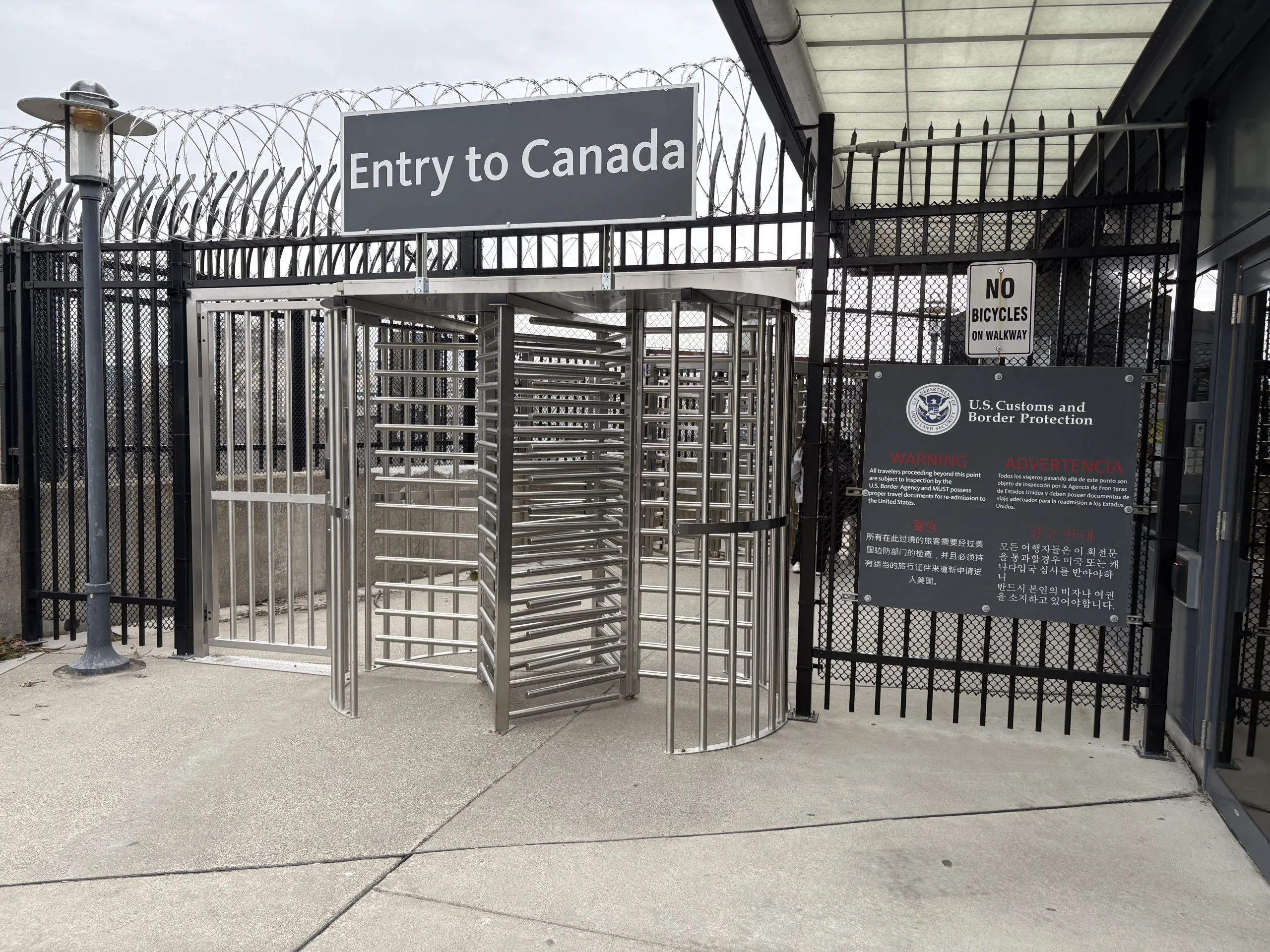
Canada has long cultivated a global reputation as a progressive, compassionate sanctuary for immigrants and refugees. But at the windswept border crossings between Quebec and Vermont, that image is colliding with a much darker operational reality.
As the government of Prime Minister Mark Carney quietly tightens Canada’s immigration rules to ward off a potential surge of asylum seekers, frontline legal advocates are raising a fierce alarm. They warn that Canadian border agents are effectively acting as an intake pipeline for U.S. Immigration and Customs Enforcement (ICE)—turning away vulnerable people and handing them straight into a severe American detention network.
The pipeline is the direct result of a geopolitical pincer movement: the return of Donald Trump’s aggressive immigration crackdowns in Washington, paired with a panicked legislative shift in Ottawa.
The Cold Reality of the Safe Third Country Agreement
Under the long-standing Safe Third Country Agreement (STCA) between the two nations, asylum seekers are legally required to pursue their refugee claims in whichever country they land in first. On paper, it is a tool for orderly border management.
In practice, the rules are tearing families apart. Consider the recent flashpoint cases trickling out from the frozen border sectors:
- The Presidial Absence Trap: A refugee named Appolon arrived at the Quebec-Vermont border on December 28, attempting to claim asylum under an STCA family exception. Because his aunt—a Canadian citizen—was temporarily out of the country handling a family medical emergency, Canadian Border Services Agency (CBSA) agents refused to allow him entry, strictly demanding her physical presence. Rather than granting a temporary deferral, Canadian officials immediately handed Appolon back across the line into the custody of waiting ICE agents.
- The Procedural Denial: Tenzin, a 29-year-old Tibetan refugee seeking to join his family in Canada, was turned away after border officers abruptly refused to interview his Canadian relatives or consider his asylum claim. He was summarily delivered to ICE and transferred to an incarceration facility in Buffalo, New York.
“This is what is so shocking,” says Toronto-based immigration lawyer Erin Simpson. “Canada is participating in this. Canada is handing people over to ICE.”
Breaking the Safety Assumption
The core legal justification for the STCA is the presumption that the United States is a “safe” country for refugees. But immigration lawyers and international human rights organizations argue that this assumption has completely evaporated.
The reality facing rejected applicants who are pushed back across the border is grim. Last July, ICE enacted an aggressive mandatory detention policy, dictating that any migrant who crossed U.S. borders without authorization could be held indefinitely without a bond hearing—the immigration system’s equivalent of bail.
| U.S. Detention Landscape | Real-World Impact on Claimants |
| Massive Scale | ICE is currently holding roughly 60,000 people in detention centers, the vast majority without criminal convictions. |
| Coercive Conditions | Former detainees report spoiled food, contaminated water, and round-the-clock lighting at facilities like Dilley, Texas, designed to pressure migrants into abandoning their cases. |
| The Attrition Strategy | Unable to secure bail or access proper legal counsel while locked in isolated, for-profit facilities, a growing number of asylum seekers are simply giving up and accepting self-deportation. |
Shifting Accountability in Ottawa
While the Canadian government publicly maintains that border officers process all claims “impartially” and respect human rights, its legislative track record tells a different story.
In March, the Carney government pushed through sweeping new legislation that enacted strict new ineligibility rules for refugee claimants. Critics have blasted the moves as an attempt to replicate Trump-style border enforcement by proxy, designed to insulate Canada from the fallout of Washington’s mass deportation threats.
By raising the bureaucratic bar for family exemptions and rushing processing timelines, Canada has effectively outsourced the human cost of its border control to American corporate prisons. For the thousands of refugees trapped in the middle, the dream of Canadian compassion is ending in the back of an ICE transport van.
For a deeper look into the conditions asylum seekers face inside the American immigration enforcement system after failing to secure status, watch this special report on How ICE detention is forcing immigrants out of the U.S.. This investigative report examines the severe conditions within facilities like Dilley, Texas, and details how mandatory detention policies are being leveraged by authorities to pressure non-citizens into leaving the country.
Trendsetter Tribune