The National Football League’s preferred strategy for handling internal controversy—keeping its mess completely out of the public eye—just suffered a massive, definitive defeat on Capitol Hill.
The U.S. Supreme Court formally turned away an emergency appeal from the NFL, refusing to intervene in a landmark racial discrimination lawsuit led by former Miami Dolphins head coach Brian Flores. By rejecting the league’s petition, the high court solidified a lower-court ruling dictating that the multi-year legal battle will proceed toward a trial in open federal court rather than behind the closed doors of private, league-mandated arbitration.
The decision represents an immense victory for Flores and his co-plaintiffs, fellow Black coaches Steve Wilks and Ray Horton. It permanently strips Commissioner Roger Goodell of his role as the ultimate arbiter over the case, guaranteeing that the league’s historically opaque hiring and firing practices will face public scrutiny under a federal microscope.
The Death of the “Goodell as Judge” Pipeline
The core of the NFL’s multi-year appeal relied on an aggressive defense of its employment contracts. The league argued that because Flores and his fellow coaches signed standard contracts bound by the NFL Constitution, any and all workplace disputes were legally required to go through internal arbitration—a process where Goodell himself serves as the default decision-maker.
However, the U.S. Court of Appeals for the Second Circuit thoroughly dismantled that argument, a position the Supreme Court has now left untouched:
- The Problem of Neutrality: The appeals court previously described the league’s private framework as an arbitration process “in name only.”
- The Conflict of Interest: Because the commissioner is hired by, reports to, and is financially incentivized to protect the interests of the 32 billionaire team owners, forcing an employee to arbitrate a systemic discrimination claim before the employer’s own chief executive violates basic legal principles of fairness.
- The Sole Dissenter: Only Justice Brett Kavanaugh noted that he would have granted the NFL’s request to hear the case, while the rest of the bench silently waved it through.
In an immediate, joint statement following the ruling, Flores’s lead attorneys, Douglas Wigdor and David Gottlieb, did not mince words about the structural shift:
“The NFL must now accept that its commissioner cannot be the arbitrator over discrimination claims against the league and its teams. We look forward to litigating these claims in court.”
Going “Scorched-Earth” on 31 Front Offices
With the final arbitration escape hatch permanently closed, the legal floodgates have opened. The timing of the Supreme Court’s refusal coincides with an incredibly aggressive, coordinated blitz by Flores’s legal team inside the Southern District of New York.
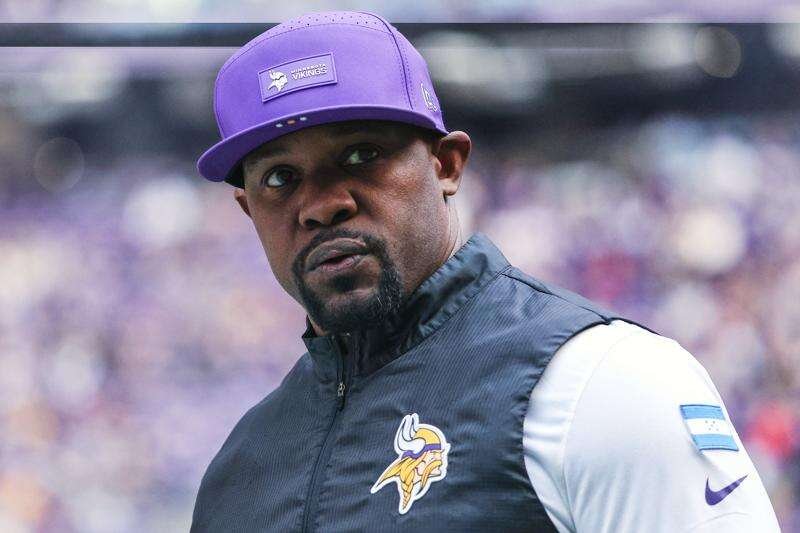
Now serving as the defensive coordinator for the Minnesota Vikings, Flores has systematically expanded the footprint of his litigation. Moving far beyond the three primary teams named as defendants in his initial 2022 complaint—the Miami Dolphins, New York Giants, and Denver Broncos—Flores’s team has officially issued sweeping document subpoenas to 25 additional NFL teams.
The Original Complaint
February 2022
Brian Flores files a bombshell class-action suit immediately after his firing by the Miami Dolphins, alleging that his interviews with the Giants and Broncos were “sham” processes designed purely to satisfy the league’s minority-hiring Rooney Rule.
The Appeals Court Blow
August 2025
The Second Circuit rules that the NFL Constitution’s arbitration clause is “plainly unenforceable” in this context, moving the case closer to a public trial.
The Discovery Stay Lifted
February 2026
Federal Judge Valerie Caproni officially lifts the stay on discovery, allowing Flores’s attorneys to begin demanding internal communications from front offices.
The 25-Team Subpoena Blitz
May 19, 2026
Flores launches a “scorched-earth” data collection effort, hit-targeting 25 non-party teams with over 1,000 document requests searching for 24 years of hiring data, text messages, and internal emails.
The Supreme Court Finality
May 26, 2026
The highest court in the land refuses to rescue the league, locking the discovery pipeline into open federal court permanently.
The Real-World Stakes of Open Discovery
The NFL has maintained that Flores’s lawsuit is entirely “without merit,” and league-friendly counsel is expected to quickly file motions to quash the sprawling subpoenas, labeling them “punishingly overbroad.”
Yet, the anxiety reverberating through the league’s corporate offices is palpable. Open court means the discovery process is bound by public record laws. Over the next few months, teams must hand over raw communication files regarding how head coaches, coordinators, and general managers are actually chosen behind closed doors.
| What Flores’s Team is Tracking | The Systemic Goal |
| The “Bridge Coach” Practice | Co-plaintiff Steve Wilks alleges he was hired by the Arizona Cardinals in 2018 purely as a short-term, unbacked “bridge” coach without a realistic chance to succeed before being summarily replaced. |
| The Paper Rooney Rule | Ray Horton alleges the Tennessee Titans conducted a completely hollow interview with him in 2016 simply to check a bureaucratic diversity box before hiring their predetermined candidate. |
| Retaliation Records | Flores’s team is preparing a new, amended complaint alleging that the NFL’s aggressive, years-long multi-million dollar push to force them into arbitration was itself an unlawful act of corporate retaliation. |
While the NFL insists it is “fully prepared to defend” its record, the reality is that the league has lost its most powerful shield: anonymity. Brian Flores has managed to bypass the commissioner’s desk, survive the corporate appeals structure, and secure a date in front of a federal jury. The inner workings of America’s most powerful sports empire are about to be laid completely bare.
Trendsetter Tribune