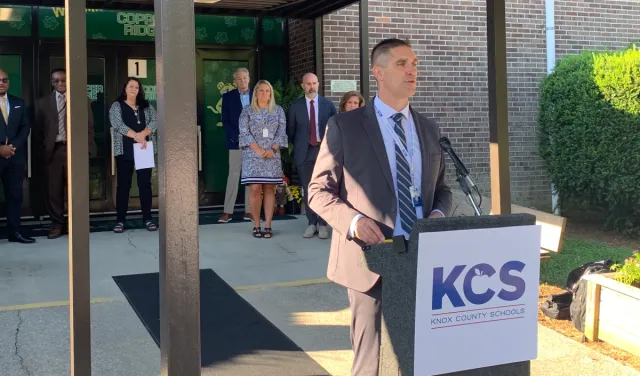
In a major turnaround, Knox County Schools Superintendent Jon Rysewyk notified the Board of Education on Tuesday that Alex Haley’s iconic 1976 novel Roots: The Saga of an American Family will return to library shelves “effective immediately.”
The rapid about-face comes exactly two weeks after the Tennessee school district sparked intense local and national backlash by pulling the masterpiece from student access on May 12. School officials had initially removed the text after determining that a single rape scene in Chapter 84 ran afoul of the state’s strict and highly contentious Age-Appropriate Materials Act (AAMA).
The initial ban struck a deeply raw nerve in Knoxville, where Alex Haley spent his final years and where an iconic bronze statue of the author sits just two miles from the school board’s headquarters.
The Legal Loophole That Sparked the Ban
The decision to ban Roots underscored a growing frustration among educators regarding how Tennessee’s 2022 censorship law—and its 2024 amendments—is being applied.
Under the AAMA, school librarians are required to review collections for any descriptions of sexual conduct or excessive violence. Crucially, the text of the law does not allow reviewers to consider the literary, historical, or educational value of a book as a whole. Instead, a single flagged passage is enough to trigger a blanket removal from independent student circulation.
District 4 Board Member Katherine Bike led an internal push to challenge the decision, writing a memo to her colleagues arguing that the law was being weaponized far beyond its original intent:
“I do not believe this is what the Tennessee General Assembly intended… The law was passed to protect children from genuinely inappropriate material—not to remove recognized works of American history because of a single passage, with no ability to weigh a book’s cultural and educational significance.”
The Superintendent’s Reversal
In his letter to the board, Superintendent Rysewyk defended the district’s review committee, noting they had applied the state’s legal definitions consistently and in good faith. However, he admitted the decision to ban Roots had “weighed heavily” on him, prompting a week of independent consultations with various legal experts.
Rysewyk revealed that even among the attorneys he consulted, there were stark discrepancies on how to interpret the criminal definitions embedded in the Tennessee Code as they applied to Haley’s historical text. Faced with conflicting legal interpretations, Rysewyk chose to prioritize student access.
“Removing any book from circulation is—and should be—an immense decision,” Rysewyk wrote. “Our intent will always be to err on the side of access, which is the decision I have made with regard to Roots.”
A Broader Trend of “Reactive” Censorship
The brief removal of Roots has reignited a broader conversation about school policies across the state. Local historians and community groups, including the Beck Cultural Exchange Center, warned that the strict guidelines are causing a chilling effect, forcing librarians to proactively purge vital African American historical materials out of fear of state penalties.
| State Book Banning Ranks (Per Capita) | The Context of the Material |
| 1. Texas | Roots spent 22 weeks at No. 1 on the New York Times bestseller list and sparked a global movement in genealogy. |
| 2. Florida | While the law pulls these books from library shelves, it technically still allows them to be used in structured, instructor-led classroom environments. |
| 3. Tennessee | Education advocates note that Tennessee has quietly risen to become the number three book-banning state in the country. |
While Roots has successfully navigated its way back onto Knox County shelves, the systemic friction between local educators and state mandate lines is far from resolved. For now, Knoxville’s student body has regained access to one of the most significant pieces of American historical fiction—proving that even in a highly restrictive legislative environment, community pushback can still shift the needle.
Knox County Schools Ban Novel, Roots This local news broadcast documents the initial decision and community reaction when Knox County Schools first pulled Alex Haley’s novel from its library shelves.
Trendsetter Tribune