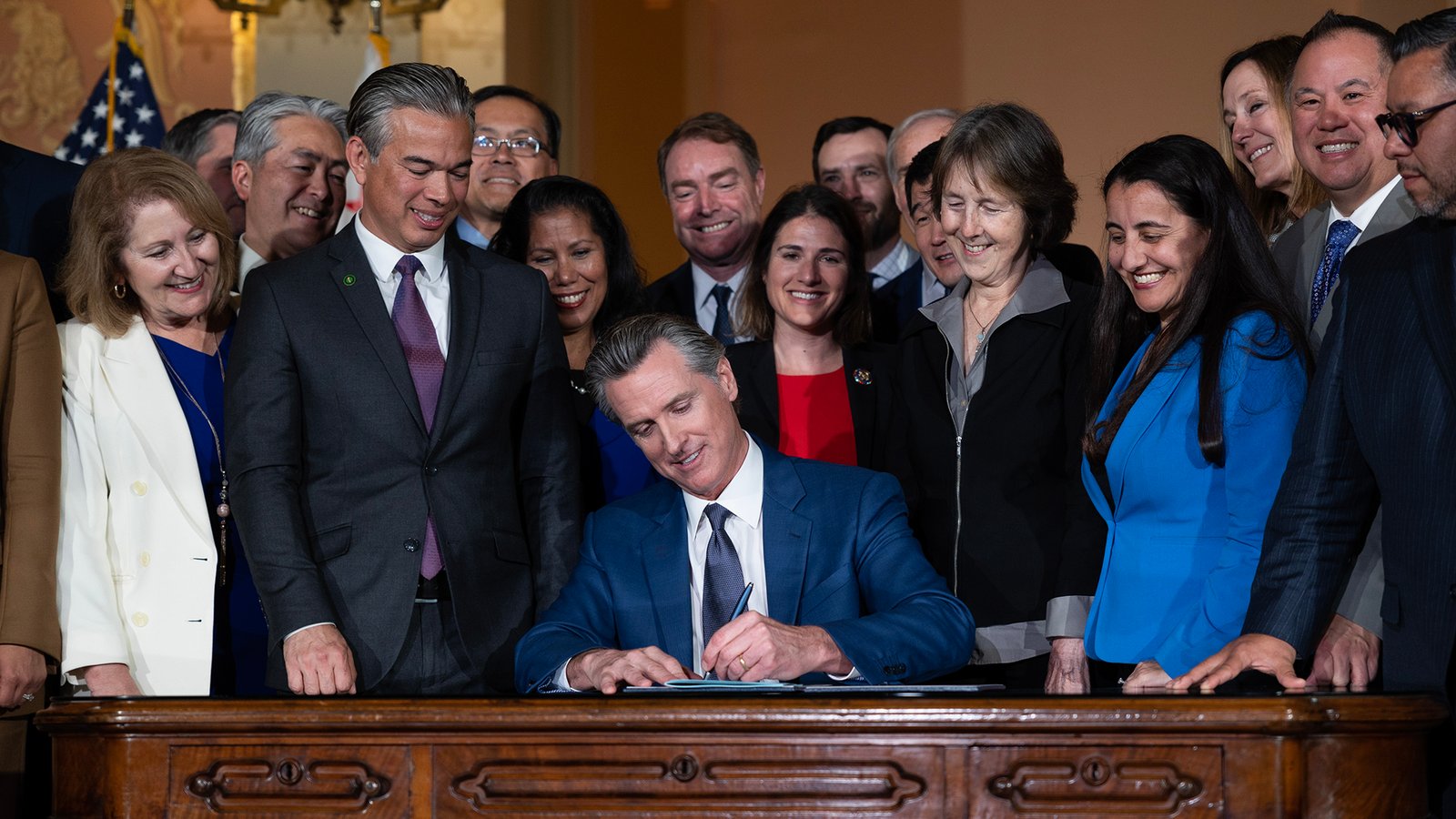
With less than a week until California’s June 2, 2026, statewide primary election, Governor Gavin Newsom has enacted emergency legislation aimed at shielding polling places and county registries from partisan interference, unauthorized law enforcement deployments, and conspiracy-driven disruption.
The law—introduced by State Senator Sabrina Cervantes (D-Riverside) as Senate Bill 73—passed the state legislature on Tuesday with an attached urgency clause, enabling it to take effect immediately upon the governor’s signature.
The legislative package sets up strict legal boundaries separating armed personnel and federal agencies from the administration of state voting data, an aggressive preemptive maneuver by California Democrats to lock down the integrity of the fast-approaching primary cycle.
The New Structural Safeguards
Senate Bill 73 creates a comprehensive, statewide protective bubble around vote-tabulation systems, localized poll workers, and physical ballots. The law was drafted as a direct reaction to nationwide conservative organizing efforts that have encouraged independent, unauthorized “poll watching” and citizen-led ballot auditing networks.
The emergency statute implements three primary firewall protections:
- The Law Enforcement Prohibition: The law explicitly empowers the California Attorney General and the Secretary of State to completely bar local, state, or federal law enforcement officers from being stationed or deployed at voting locations and county election offices without an explicit, verified security emergency.
- The Court Order Mandate: Law enforcement personnel and federal immigration officials are legally prohibited from accessing digital voting machines or viewing internal voter registration rolls unless they present a specific, signed court order.
- Felony Defaced Ballots: The law ups the stakes for bad actors by making the unauthorized removal of ballots from the custody of a county registrar a formal state felony.
A Push for Speed Amid Rising Disinformation
The enactment of SB 73 lands amidst an intense parallel battle between Governor Newsom and local county registrars over how quickly those ballots should be tallied.
Earlier this month, Newsom sent a directive to all 58 county election officials aggressively urging them to accelerate their post-election vote counting and reporting infrastructure.
“The longer the voting count takes, the more mis- and disinformation spreads,” Newsom wrote in the missive, warning that slow data drops give bad-faith actors a wider window to brew groundless conspiracy theories.
However, local election directors have pushed back heavily against the governor’s speed mandates. Local administrators argue that rushing the canvas process compromises accuracy and places an unfair structural burden on standard county staffs already laboring under tight budgets and enhanced post-election security rules.
The Broader National Battlefield
California’s new law places it at the absolute forefront of a polarized, multi-state legislative landscape regarding voting access and ballot security ahead of the 2026 midterms.
While states like New Mexico, Oregon, and Virginia have passed similar laws banning rogue immigration enforcement or unauthorized National Guard presence at the polls, a starkly different trend is taking shape across other state capitols:
| State Action Type | Notable Legislative Measures |
| Protective Firewalls (CA, NM, OR) | Banning unauthorized armed personnel, restricting federal data access without warrants, and increasing penalties for ballot theft. |
| Hand-Count Mandates (GA, KS) | Pushing to outlaw electronic voting machinery entirely in favor of manual, full hand recounts of all statewide elections. |
| Citizenship Restrictions (Various) | Enacting strict mandates requiring physical proofs of citizenship (like a passport or birth certificate) simply to register or remain on active voter rolls. |
For California voters heading to the boxes next Tuesday to narrow down a massively crowded gubernatorial field to succeed the term-limited Newsom, the new legal protections mean a uniform, highly insulated voting environment. By signing SB 73 into immediate effect, Sacramento is signaling to activists on both sides of the aisle that while political debates remain free-game, the physical mechanism of casting a ballot remains off-limits.
Trendsetter Tribune