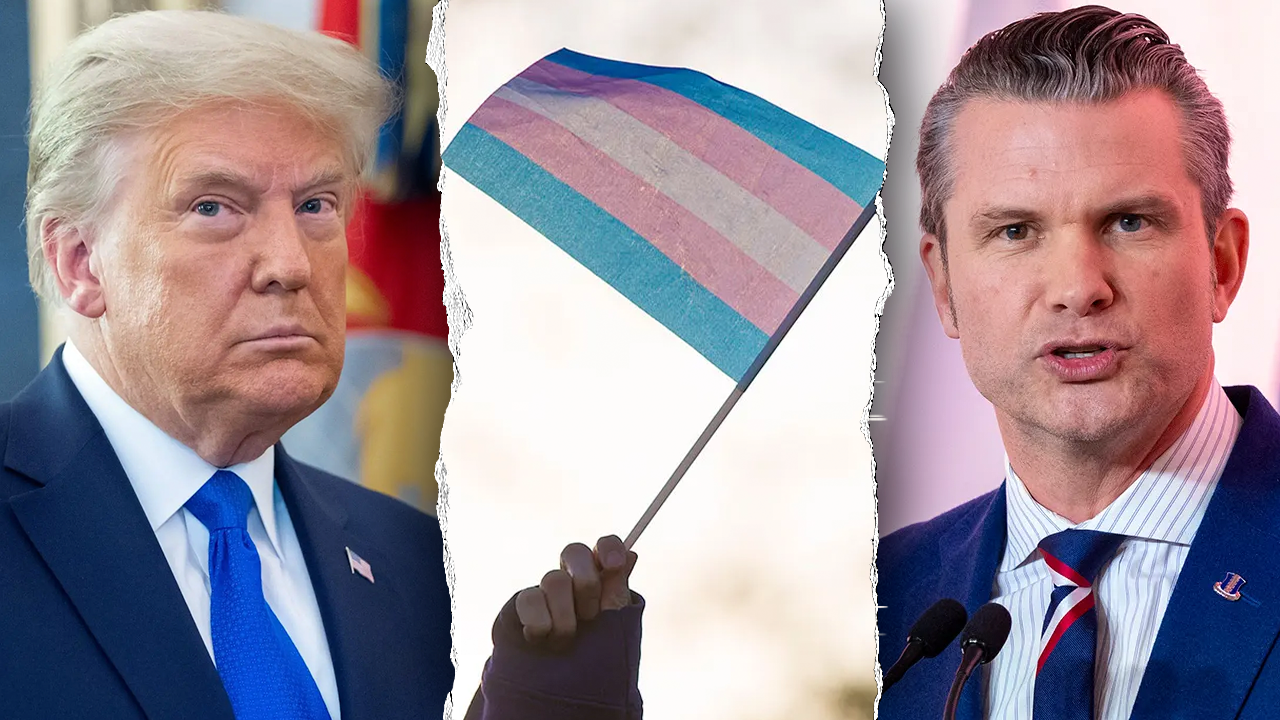
In a major legal rebuke to the second Trump administration’s anti-diversity agenda, a federal appeals court ruled on Monday, June 1, 2026, that the Pentagon’s blanket policy barring transgender individuals from military service is likely unconstitutional.
The divided 2-1 decision by a three-judge panel of the U.S. Court of Appeals for the D.C. Circuit concluded that the administration’s restrictions were “both arbitrary, and based on animus.”
However, the ruling represents a split victory for both sides. While the court upheld a preliminary injunction allowing roughly 1,000 openly transgender personnel currently on active duty to remain in the armed forces, it simultaneously ruled that the Pentagon can continue blocking new transgender recruits from enlisting while the legal battle plays out.
“Premised on a Desire to Harm”
The legal challenge stems from an executive order signed by President Donald Trump in January 2025 during the opening days of his second term. The directive asserted that the military’s strict standards for readiness and cohesion were fundamentally inconsistent with the medical and mental health constraints associated with gender dysphoria.
Following the directive, Defense Secretary Pete Hegseth instituted a policy presumptively disqualifying anyone with a history of gender dysphoria from serving unless they obtained a narrow waiver, alongside a freeze on new accessions and medical transitions.
Writing for the majority, Circuit Judge Robert Wilkins ruled that the administration’s justification for the policy was a pretext for illegal discrimination under the Constitution’s guarantee of equal protection.
“The government’s stated reason… was pretextual, and instead, the policy was premised, at least in part, on a non-legitimate state interest to harm the politically unpopular group of transgender persons. [The policy] appears to be driven by the bare desire to harm a politically unpopular group.”
— U.S. Circuit Judge Robert Wilkins
Wilkins pointedly noted that the active-duty transgender plaintiffs in the lawsuit have a combined 130 years of military service and more than 80 commendations, facts the administration did not dispute. Furthermore, the court highlighted that the government had conceded during arguments that there was absolutely no evidence showing transgender service members lacked honesty, humility, or integrity.
The Dissent: Judicial Overreach on Military Policy
The panel split along predictable ideological lines. Judge Wilkins (an Obama appointee) was joined by Judge Judith Rogers (a Clinton appointee). The lone dissent came from Judge Justin Walker, a Trump appointee, who argued that civilian courts have no business dictating the composition of the U.S. military.
D.C. Circuit Appeal Panel Breakdown
[Majority] Judge Robert Wilkins  → Voted to uphold active-duty protections.
[Majority] Judge Judith Rogers   → Joined majority; agreed policy stems from animus.
[Dissent]  Judge Justin Walker   → Argued the judiciary lacks authority over military ranks.
In his sharp dissenting opinion, Walker wrote: “We have neither the expertise nor the authority to decide whether the military can exclude the plaintiffs from its ranks. The Constitution assigns that authority to Congress and the Commander in Chief.”
The Next Battleground: “See You at SCOTUS”
The ruling mostly upholds a blistering March 2025 decision by U.S. District Judge Ana Reyes, who originally blocked the policy. However, by narrowing the injunction specifically to currently serving personnel, the appeals court left the administration’s enlistment ban intact for new applicants.
The Department of Defense has not yet indicated if it will request an en banc review—a hearing by the full roster of D.C. Circuit judges. However, Defense Secretary Pete Hegseth made the administration’s ultimate strategy clear in a defiant social media post on Monday afternoon, writing: “See you at SCOTUS.”
| Military Data Point | Estimated Impact | Current Legal Status |
| Active-Duty Transgender Troops | ~1,000 to 4,200 personnel with gender dysphoria diagnoses. | Protected: Review boards and discharges are temporarily frozen. |
| Prospective Enlistees | Hundreds of applicants pursuing recruitment. | Blocked: The Pentagon may continue to bar new transgender accessions. |
Because the U.S. Supreme Court previously issued a party-line ruling in May 2025 allowing the administration to temporarily enforce parts of the ban while lower court litigation proceeded, legal experts expect this latest D.C. Circuit ruling to fast-track the case back to the nation’s highest court by the end of the year.
Trendsetter Tribune