 By Trendsetter Tribune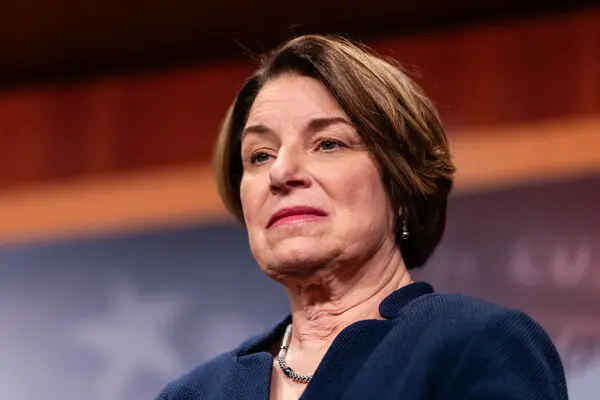
A new KSTP/SurveyUSA poll shows Amy Klobuchar leading all Republican challengers in Minnesota’s 2026 governor’s race, as immigration operations and political fallout reshape the contest.
Democratic Senator Amy Klobuchar holds an early lead over her Republican rivals in the 2026 Minnesota gubernatorial race, according to a new KSTP/SurveyUSA poll. The survey arrives as Minnesota has become the central focus of the Trump administration’s intensified immigration operations, shifting political priorities in the state.
The poll, taken January 27–30 among 575 registered voters, shows Klobuchar ahead of every major GOP contender by double digits. Her closest matchup is against former state Senator Scott Jensen, whom she leads 49 percent to 35 percent. Other Republican candidates trail by margins ranging from 15 to 20 points. The survey carries a margin of error of 4.8 percent.
Klobuchar, who has served nearly two decades in the U.S. Senate, launched her gubernatorial bid in late January after Governor Tim Walz opted not to seek a third term. Walz’s departure followed months of criticism stemming from a massive fraud scandal involving the Feeding Our Future nonprofit, which federal investigators say siphoned tens of millions of dollars from child nutrition programs during the pandemic. While Democrats hope Klobuchar’s well-established statewide appeal will stabilize the race, Republicans aim to keep the contest competitive.
Several GOP candidates responded to the early polling. MMA fighter Brad Kohler dismissed the results, saying he does not trust surveys conducted this early. Kendall Qualls called the numbers proof that his message is resonating, while Jeff Johnson argued the senator’s sub-50 percent support signals vulnerability. Each candidate maintains that Minnesota needs new leadership amid economic pressures, public safety concerns, and the fallout from immigration tensions.
Minnesota has leaned Democratic in recent presidential years but remains competitive. Kamala Harris carried the state by four points in 2024, while Joe Biden won it by about seven in 2020. Hillary Clinton won by less than two points in 2016. Despite the state’s blue tilt, Republicans have frequently sought openings in midterm and gubernatorial cycles.
Political analysts say the dynamics have shifted sharply in recent weeks. Larry Jacobs, director at the University of Minnesota’s Humphrey School, said the immigration crackdown has eclipsed the earlier focus on fraud. With federal agents deployed to Minnesota and protests erupting after the fatal shootings of two U.S. citizens during immigration operations, the political environment has been transformed. Jacobs argued that the situation has weakened the GOP’s ability to campaign on border and immigration issues, a strategy that previously showed potential.
Republican contenders face additional hurdles, including Klobuchar’s broad name recognition and extensive campaign network. Analysts note that her challenge will be balancing energized Democratic voters with more centrist Minnesotans in a high-profile governor’s race.
Following the scandal and rising political tension, Walz defended his administration’s handling of the fraud probe, saying he had pushed for stronger enforcement powers. Critics maintain he did not act quickly or aggressively enough as the scheme expanded, ultimately involving members of Minnesota’s Somali community and generating national attention.
As Klobuchar entered the race, Republican figures moved quickly to define her record. Minnesota House Speaker Lisa Demuth called her a “career politician” aligned with Walz’s approach. Minnesota GOP Chair Alex Plecash argued that Klobuchar supported policies that led to declines in education outcomes, higher taxes, and insufficient oversight.
Klobuchar, announcing her candidacy on X, said Minnesotans have endured significant hardship but remain resilient. She framed her campaign as a call for stability, fairness, and practical leadership heading into a contentious election year.
As the immigration debate intensifies and the campaign season unfolds, both parties see high stakes in Minnesota. Early polling gives Democrats an advantage, but the political environment remains fluid as national attention continues to focus on the state.