 By Trendsetter Tribune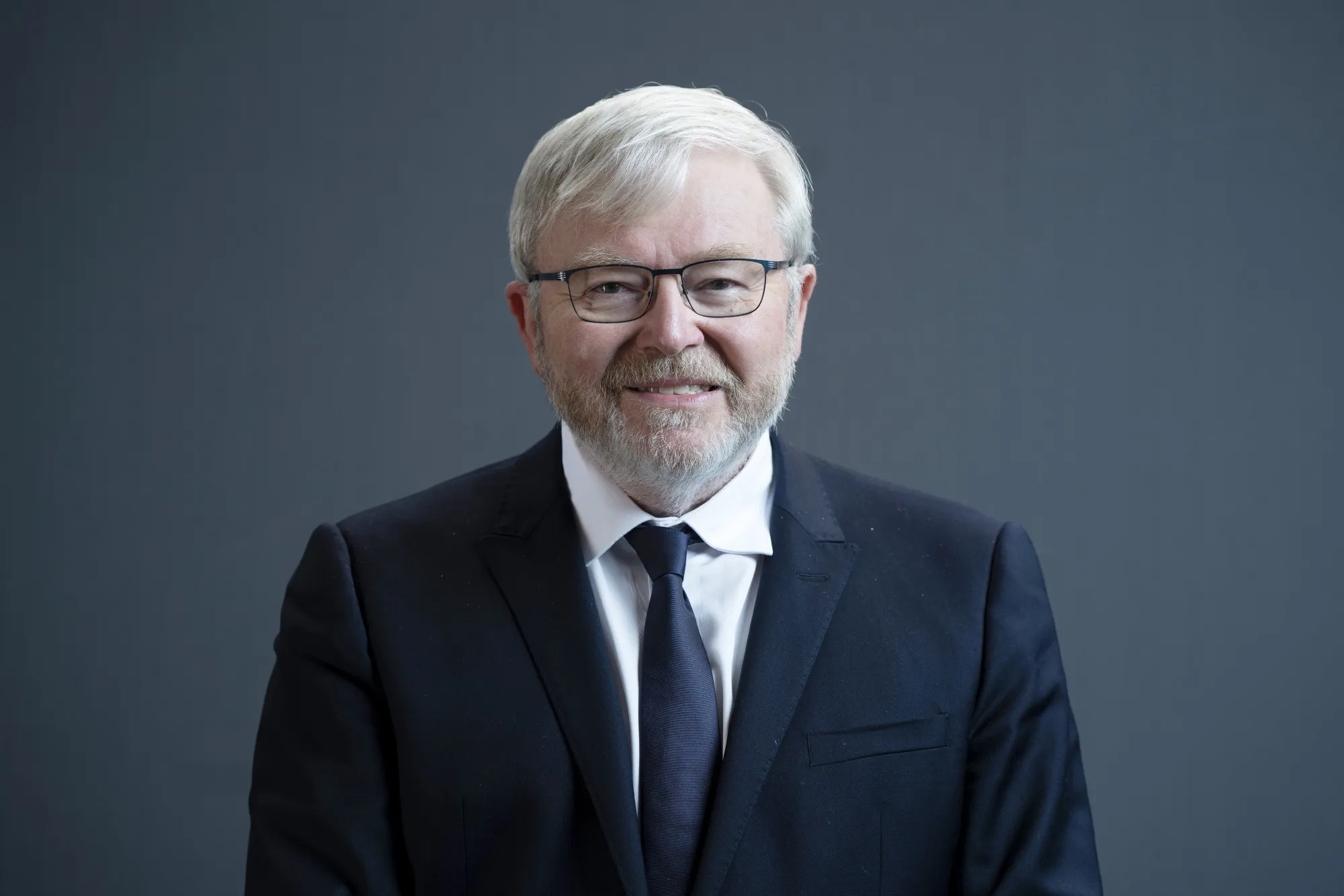
Australia’s U.S. ambassador Kevin Rudd has resigned after past remarks calling Donald Trump a “village idiot” resurfaced, raising new questions about diplomacy and political fallout.
Australia’s ambassador to the United States, Kevin Rudd, has resigned from his post—reviving controversy over his past remarks about President Donald Trump that once labeled the American leader a “village idiot” and “the most destructive president in history.”
While the official reason for Rudd’s departure centers on a new role at a major international think tank, the timing and political context have reignited debate over whether his history of blunt criticism made his continued tenure untenable under a Trump administration.
Background: From Prime Minister to Washington Power Broker
Rudd, a former Australian prime minister, was appointed ambassador to Washington in March 2023 during President Joe Biden’s administration. His four-year term was scheduled to run through 2027.
Before assuming the diplomatic role, however, Rudd had published a series of sharply worded social media posts criticizing Trump—tweets he later deleted but which continued to circulate widely.
Among them were comments calling Trump a “village idiot,” a “traitor to the West,” and “the most destructive president in history,” remarks that would later resurface as Trump returned to power.
What Happened: Rudd Steps Down Early
On Tuesday, Rudd confirmed he would step down as Australia’s U.S. ambassador, citing his appointment as global president of the Asia Society and head of its Center for China Analysis.
In a post on X, Rudd described it as an “honour” to represent Australia in Washington and said he would remain in the United States working between New York and Washington on U.S.-China relations.
“I have always believed this to be the core question for the future stability of our region and the world,” Rudd wrote.
His resignation will take effect at the end of March 2026, cutting his term short by more than a year.
White House Response: A Carefully Worded Goodbye
Despite the history, a White House official sought to strike a diplomatic tone.
“Ambassador Rudd worked well with President Trump and the administration. We wish him well,” the official told Newsweek.
That public cordiality contrasts sharply with a tense private exchange last October, when Rudd addressed his past tweets during a White House meeting. According to reports, Trump responded bluntly: “I don’t like you either and I probably never will.”
Australia Reacts: Praise, Criticism, and Politics
Australian Prime Minister Anthony Albanese praised Rudd’s tenure, crediting him with delivering “concrete outcomes for Australia” and thanking him for his service in Washington.
But not all political figures were as charitable.
Pauline Hanson, leader of the right-wing One Nation party, argued that Rudd was never suited for the role, pointing to Trump’s public disdain as evidence.
“Our relationship with the United States is vital and needs the right person for the job, not just another Labor mate,” Hanson wrote.
Her remarks underscore the domestic political fault lines in Australia, where relations with Washington remain a central foreign policy issue.
Analysis: When Old Tweets Become Diplomatic Liabilities
Rudd’s resignation highlights a growing reality in modern diplomacy: past digital footprints matter—especially when administrations change.
While Rudd reportedly worked effectively with Trump’s team, his prior comments created an unavoidable undercurrent of tension. In an era where leaders place increasing value on loyalty and public respect, old insults can become strategic liabilities.
The episode also illustrates the fragility of diplomatic roles during political transitions, particularly when personal history collides with shifting power dynamics.
Implications: What Comes Next for Australia–U.S. Relations
Rudd’s departure now puts pressure on the Albanese government to nominate a successor who can navigate Washington without political baggage.
With global instability, China tensions, and defense cooperation at stake, Australia’s next ambassador will need to balance diplomacy, credibility, and access at the highest levels of the Trump administration.
For Rudd, the move signals a pivot back to policy influence rather than public diplomacy—placing him at the center of debates over U.S.-China relations from outside government.
Conclusion: A Resignation That Wasn’t Just About a Job Change
Officially, Kevin Rudd is leaving his ambassadorial post for a prestigious new role. Unofficially, his exit reflects the lasting consequences of political rhetoric in a world where yesterday’s tweets can shadow today’s diplomacy.
As Australia prepares for a new chapter in its Washington relationship, Rudd’s resignation serves as a reminder that in international politics, words rarely disappear—they wait.