 By Trendsetter Tribune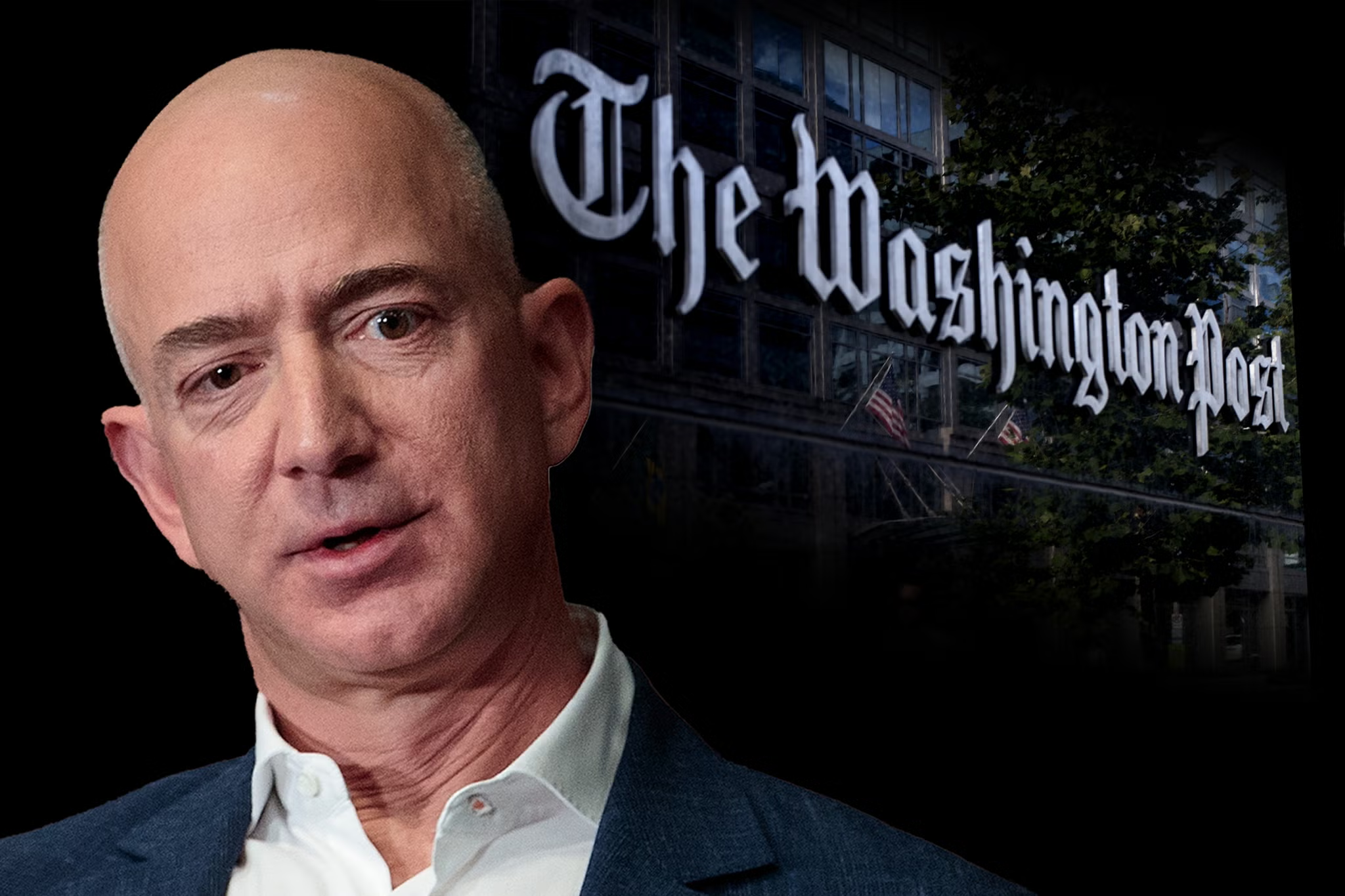
The Washington Post suffered what former editor Marty Baron called “one of the darkest days” in its 150-year history on Wednesday, February 4, 2026. In a sweeping “strategic reset” ordered by owner Jeff Bezos, the storied publication laid off approximately one-third of its entire workforce, including more than 300 journalists from its 800-person newsroom.
The cuts effectively dismantle several pillars of the Post’s identity, signaling a retreat from local and cultural coverage in favor of a narrower focus on federal power and national security.
The “Death” of Key Sections
Executive Editor Matt Murray informed staff of the cuts via a morning Zoom call, confirming that “nearly all news departments” would be impacted. The most severe casualties include:
- Sports: Shuttered as a standalone department. A handful of writers will be retained for feature-style coverage, but daily beat reporting is dead.
- Books: The entire section has been closed, ending a long-standing cultural franchise.
- Metro: The desk—once the heart of the “For and About Washington” mission—was slashed by 70%. Only 12 reporters remain from a team of 40.
- “Post Reports”: The paper’s flagship daily podcast has been cancelled.
- International: Bureaus have been significantly reduced, with the entire roster of Middle East correspondents reportedly among those let go.
Financial Realities vs. “Ideological” Shifts
While management cited a $177 million loss over the past two years and a 50% drop in organic search traffic as the primary drivers, many employees aren’t buying it.
- Subscriber Exodus: Marty Baron and other critics pointed out that the Post’s financial woes were “made infinitely worse” by Bezos’s decision to spike the editorial endorsement of Kamala Harris in late 2024, which reportedly led to over 250,000 cancellations.
- The Bezos-Trump Connection: Former staffers, including race and ethnicity reporter Emmanuel Felton, described the move as “ideological.” Many believe Bezos is hollowing out the paper to avoid friction with the Trump administration, citing his recent hosting of Defense Secretary Pete Hegseth at Blue Origin as evidence of his shifting priorities.
- Subscription Peaks: At its height during Trump’s first term, the Post exceeded 3 million digital subscribers. Current figures are reportedly “far below” that mark.
A Newsroom Smaller Than 2013
With these cuts, the Washington Post newsroom is now smaller than it was when Jeff Bezos purchased it for $250 million in 2013.
| Metric | 2022 Peak | Feb 4, 2026 (Post-Layoffs) |
| Newsroom Staff | 1,000+ | ~500 |
| Metro Desk Size | 40+ | ~12 |
| Annual Losses | ~$100M | ~$170M+ |
| Subscribers | 3 Million | “Well below” 3 Million |
“It’s Been One Funeral After the Other”
The mood in the newsroom was described as “funereal.” Contributor Sally Quinn, widow of the legendary Ben Bradlee, noted the heartbreak of seeing a billionaire owner refuse to bankroll an institution he once called a “civic investment.”
The Washington Post Guild issued a blistering statement following the cuts, warning that “a newsroom cannot be hollowed out without consequences for its credibility.”