 By Trendsetter Tribune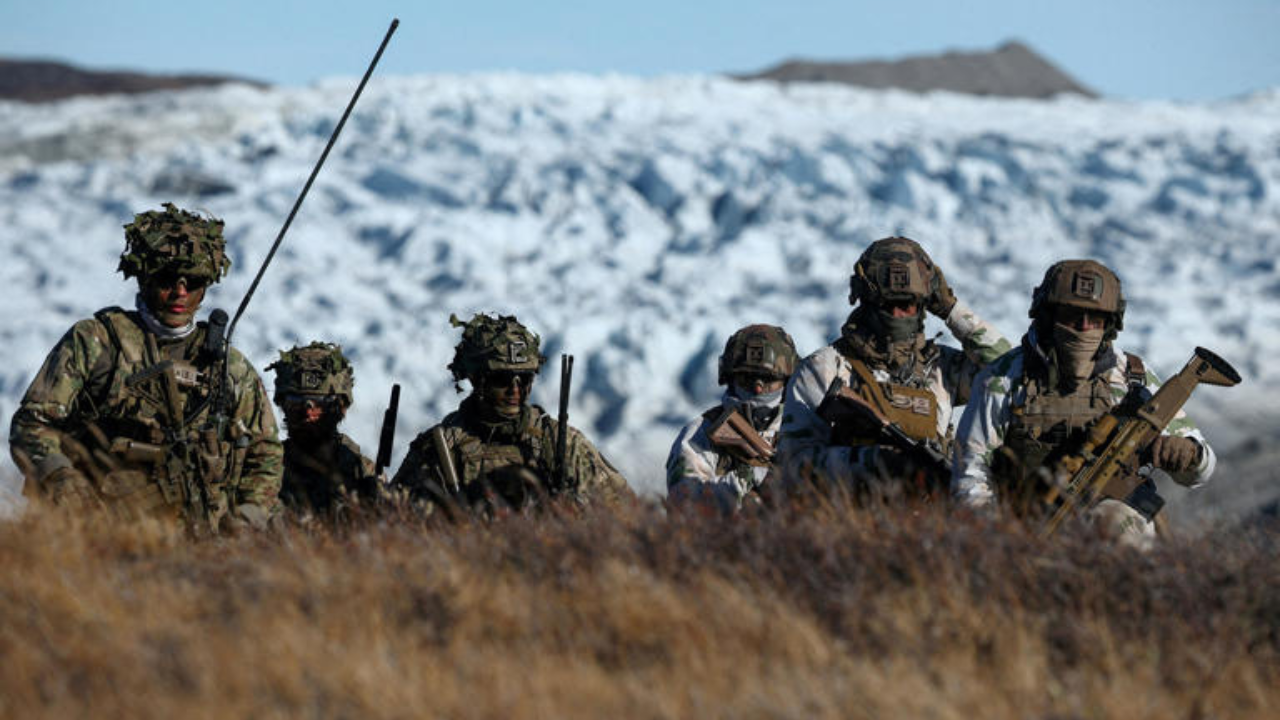
Denmark and Greenland have begun increasing their military presence in and around Greenland, citing Arctic security concerns, as officials prepare for high-stakes talks with U.S. Vice President JD Vance amid renewed interest from President Trump.
Denmark and Greenland are moving to reinforce military operations across the Arctic at a moment of heightened geopolitical tension, as renewed U.S. interest in Greenland’s strategic value collides with growing concerns over Arctic security. The move comes just as senior Danish and Greenlandic officials prepare to meet with U.S. Vice President JD Vance, following weeks of provocative statements from President Donald Trump about taking control of the resource-rich island.
The developments underscore how Greenland — long viewed as remote and politically quiet — is increasingly at the center of global power competition involving the United States, Russia, China, and NATO allies.
Background: Greenland’s strategic importance
Greenland, the world’s largest island, occupies a critical position between North America and Europe. Though it is an autonomous territory within the Kingdom of Denmark, it holds enormous strategic value due to its Arctic location, access to emerging shipping routes, rare earth mineral potential, and proximity to key U.S. military infrastructure, including Thule Space Base.
As Arctic ice melts due to climate change, new maritime corridors are opening, intensifying military and commercial interest in the region. At the same time, Russia has expanded its Arctic military footprint, and China has described itself as a “near-Arctic state,” investing in infrastructure and research tied to polar access.
Against this backdrop, Greenland has become a focal point in broader debates over sovereignty, defense responsibility, and alliance politics.
What Denmark and Greenland announced
On Wednesday, Danish and Greenlandic officials confirmed they have begun increasing military presence in and around Greenland in close coordination with allies. While specific troop numbers and asset deployments were not publicly disclosed, officials emphasized that the buildup is part of long-standing plans to strengthen Arctic defense rather than a reaction to a single country.
The effort includes enhanced surveillance, maritime patrols, and coordination with NATO partners operating in the High North. Danish officials framed the move as necessary to ensure sovereignty, regional stability, and the safety of Arctic shipping lanes.
Greenland’s government signaled support for the measures, stressing that security decisions affecting the island must involve local authorities rather than being dictated externally.
Trump’s renewed interest in Greenland
The military buildup comes amid renewed pressure from President Trump, who has again raised the idea of the United States taking control of Greenland — a proposal he first floated during his previous term in office.
In recent weeks, Trump has described Greenland as vital to U.S. national security and economic interests, framing American control as both strategic and inevitable. While no formal policy proposal has been introduced, the rhetoric has unsettled officials in Copenhagen and Nuuk, Greenland’s capital.
Trump’s comments have revived memories of his 2019 suggestion that the U.S. purchase Greenland outright — a proposal that was swiftly rejected by Denmark and Greenland alike and led to diplomatic friction between Washington and Copenhagen.
High-stakes meeting with Vice President JD Vance
Denmark’s and Greenland’s foreign ministers are scheduled to meet with Vice President JD Vance in the coming days, a meeting widely viewed as an attempt to lower tensions while reaffirming alliance commitments.
Officials from both Denmark and Greenland have signaled that while they welcome cooperation with the United States on Arctic security, any discussion of sovereignty is off the table.
Diplomats familiar with the talks say the focus is expected to include defense coordination, Arctic infrastructure, climate security, and the future role of NATO in the region.
Analysis: Sovereignty, security, and alliance strain
The decision to visibly increase military presence sends a dual message. On one hand, it reassures allies that Denmark and Greenland are taking Arctic defense seriously amid growing global competition. On the other, it serves as a clear signal that Greenland’s status is not up for negotiation.
For Denmark, the challenge lies in balancing its role as a NATO ally with its responsibility to defend Greenland’s autonomy. For Greenland, the situation highlights longstanding concerns about being treated as a strategic asset rather than a self-governing society with political agency.
The episode also exposes broader tensions within U.S. foreign policy. While the Pentagon has consistently emphasized cooperation with Denmark and respect for Greenlandic self-rule, Trump’s rhetoric has complicated diplomatic efforts and raised questions about Washington’s long-term intentions.
Greenland’s local perspective
Greenlandic leaders have repeatedly stated that the island is “not for sale” and have pushed for greater control over defense-related decisions affecting their territory.
Public opinion in Greenland has generally favored closer economic ties with the West while remaining wary of becoming entangled in great-power rivalries. Increased military activity, while seen as necessary by some, also raises concerns about environmental impact and local consent.
Greenland’s government has emphasized that any security expansion must respect local communities and be aligned with long-term development goals.
Implications for the Arctic and beyond
The Arctic is rapidly emerging as one of the most strategically contested regions in the world. Increased military activity by Denmark and Greenland reflects a broader trend among Arctic states preparing for intensified competition.
For the United States, the situation tests its ability to maintain strong alliances while navigating nationalist rhetoric at home. For NATO, it reinforces the importance of unity in the High North as Russia continues to expand its Arctic capabilities.
The outcome of the upcoming talks with Vice President Vance may shape the tone of Arctic cooperation for years to come.
Conclusion
Denmark and Greenland’s move to bolster military presence around Greenland marks a significant moment in Arctic geopolitics, driven by security concerns, alliance dynamics, and renewed U.S. pressure.
As global interest in the Arctic accelerates, the episode highlights a central question facing the region: how to balance defense, diplomacy, and sovereignty in a rapidly changing strategic landscape. What happens next will depend not only on military deployments, but on whether diplomacy can keep pace with rising geopolitical ambition.