 By Trendsetter Tribune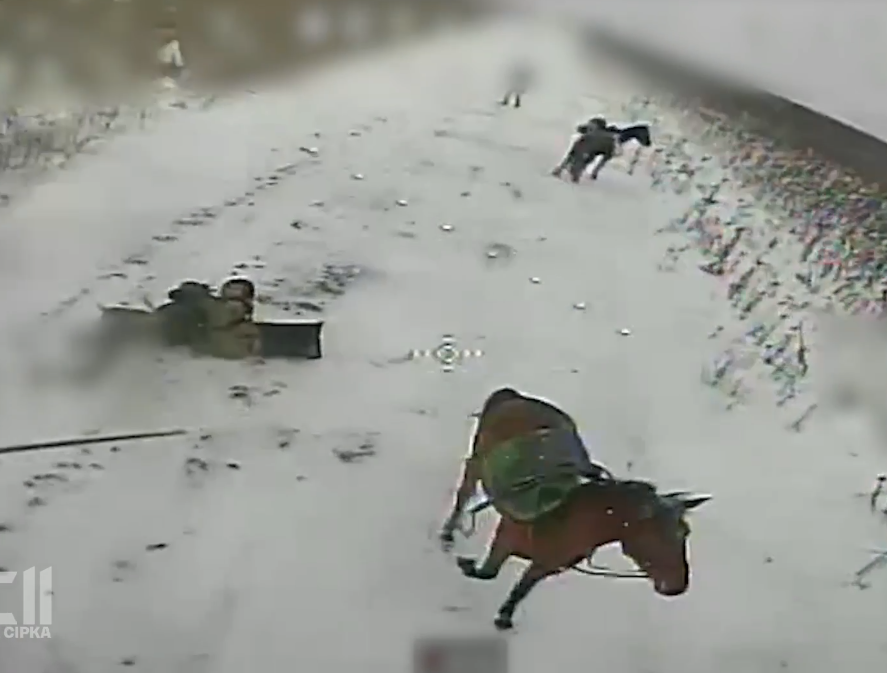
As Russian advances stall in Ukraine, soldiers are returning to horse-mounted units to bypass drones and artillery, highlighting both desperation and battlefield improvisation in 2026.
In a jaw-dropping twist on modern warfare, Ukrainian drone operators are taking out Russian horse-mounted units — yes, real horses — on the battlefield. As Russia’s 2026 offensive in Ukraine has slowed to a crawl, reports suggest Moscow is resorting to unconventional tactics reminiscent of the 19th century.
Large-wave assaults have been neutralized by NATO-made heavy artillery, motorized transports have been shredded by kamikaze drones and land mines, and infantry charges across open ground have proven deadly. In response, the Russian army has turned to equine mobility: deploying horse-mounted troops to navigate the chaos.
From Dragoons to Starlink Cavalry
Strictly speaking, these are not traditional cavalry charges but closer to dragoons — infantry using animals as transport before fighting on foot. Analysts say this reflects desperation: the Russian army faces equipment shortages and is struggling with spare parts for vehicles.
Ironically, horses offer some tactical advantages. Unlike metal vehicles, they are immune to magnetic land mines, giving Russian units an unexpected edge against certain Ukrainian defenses.
But these horses are anything but ordinary. Russian soldiers have reportedly equipped them with Starlink terminals, using improvised rigs that include dishes and consoles to maintain communications. While SpaceX officially does not serve Russia, field workarounds are giving soldiers limited satellite access. Military expert Samuel Bendett told Forbes that this appears to be individual units improvising rather than a coordinated strategy from Moscow.
Ukrainian Drone Operators Adapt
Ukrainian forces have also adapted their drone tactics to the new threat. Instead of taking out horse-mounted soldiers with traditional kamikaze strikes, drone operators now spook the horses to dismount the riders first, sparing the animals. Only then do the drones circle back to neutralize the human targets.
The result is a bizarre and brutal ballet of technology and 19th-century-style warfare: drones buzz horses, horses bolt, and soldiers fall. Battlefield empathy for quadrupeds, it seems, has become part of modern military strategy.
What This Signals About the Conflict
Military analysts interpret this reversion to equine tactics as a sign of both strategic desperation and economic strain within the Russian military. Modern vehicles and equipment are in short supply, forcing commanders to improvise with whatever resources remain.
The use of horses alongside hi-tech devices like Starlink terminals also reflects the ingenuity — and chaos — of a military under pressure. It underscores the increasingly asymmetric nature of the Ukraine conflict: one side relying on advanced drone warfare, the other improvising with unconventional solutions.
The Human and Animal Cost
While horses provide a tactical workaround, they are also unwilling participants in the conflict. Ukrainian drone operators have had to adjust their methods to avoid killing the animals, illustrating the unforeseen ethical challenges of modern warfare. Meanwhile, soldiers on horseback remain highly vulnerable targets in open terrain.
Analysis: War, Technology, and Innovation Under Pressure
This curious combination of 19th-century cavalry and 21st-century tech highlights the unpredictable evolution of the war in Ukraine. It demonstrates how scarcity, battlefield innovation, and asymmetric tactics are reshaping modern combat.
As Russian forces struggle to advance and Ukraine continues leveraging drones and heavy artillery, the conflict is increasingly defined by improvisation — whether that means horses equipped with satellite terminals or drones executing precision strikes with humane adjustments.
https://t.co/BeT9UQpCRo pic.twitter.com/626A5HNKfM
— OSINTtechnical (@Osinttechnical) December 26, 2025
Conclusion: The Frontlines Keep Changing
In 2026, the war in Ukraine continues to produce startling images of soldiers charging on horseback into a sky buzzing with drones. The mixture of old and new, desperation and ingenuity, marks the conflict as one of the most unusual battlefields of the 21st century.
Whether these equine units will achieve any significant military advantage remains uncertain, but the spectacle underscores the intensity and innovation that both sides are bringing to the fight.