 By Trendsetter Tribune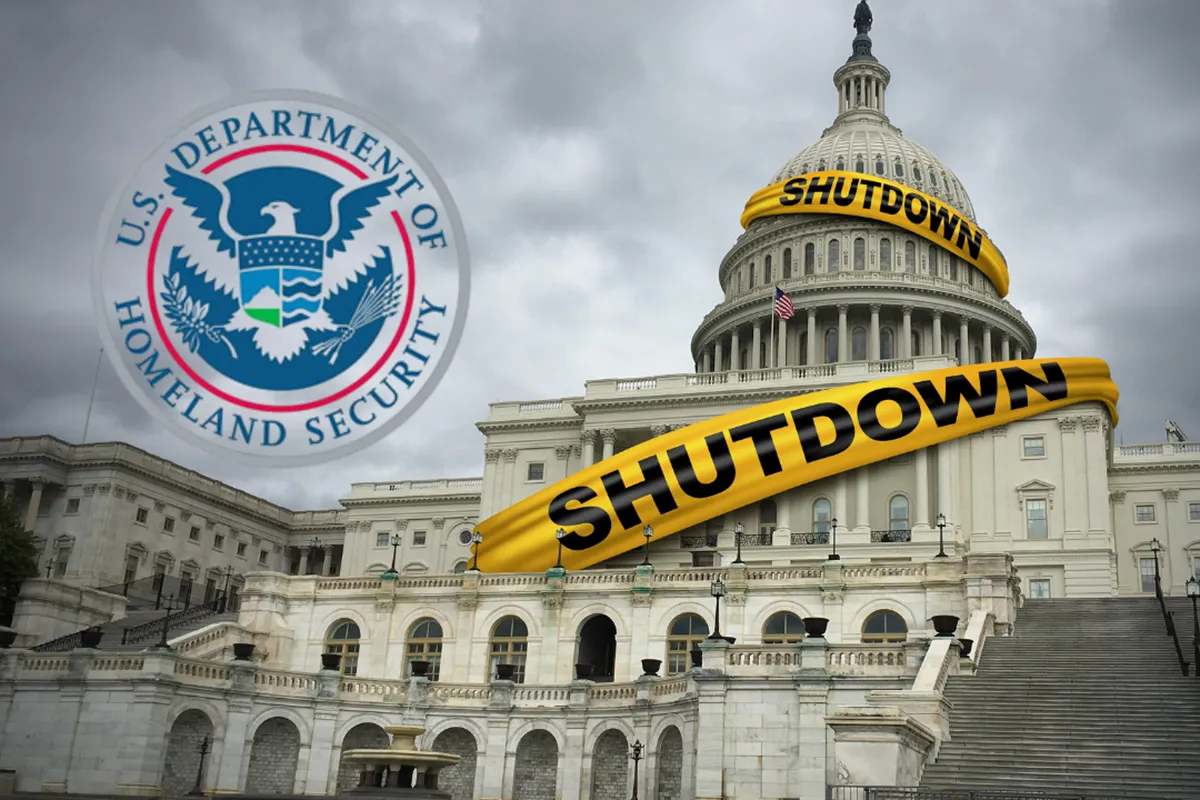
The Department of Homeland Security (DHS) is on the brink of a partial government shutdown as funding is set to expire at midnight tonight, Friday, February 13, 2026. While the rest of the federal government is fully funded through September, DHS remains the center of a intense political standoff.
The impasse stems from a demand by Senate Democrats for major reforms to immigration enforcement following the fatal shootings of two U.S. citizens, Alex Pretti and Renee Nicole Good, by federal agents in Minneapolis last month.
Why is This Shutdown Unique?
Unlike previous shutdowns, the 2026 DHS funding lapse occurs in a landscape transformed by the One Big Beautiful Bill Act (OBBBA) passed last summer.
- Financial Cushion: The OBBBA provided DHS with nearly $190 billion in multi-year funding, including $75 billion for ICE and $64 billion for CBP.
- Operational Continuity: Because of this massive cash infusion, Secretary Kristi Noem has the authority to keep the majority of the agency running. Most law enforcement activities will continue regardless of the congressional deadlock.
- Essential Personnel: Over 90% of the 272,000 DHS employees are considered “essential” and will remain on the job.
The Human and Public Impact
While the agency won’t “turn off,” the effects will eventually be felt by the workforce and the public:
| Agency | Impact of Shutdown |
| TSA | Agents must work without immediate pay. Historically, long shutdowns lead to increased staff call-outs and longer airport lines. |
| ICE & CBP | Operations will largely continue at full capacity due to OBBBA funds, but specific administrative and non-essential roles will be furloughed. |
| FEMA | The Disaster Relief Fund is currently stable with roughly $31 billion, ensuring response capabilities for immediate emergencies. |
| Coast Guard | Servicemembers will continue operations, but their pay may be delayed depending on the duration of the lapse. |
The Negotiating Table: Democrats’ 10 Demands
The primary hurdle for a deal is a list of 10 reforms proposed by Democrats to “rein in” immigration enforcement. Key points include:
- Mandatory Body Cameras: Requiring agents to wear cameras and prohibiting them from wearing masks during operations.
- Visible Identification: Requiring all agents to display their names and unique ID numbers.
- Warrant Requirements: Prohibiting entry into private property without a judicial warrant.
- Use-of-Force Standards: Codifying stricter rules for when federal agents can use lethal force.
Current Status: With the Senate having left Washington for the week, a deal is unlikely before the deadline. Negotiators are not scheduled to return until February 23, though a “short notice” recall remains possible if a breakthrough occurs.