 By Trendsetter Tribune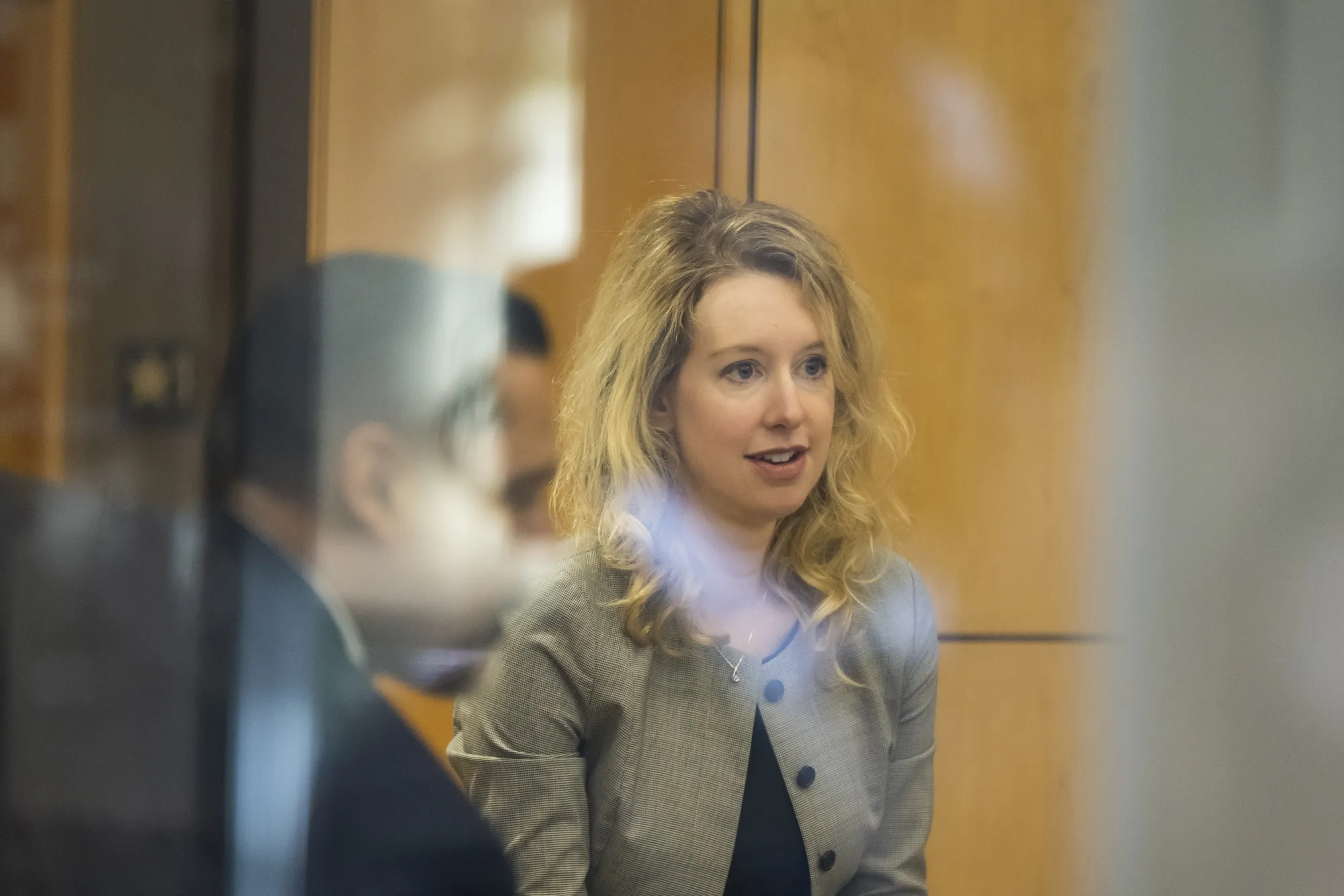
Elizabeth Holmes, the former CEO of now-defunct blood-testing company Theranos, has formally asked President Donald Trump to consider an early release from federal prison, according to a clemency request filed with the U.S. Department of Justice.
Holmes is currently serving an 11-year sentence after being convicted in 2022 of defrauding investors. She reported to a federal prison camp in Texas in 2023, and her scheduled release date is December 2031. If her request were approved, she could be released nearly six years early.
Court records show that Holmes’ conviction and sentence were upheld last year by a federal appeals court. The ruling also maintained the $452 million restitution order imposed on Holmes and former Theranos president Ramesh “Sunny” Balwani, who was convicted in a related trial.
Holmes founded Theranos while still a college student, promoting a vision of revolutionizing medical testing through technology that she claimed could diagnose a wide range of conditions using just a few drops of blood. The company quickly gained attention in Silicon Valley and beyond, reaching a peak valuation of approximately $9 billion.
Theranos attracted nearly $1 billion in investment, secured partnerships with major retail chains, and assembled a high-profile board that included former government and military leaders. Holmes herself became a prominent figure in business media and was often described as one of the most powerful women in tech.
That image began to collapse after investigative reporting raised serious questions about the company’s technology. A Wall Street Journal investigation revealed that Theranos’ testing devices were unreliable and, in many cases, not used at all for patient testing. Federal prosecutors later charged Holmes and Balwani with wire fraud and conspiracy.
Holmes pleaded not guilty and maintained her innocence throughout the trial, arguing that she believed in the company’s technology and did not intentionally mislead investors. A jury ultimately convicted her on multiple counts related to investor fraud, though she was acquitted on charges connected to patient harm.
Now 41 years old, Holmes is incarcerated at Federal Prison Camp Bryan, a minimum-security facility located roughly 100 miles outside Houston. The prison houses female inmates serving sentences for non-violent offenses.
The White House does not comment publicly on clemency requests, and a spokesperson said decisions on commutations or pardons rest solely with the president. Attorneys for Holmes have not responded to requests for comment.
Holmes has recently drawn renewed public attention after activity resumed on her social media account on X. Posts have included commentary on health care policy and references to her family and life in prison. The account states that posts are “mostly my words, posted by others,” though it remains unclear who manages it.
In one recent post, the account said Holmes continues to fight her conviction, stating that “the truth cannot be repressed forever,” though the message contained spelling errors and offered no legal details.
President Trump has granted several high-profile pardons and sentence commutations during his second term, including to business figures and individuals convicted in major federal cases. Those actions have kept attention focused on the scope of presidential clemency powers and the criteria used in making such decisions.
For now, Holmes remains incarcerated while her request moves through the clemency review process, which can take months or longer and does not guarantee action. Without intervention, she is expected to remain in custody until the early 2030s.