 By Trendsetter Tribune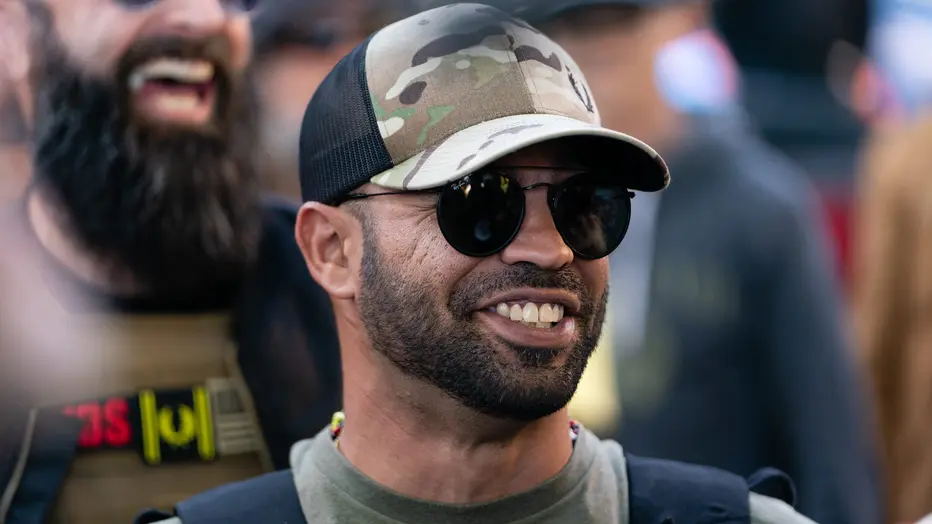
Former Proud Boys leader Enrique Tarrio says he is weighing legal options after media outlets published a leaked list allegedly identifying him as an ICE agent.
Claims that private individuals are federal law enforcement agents can carry serious safety and legal consequences. Former Proud Boys leader Enrique Tarrio says he has received threats after media outlets published a leaked database that allegedly identified him as an Immigration and Customs Enforcement agent, prompting him to consider legal action.
Tarrio Weighs Lawsuit Against Media Outlets
Enrique Tarrio told Newsweek exclusively that he is exploring legal options against media organizations that published a list naming him as an ICE agent following what was described as a Department of Homeland Security database leak.
“I’m going to take a look at my legal options,” Tarrio said, adding that his recent experience pursuing a civil lawsuit against the United States has made him more confident in taking further legal action.
“If I’m suing the United States of America, it’s very easy for me to sue media outlets that decided to publish this,” he said.
Tarrio said he has received numerous threats since the list circulated online, which he claims stemmed from reports that failed to verify the information or seek comment from him prior to publication.
Background on Tarrio
Tarrio is the former leader of the Proud Boys, a far-right, male-only organization known for promoting extremist nationalist views and engaging in political violence. The group gained national attention for its involvement in the January 6 attack on the U.S. Capitol.
Tarrio was previously convicted of seditious conspiracy and sentenced to 22 years in prison for his role in efforts to block the peaceful transfer of power following the 2020 presidential election. That sentence was later vacated after President Donald Trump issued a sweeping pardon covering more than 1,500 individuals connected to January 6.
Earlier this month, Tarrio confirmed that he had previously worked as an FBI informant, stating that in 2013 he assisted authorities in dismantling a sex trafficking operation linked to Mexico.
ICE Allegations and Social Media Response
Tarrio has denied being employed by ICE, though he told Newsweek that he would “love” to work for the agency and joked about the $50,000 signing bonus offered to new recruits.
The controversy centers on an image circulated on social media that allegedly showed the names of ICE officers, with Tarrio’s name circled. The image was published by several outlets, including NowThis Impact.
NowThis Impact stated on X that the list originated from a whistleblower within DHS and was provided to a watchdog group known as The ICE List following the killing of Renee Nicole Good.
Tarrio initially reposted the image and wrote, “A list I’m finally happy to be part of…,” but later clarified that the remark was intended as satire.
In subsequent posts, Tarrio said he had received a surge of death threats and accused media outlets of irresponsible reporting. He argued that the list appeared to be alphabetized by last name and that his inclusion under his first name should have raised questions about its accuracy.
“My initial post was obviously satire,” Tarrio later wrote, criticizing outlets for publishing the claim without verification.
Media Scrutiny and Ongoing Fallout
Tarrio said he has since received numerous media inquiries but maintains that the initial reports caused real-world harm. He has not yet announced whether formal legal action has been filed.
The Department of Homeland Security has not publicly commented on the authenticity of the alleged leak or Tarrio’s inclusion in the circulated list.
Broader Implications
The episode highlights growing concerns about the publication of unverified information related to law enforcement personnel, particularly amid heightened tensions surrounding immigration enforcement and public protests.
As scrutiny over immigration operations continues nationwide, the controversy raises questions about media verification standards, whistleblower disclosures, and the risks posed by online dissemination of alleged government data.