 By Trendsetter Tribune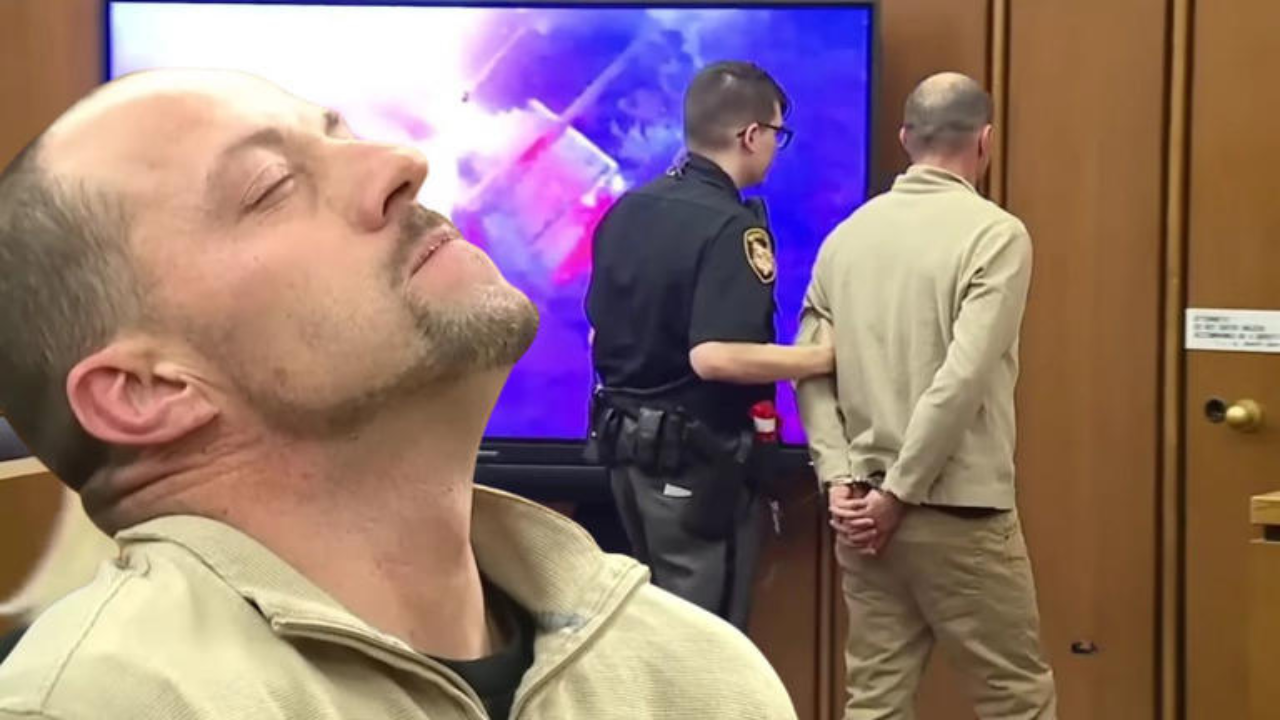
A former East Cleveland police officer who assaulted a handcuffed driver and tried to cover it up was sentenced to prison, sending a message about police accountability and abuse of power.
A former East Cleveland police officer walked into a Cuyahoga County courtroom hoping for leniency. He walked out in handcuffs.
Brian Parks, once trusted with a badge and a gun, pleaded with a judge not to send him to prison. He told the court he had “never been in trouble,” that he wasn’t a danger, and that he deserved mercy.
But the judge wasn’t persuaded.
Instead, Cuyahoga County Common Pleas Judge Cassandra Collier-Williams sent Parks to prison — not just to punish him, but to send a message.
A message about accountability.
A Plea for Mercy — and a Hard No
Courtroom video cited by News 5 Cleveland investigator Scott Noll shows Parks speaking softly, asking for probation rather than incarceration. He framed himself as someone who made a mistake, not a criminal.
Judge Collier-Williams disagreed.
She told Parks that prison was necessary to show the community that law enforcement officers are not above the law — and that when they abuse their power, there are real consequences.
That single word — accountable — hung over the entire hearing.
Because this case wasn’t just about one former officer. It was about whether the justice system is capable of holding its own accountable when the person on trial once wore a badge.
The Chase That Became a Crime
The case stemmed from a police pursuit in East Cleveland involving Mario Garcia, who investigators said failed to stop for officers. Police chased the vehicle until it crashed.
But prosecutors made clear that what brought Parks to prison was not the pursuit itself.
It was what happened after.
According to Scott Noll’s reporting, prosecutors played body-camera footage in court that showed Garcia already in handcuffs when Parks used force against him.
The courtroom watched in silence.
Parks stared straight ahead.
Body Cam Tells a Different Story
The video, prosecutors said, showed Garcia being slammed into the back of a police cruiser, struck, and forced against a vehicle door — with the door closing on his leg.
Most damning of all, prosecutors said Parks used a Taser on Garcia while he was already restrained.
That detail is critical.
Handcuffs are meant to end resistance — not justify new force. Once a suspect is restrained, the officer’s role shifts from control to custody.
Anything beyond that crosses a legal and moral line.
When Force Becomes Punishment
Even for those inclined to believe a suspect “deserved” rough treatment — a dangerous and legally flawed way of thinking — the law is clear: handcuffs mark the end of the fight.
After that point, force is no longer defensive. It becomes punitive.
Prosecutors argued that Parks crossed that line — and then tried to erase it.
The Cover-Up That Sealed His Fate
Parks pleaded guilty not only to assault, but also to attempted tampering with records.
That second charge changed everything.
According to prosecutors cited by Scott Noll, Parks attempted to manipulate official police reports to make it appear that Garcia had been handcuffed later than he actually was — a move designed to justify the force used on video.
In other words, the evidence suggested Parks didn’t just lose control.
He tried to rewrite reality.
Assistant Prosecuting Attorney Gregory Mussman didn’t mince words, calling it a “grave abuse of power.”
That phrase landed hard in the courtroom.
Because violence alone is one thing — but lying about it, under color of law, poisons public trust.
Why This Case Matters Beyond One Officer
This sentencing arrives at a moment when police accountability remains one of the most volatile issues in American public life.
Communities aren’t just watching whether officers are punished — they’re watching whether the system protects its own.
In many high-profile cases across the country, body-camera footage has contradicted official police narratives, raising uncomfortable questions about transparency, honesty, and institutional self-policing.
In this case, the system didn’t flinch.
The video mattered.
The report manipulation mattered.
And the badge did not protect Parks from prison.
Judge Sends a Message
Judge Collier-Williams made clear that probation would not suffice — not because Parks posed an ongoing threat, but because the integrity of the justice system was at stake.
Sending a former officer to prison, she signaled, was about restoring trust — or at least proving that accountability isn’t just a talking point.
The decision sent a ripple through the courtroom and beyond.
For many watching, it was a rare moment where the system appeared to discipline itself.
A Badge Is Authority — and Responsibility
Police officers are granted extraordinary authority over civilians, including the legal right to use force.
But that authority comes with an obligation to tell the truth — especially when force is used.
Prosecutors argued that Parks violated both obligations.
First, by assaulting a restrained man.
Second, by trying to falsify the record to shield himself from consequences.
That combination, they said, demanded prison.
Walking Out in Handcuffs
Brian Parks walked into court hoping for mercy.
He walked out in handcuffs.
For some, the sentence represents overdue justice. For others, it’s a reminder of how fragile trust between law enforcement and the public remains.
But one thing is clear: the judge wanted the message heard loud and clear.
When a police officer crosses the line — and then lies about it — the badge does not protect him.
And in this courtroom, at least, accountability meant prison.