 By Trendsetter Tribune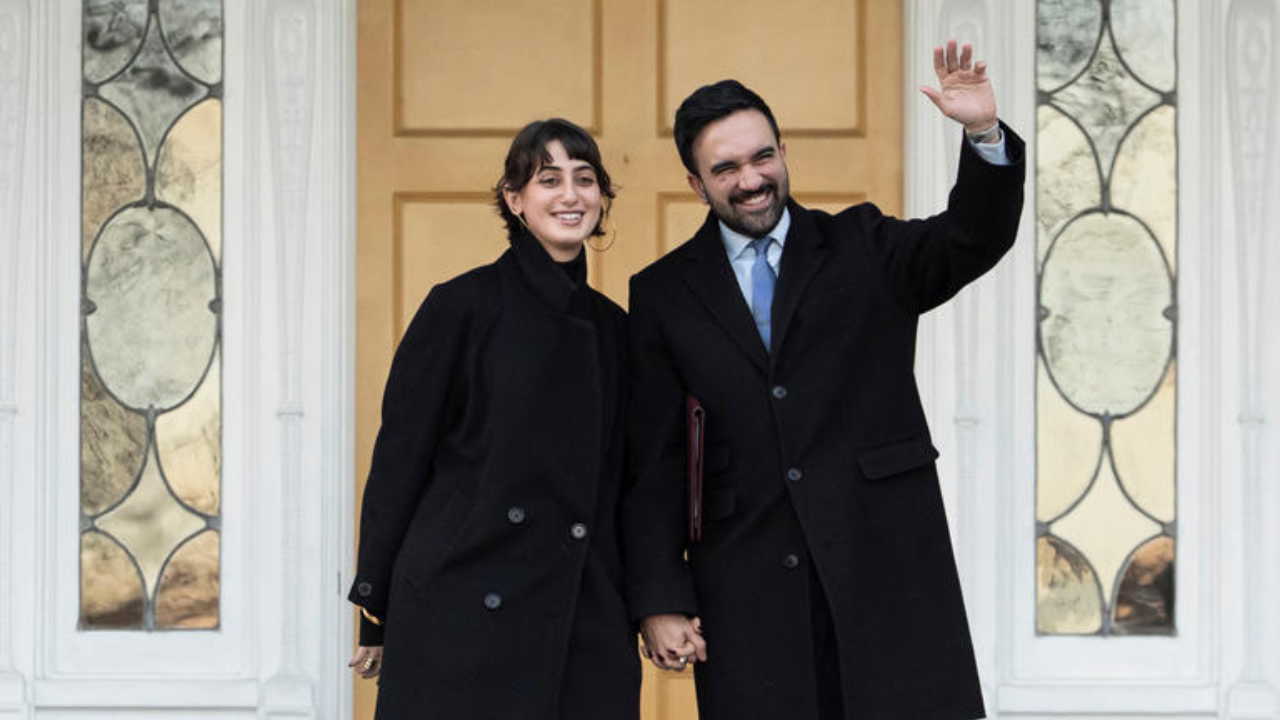
New York City Mayor Zohran Mamdani and his wife move into Gracie Mansion, trading a modest Queens apartment for the historic mayoral residence—raising questions about symbolism, power, and politics.
New York City Mayor Zohran Mamdani officially moved into Gracie Mansion on Monday, marking a highly symbolic transition from a leaky, one-bedroom apartment in Queens to one of the most storied residences in American municipal politics.
The move, while routine for incoming mayors, has reignited a familiar New York debate: Can a leader who ran on living like the people still govern from a mansion?
Background: A Tradition Dating Back to 1942
Gracie Mansion, the stately custard-colored 18th-century home overlooking the East River, has served as the official mayoral residence since 1942. Nearly every New York City mayor has lived there at least part-time, making the move a longstanding rite of passage.
But for Mamdani—a 34-year-old democratic socialist who campaigned on affordability, equality, and political transparency—the contrast between his old and new homes is unusually stark.
What Happened: Boxes, Houseplants, and a Press Conference
As workers unloaded cardboard boxes filled with houseplants and rolled carpets across the mansion’s grounds, Mamdani and his wife, Rama Duwaji, held a press conference on the riverfront lawn.
“Today, Rama and I feel lucky to participate in a ritual that so many New Yorkers have experienced,” Mamdani said, describing the move as “beginning a new chapter.”
The couple is leaving behind a $2,300-per-month Queens apartment that lacked a washer and dryer and was prone to flooding from a broken pipe.
Inside Gracie Mansion: History, Space, and a Few Ghosts
The mayor’s new residence spans 11,000 square feet, featuring:
- A private chef
- An ornate ballroom
- A veranda overlooking the East River
The home also carries deep historical weight. It contains the original fireplace where Alexander Hamilton was brought after his fatal duel with Aaron Burr. According to former Mayor Eric Adams, the mansion may even be home to at least one ghost.
Analysis: Optics vs. Reality for a Democratic Socialist Mayor
Mamdani appeared keenly aware that the move could clash with his pledge to lead a “government that looks and lives like the people it represents.”
He emphasized plans to open Gracie Mansion to New Yorkers who are not often invited into spaces of power, framing the residence as a public asset rather than a personal luxury.
The move highlights a central tension in Mamdani’s political identity: balancing anti-elitist rhetoric with the realities of governing one of the world’s wealthiest cities.
From Astoria to the Upper East Side
Before becoming mayor, Mamdani lived in Astoria, a diverse Queens neighborhood sometimes nicknamed the “People’s Republic of Astoria” for its strong support of left-wing politicians, including Rep. Alexandria Ocasio-Cortez.
In a farewell statement, Mamdani said he would miss:
- “Endless Adeni chai”
- Conversations in Spanish, Arabic, and many other languages
- The smells of seafood and shawarma drifting down the block
His new neighborhood—the Upper East Side—is among the city’s wealthiest and nearly three-quarters white, a sharp contrast to Astoria’s multicultural character.
Notably, while Mamdani won Astoria overwhelmingly, his former opponent Andrew Cuomo carried the Upper East Side by double digits.
Neighborhood Reaction: Cautious Optimism
Some longtime Upper East Side residents expressed curiosity rather than hostility.
Zoe Cuddy, a neuropsychologist walking her cockapoo near the mansion, described the area as “the suburbs of Manhattan” and said she hoped Mamdani would grow to appreciate its quieter charm.
“I think we’ll grow to be happy to have him here,” she said.
Looking Ahead: Symbolism Still Matters
Mamdani has joked about making only modest changes to the mansion, expressing an “aspirational hope” of installing bidets in the bathrooms.
While the move itself follows tradition, the symbolism surrounding it will likely remain under scrutiny—especially for a mayor whose political rise was built on challenging entrenched power and privilege.
Conclusion: A New Chapter, Under a Spotlight
From a flooded Queens apartment to Gracie Mansion’s riverfront lawns, Mayor Zohran Mamdani’s move underscores both the promise and contradictions of progressive leadership in New York City.
Whether Gracie Mansion becomes a symbol of openness—or a lightning rod for criticism—may depend less on where Mamdani sleeps, and more on how he governs from inside its historic walls.