 By Trendsetter Tribune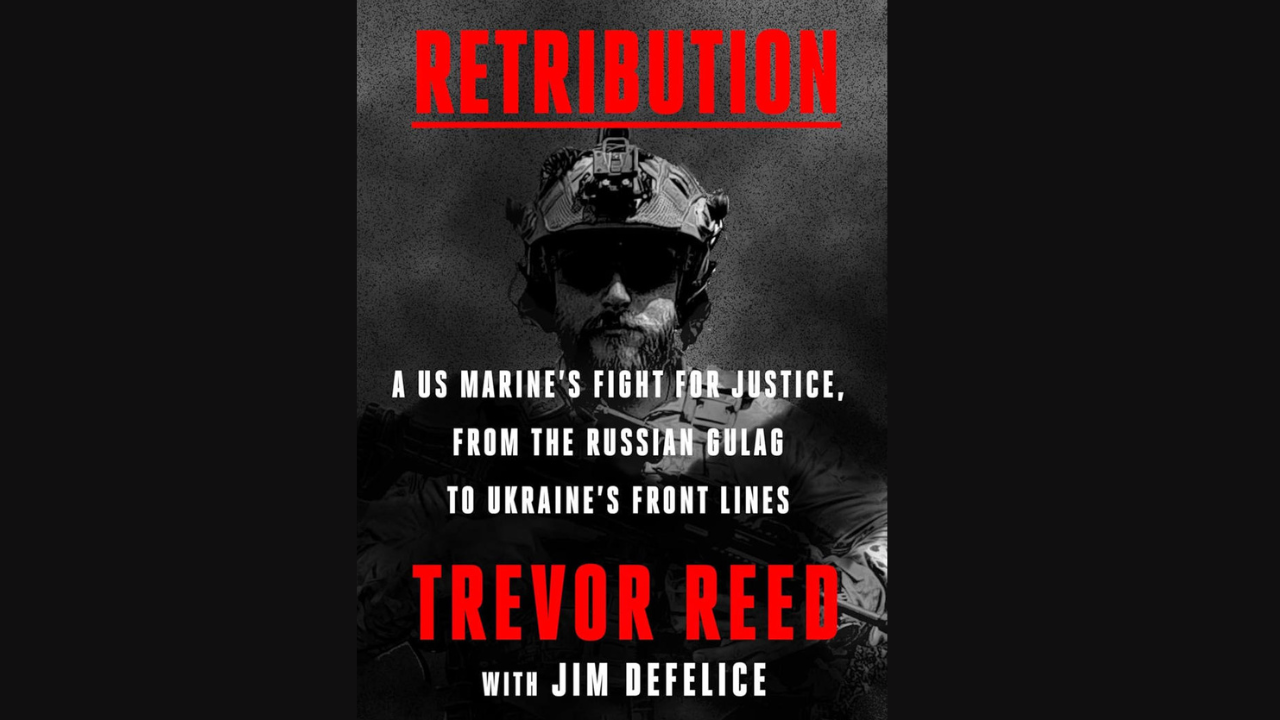
After surviving three brutal years in a Russian prison, former U.S. Marine Trevor Reed came home—but not for peace. His journey from wrongful imprisonment to the battlefields of Ukraine reveals trauma, revenge, and the cost of freedom.
When Trevor Reed finally stepped back onto American soil in April 2022 after nearly three years in a Russian gulag, many expected a familiar story: a wrongfully detained American, freed through diplomacy, returning home to rebuild his life.
That’s not what happened.
Instead of rest, college, or a quiet recovery in Texas, the former U.S. Marine wanted one thing—retribution. Within months of his release, Reed was preparing to go to Ukraine to fight Russian forces directly, driven by rage forged in isolation cells, starvation, and what he describes as psychological disintegration inside Russia’s prison system.
“I knew I could never be myself again if justice wasn’t served,” Reed told The Post in an exclusive interview. “I had the training and experience to help them.”
Freedom Didn’t Bring Peace
Reed’s decision stunned his family—especially his father, who had spent years lobbying politicians, media outlets, and human rights organizations to secure his son’s release.
“He looked at me in shock and bewilderment,” Reed writes in his new memoir, Retribution: A Former US Marine’s Harrowing Journey from Wrongful Imprisonment in Russia to the Front Lines of the Ukrainian War. “I told him I was going to kill every one of those sons of b—–s.”
His father’s reaction was haunting. “His face went white… like he had seen a ghost.”
Reed had already survived what many never would. A Marine veteran who later worked as a security contractor in Afghanistan, he was arrested in Moscow in August 2019 after a night of heavy drinking while visiting his Russian girlfriend, Alina “Lina” Tsybulnik. He woke up in a police station with no memory of the previous night—and no idea his life was about to be hijacked by geopolitics.
A Case Built on Nothing
Initially, police told Reed he was free to leave. But when a new shift came in, the tone changed.
“The police chief arrived with a whole different attitude,” Reed recalled. “He detained me and called the FSB.”
Russian authorities accused Reed of assaulting two police officers—a charge carrying up to 10 years in prison. There was no physical evidence, no credible witnesses, and even the investigator assigned to the case reportedly didn’t believe the accusations.
The U.S. ambassador at the time, John Sullivan, publicly dismissed the case as “ridiculous,” calling the trial “theater of the absurd.”
At one hearing, Reed recalls the investigator breaking down in tears while reading fabricated testimony.
“‘It’s your job!’ the judge shouted,” Reed writes.
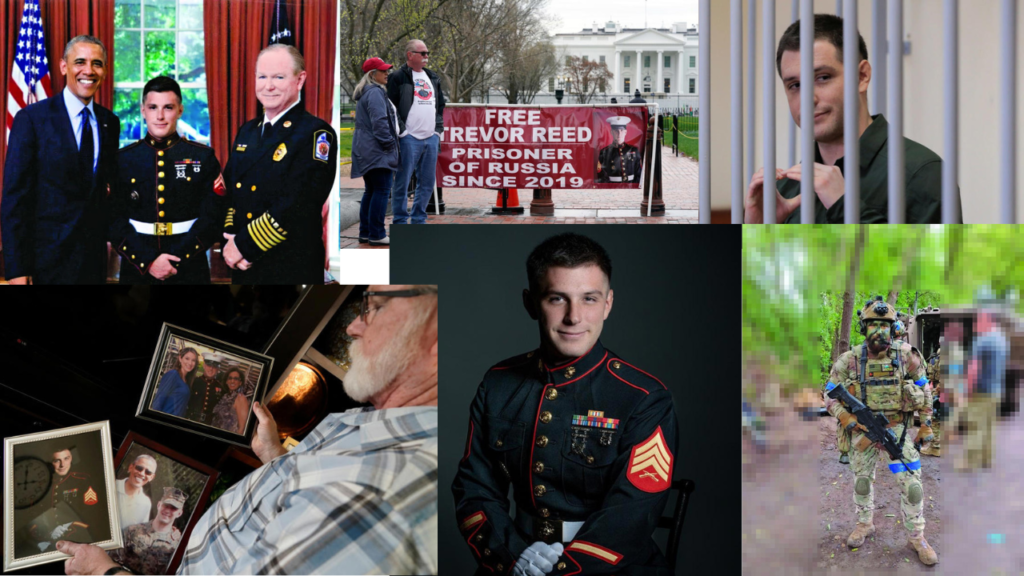
Then came the moment that sealed his fate. Reed’s attorney presented a photo of him in Marine dress blues standing next to President Barack Obama, whom Reed had guarded at Camp David.
“If there was a picture of me with the president,” Reed realized, “then I wasn’t worthless. I was valuable.”
A bargaining chip.
Life Inside the Gulag
Reed was sent to SIZO-5, a Moscow detention center infamous for its brutality. He endured years of solitary confinement, cells “barely big enough to turn around in,” and starvation-level meals of bread and fish scraps.
He lost nearly 50 pounds, contracted COVID-19, coughed up blood, and was hospitalized with what appeared to be tuberculosis.
Mentally, he unraveled.
“This isn’t a metaphor,” Reed writes. “I had become a different human in the gulag.”
After 985 days in Russian custody, Reed was freed in a prisoner swap in April 2022. America celebrated his return. But Reed says the man who came home was no longer the same person who had been arrested.
Trading One War for Another
Within months, Reed joined Rogue Team, an elite volunteer unit of combat veterans fighting near Bakhmut in eastern Ukraine—one of the bloodiest fronts of the war.
“I felt that live or die, by finally making it there, I was taking my life back from the Russians,” he said. “I slept for nine hours. That hadn’t happened in years.”
For months, the team conducted reconnaissance missions and direct combat operations against Russian forces. Then came the night that nearly ended Reed’s life.
While extracting through a minefield after a successful assault, a teammate stepped on a mine. Then another explosion. Then another.
“Blood streamed from my legs,” Reed writes.
He applied a tourniquet to himself as shock set in. His arms stopped working. His vision faded.
“I realized I was very likely going to die.”
Reed told a teammate to pass a message to his family—that he had died a free man.
Survival, Again
Medics evacuated Reed under fire. He survived severe leg injuries and spent weeks recovering in Ukrainian and German hospitals. He kept his leg. Others weren’t as lucky.
Two teammates lost limbs. Four others who stayed in the fight were later killed.
“I owe my life to those guys,” Reed writes. “Until Valhalla, brothers.”
Redefining Retribution
Today, Reed is back in Texas. He works with Bring Our Families Home, helping advocate for Americans still wrongfully detained abroad.
And his understanding of revenge has changed.
“I’m proud of what we did in Ukraine,” he says. “But coming home alive and being with the people I love was more important than any moment on the battlefield.”
In his memoir, Reed offers a conclusion forged not in hatred, but survival.
“In spite of everything the Russians did to me, I will not be broken,” he writes. “The greatest revenge is to survive and be free.”
Why This Story Resonates
Trevor Reed’s journey forces uncomfortable questions:
- What happens after freedom, when trauma doesn’t stay behind bars?
- How should nations treat citizens used as geopolitical leverage?
- And how many former detainees return home still at war—with the world, and themselves?
Reed didn’t come back seeking applause. He came back carrying scars, anger, and an unshakable need to reclaim control over his own life.
For some, that path led him straight back into combat.
For others, his story is a stark reminder: freedom doesn’t always end the fight—it just changes the battlefield.