 By Trendsetter Tribune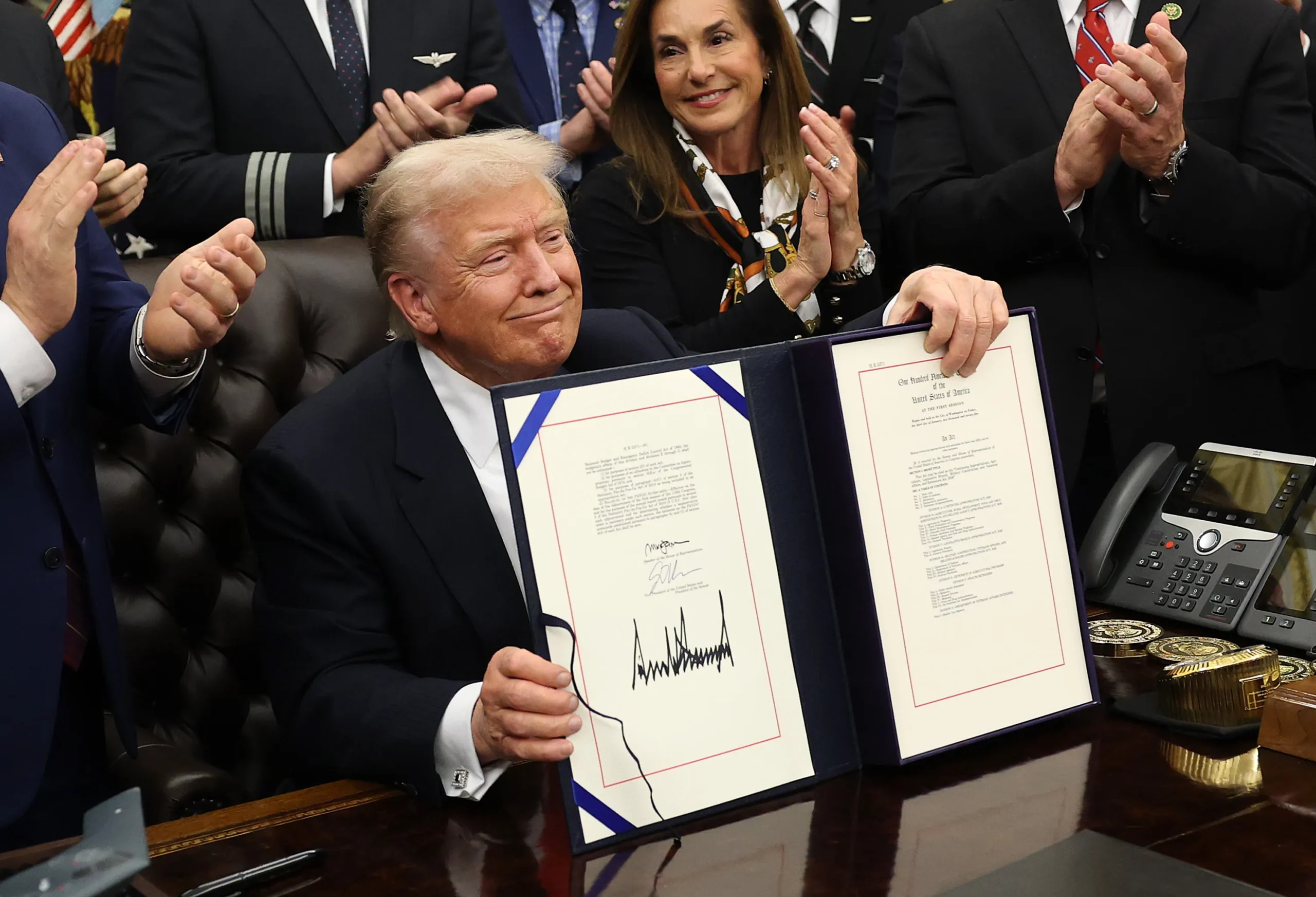
President Trump signed a major funding package on Tuesday, February 3, 2026, officially ending a four-day partial government shutdown. While the move provides full-year funding for three-quarters of the federal government, it leaves the Department of Homeland Security (DHS) on a two-week “leash,” setting up a high-stakes Valentine’s Day deadline.+1
The agreement serves as a temporary ceasefire in a Washington atmosphere increasingly defined by intense civil unrest and internal GOP divisions.
The Compromise: What’s Funded and What’s Not
The Consolidated Appropriations Act, 2026 (H.R. 7148) restores operations for agencies like the DOD, Labor, and HHS through September 30, 2026.
Key Highlights of the Bill:
- Military Pay Raise: A 3.8% increase for servicemembers, a cornerstone of the “America First” budget.
- Air Safety: New investments in FAA technology to address recent modernization needs.
- USAID Shuttering: The bill formalizes the redirection of international aid funds following the administration’s decision last year to dissolve USAID and roll its remaining functions into the State Department.
- Domestic Programs: Despite GOP calls for deep cuts, funding for the NIH, Pell Grants, and election security remains largely intact.
The DHS “Stumbling Block”:
Funding for DHS—which oversees ICE, TSA, and FEMA—was only extended until February 13, 2026. This “bridge” funding was a necessary concession after Senate Democrats refused to grant full-year money without new restrictions on federal immigration agents.+1
The Minneapolis Shadow: Why DHS is the Flashpoint
The reluctance to fund DHS stems from “Operation Metro Surge” and the recent deaths of two American citizens in Minnesota:
- Renee Nicole Good (Jan 7): Shot by an ICE agent during an enforcement action, an incident that sparked nationwide protests.
- Alex Pretti (Jan 24): A VA nurse shot by Border Patrol agents while reportedly recording a federal operation.
These killings transformed the budget debate into a referendum on federal law enforcement. Senate Majority Leader Chuck Schumer and the White House agreed to the 14-day pause to negotiate “guardrails” for ICE, such as mandatory body cameras and a “masks off” policy for agents.
Internal GOP Friction: The Voter ID Battle
The road to this deal was rocky for Speaker Mike Johnson. A group of House conservatives, led by Rep. Anna Paulina Luna, nearly derailed the bill on Tuesday morning by demanding the inclusion of the SAVE Act (a bill requiring documentary proof of citizenship for voter registration).
Trump played a decisive role in quelling the rebellion, personally calling holdouts to argue that a prolonged shutdown would “distract from the mission.” To appease the hardliners, leadership has reportedly promised a separate “Plan” for a federal voter ID push later this spring.
What Happens Next?
The clock is now ticking toward February 14. If Trump and Congressional Democrats cannot reach an agreement on immigration enforcement reforms by then, the Department of Homeland Security will face a total lapse in funding.