 By Trendsetter Tribune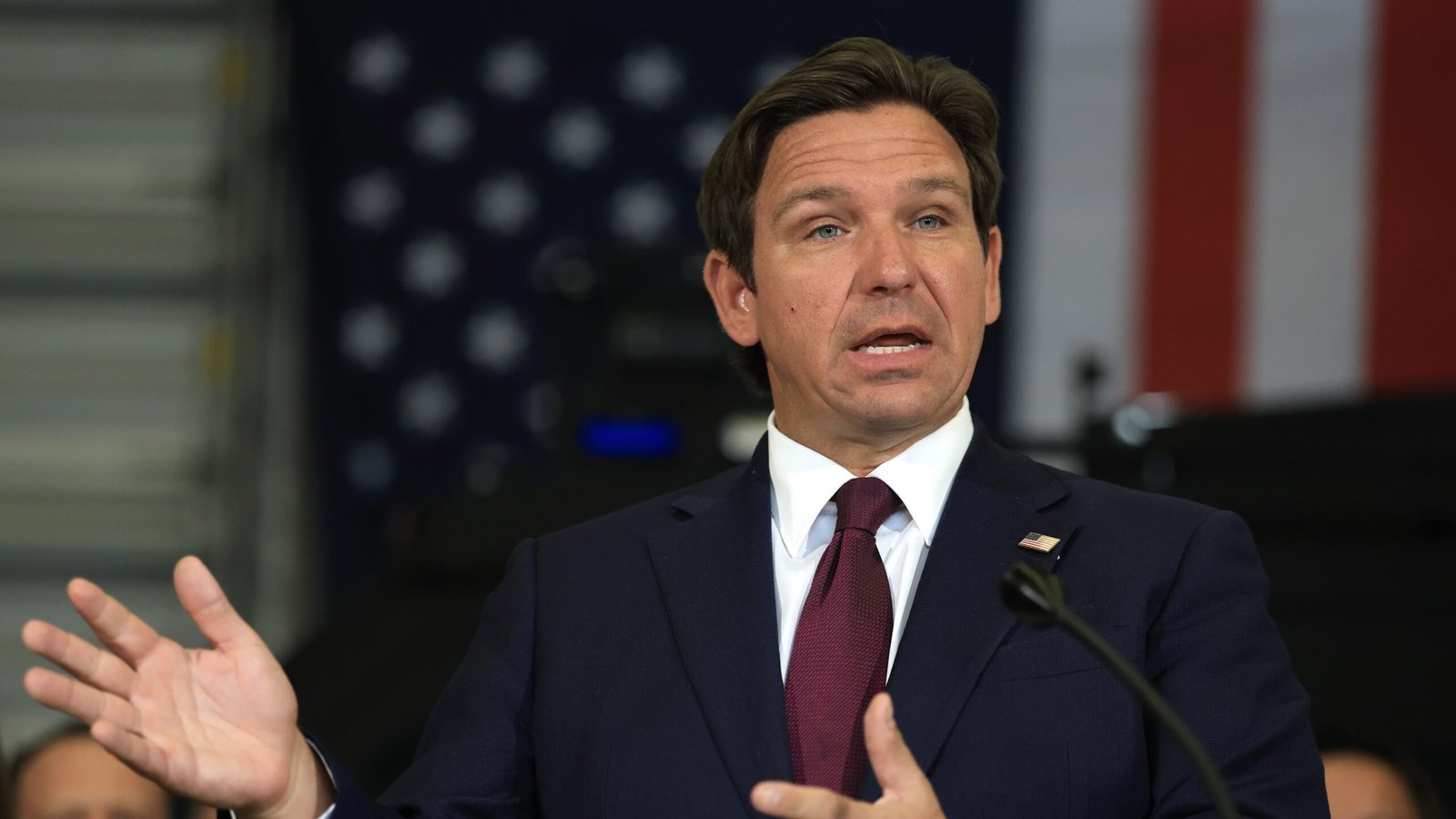
Florida Governor Ron DeSantis has long presented himself as a defender of taxpayers. But new reporting shows that, behind the scenes, his administration redirected more than $35 million in public funds — money already earmarked for vulnerable Floridians — to help defeat two statewide ballot initiatives in 2024.
Those initiatives would have:
- legalized recreational marijuana, and
- expanded abortion protections in the Florida Constitution.
Rather than relying solely on political donors or campaign committees, DeSantis’ administration allegedly tapped into state agencies and special-purpose funds, turning public dollars into tools of partisan warfare.
Money Meant for the Public — Reworked Into Political Strategy
According to documents and interviews reviewed by journalists, the diverted funds came from areas meant to support schools, social services, and children’s health and welfare programs.
Some of this money was used to commission research, messaging, polling, legal work, and consulting — not for program improvement, but to build arguments and strategies designed to defeat the ballot initiatives.
In other words, money meant to help struggling families and kids became political ammunition.
State officials reportedly justified the spending by labeling it as “issue research” or “public education.” But critics argue there is a clear difference between educating the public and mounting what amounts to a taxpayer-funded campaign.
“Cheating” Floridians Out of Promised Support
Advocates say this practice does more than blur ethical lines — it betrays the people whose lives those programs were supposed to improve.
Programs affected included services that:
- provide support to needy families
- help children access essential care
- stabilize communities already under financial strain
When those funds are quietly siphoned away, the consequences ripple outward. Fewer services delivered. Longer wait lists. Less accountability.
To critics, this is not fiscal conservatism — it’s political opportunism wrapped in government paperwork.
A Test Case for Power, Messaging, and Control
DeSantis’ strategy highlights a broader shift in modern politics:
Governors are increasingly treating public budgets as political war chests — especially when ballot initiatives threaten their ideological agendas.
And ballot measures are uniquely powerful. They bypass politicians and place power directly in voters’ hands. That makes them harder to control — unless the state itself steps in.
Here, the government didn’t just argue its position. It allegedly paid itself to do so.
Why This Matters Beyond Florida
What happened in Florida could become a blueprint elsewhere.
If public money can be routinely redirected toward defeating voter-led initiatives, future campaigns may play out on an uneven field — with taxpayers unknowingly funding the very campaigns working against their votes.
It raises urgent questions:
- Who decides how “flexible” earmarked funds really are?
- Should taxpayers foot the bill for political fights?
- What protections should exist to keep public funds tied to their original purpose?
The Bottom Line
The revelations about how more than $35 million was moved and used do more than expose creative accounting — they spotlight a growing tension between political power and public trust.
Needy Floridians and children were promised support. Instead, part of that money reportedly became ammunition in a political battle.
Whether investigations or reforms follow remains to be seen — but the ethical debate has only just begun.
Florida Gov. Ron DeSantis diverted more than $35 MILLION in taxpayer dollars to defeat two ballot initiatives last year. I’ve got the @miamiherald.com‘s blockbuster reporting on how DeSantis cheated needy Floridians and children from their already-earmarked funds. youtu.be/EM0uTojxLCM?…
— Katie Phang (@katiephang.bsky.social) December 30, 2025 at 3:27 PM
[image or embed]