 By Trendsetter Tribune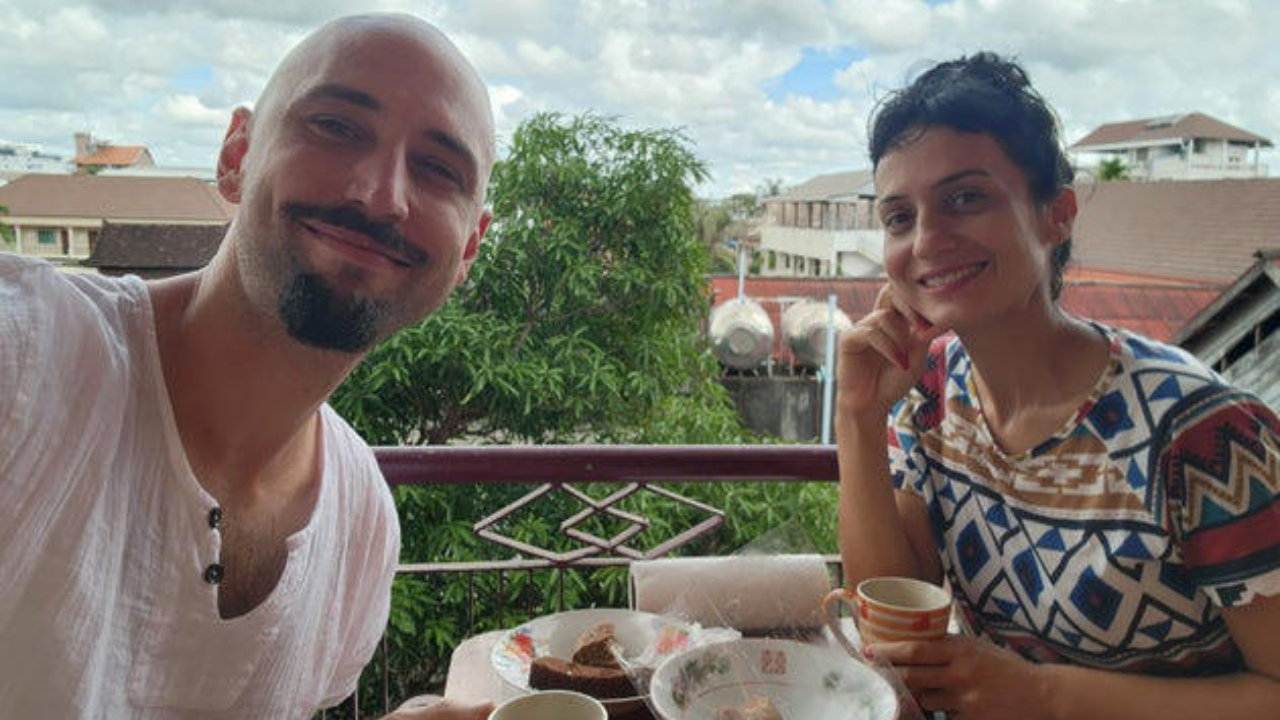
I was down and out. I didn’t want to die, but I didn’t want to live either.
I had just dried up after years of alcoholic drinking. My career was in the toilet. My immediate and extended family had stopped speaking to me. Most of them still don’t.
At 37, my spark was gone. I wasn’t curious about the future or interested in becoming anything else. Love felt like a young person’s illusion—a chemical trick dressed up as meaning. People settled. They used each other. That was the deal. I believed only the young fell in love, because only they were still naïve enough.
There was no danger of me drinking again. That part was over. But there was also nothing left for me in the United States. I was scraping together enough money just to stay afloat, exhausted from counting every dollar and calling it a life.
I didn’t go to Cambodia to find myself. I went because I could afford to exist there.
Siem Reap was cheap, quiet enough, and far away from the life I had already failed at. That was the appeal.
I rented a small apartment and kept my head down. I wasn’t trying to build a new life; I was trying to reduce the old one to something manageable.
But Siem Reap doesn’t rush you. It doesn’t demand explanations. Life happens out in the open. People sit. People talk. People wait.
I started noticing things again—the way the air cooled at night, the unhurried sound of motorbikes passing, the feeling that time itself was less hostile.
At some point, curiosity returned. Not hope. Not ambition. Just curiosity.
I wanted to know where a road led. I wanted to try food I couldn’t name. I wanted to listen to people tell stories I had no stake in.
Once I stopped bracing for the next hit, I started saying yes to small things: conversations, coffee, staying out longer than planned.
That’s how I ended up on Tinder.
Meeting on Tinder isn’t romantic, but it’s honest. We were two people living far from the lives we’d been handed, scrolling through strangers because curiosity needs somewhere to go.
Her name was Feride. She was Turkish and taught English to children online. She came to Cambodia for reasons that echoed mine, though not exactly. I was escaping a drinking habit and a life I couldn’t afford. She was escaping a conservative Muslim family and a life she couldn’t afford.
Our first three dates were mostly confusion. Her accent was thick, unmistakably Turkish. Mine was fast, Californian, full of swallowed sounds. We barely understood each other. We nodded too much. Sometimes we laughed without knowing why.
Still, we kept meeting.
At first, it may have been physical attraction—two lonely people in a small city, reaching for something warm. But something steadier took hold. A quiet pull.
One afternoon, I watched her teach. She had drawn flags by hand and colored them carefully. She sang to her students. I sat nearby with my laptop, telling myself I was writing. Mostly, I watched her.
I teach English to adults, so we began trading lessons—one hour of English, one hour of Turkish. We corrected each other gently. As the language gap closed, something else opened. We learned how the other thought. We discovered shared values: curiosity, kindness, a desire to live deliberately, even if quietly.
I came to admire her in a way that caught me off guard. She had left her religion, her family, and her country. She learned a new language, became a teacher, and built a life alone. She was the bravest person I’d ever met.
Sometimes I still can’t believe I get to be in the same room as her—let alone the same bed.
Our connection was a slow burn, but it was honest. We took our time. We paid attention. We were careful with each other in a way that felt intentional.
She was the first woman I’d ever been in a relationship with whom I didn’t lie. Not once.
Partly because of the language barrier—there was nowhere to hide even if I wanted to—but mostly because by then I knew who I was. The good, the bad, and the parts harder to look at. I told the truth.
She met it fully.
We built our relationship around kindness, trust, and saying what we meant. Every conversation mattered, because it did. It felt delicate at first, like a house of cards—but it held. Somehow, it was sturdy.
After learning how to live alone in a foreign country, we learned how to be strong together.
We could have stayed in Siem Reap for decades.
Then the Thai army came knocking.
What began as a border dispute escalated quickly. Thailand and Cambodia had argued over temples and slivers of land for years—the kind of conflict that starts on old maps and ends with rifles.
The fighting crept closer. Cambodia buys most of its power from Thailand, and I started thinking about blackouts, dropped connections, the internet going dark. Teaching English online was how I survived.
The city thinned out. Hotels breathed like empty lungs. When reports came of shots fired within 50 kilometers, that was close enough.
People told me Siem Reap was safe. Social media still says that now. But I wasn’t willing to gamble with her life. The thought of losing her after finding her so late was unbearable.
I walked to her house and told her to pack.
“Where are we going?” she asked.
“Do you trust me?”
“I do.”
We chose Malaysia—developed, orderly, affordable. A safe landing.
We landed in Penang after a chaotic flight. I was wound tight, terrified, trying not to show it.
We found an apartment on the 29th floor overlooking the ocean. The elevators worked. The nights were quiet.
She loved George Town immediately. When she said she felt safe, something in me loosened. That night, I slept deeply for the first time in weeks.
We fell into a rhythm. I worked from the living room. She taught from the bedroom. Quiet coordination. We liked it.
The only problem was geography. Neither of us wanted to go home, and I couldn’t afford to take her to the United States anyway.
So we researched. We talked. We imagined a future that didn’t require either of us to disappear.
There were doubts. One afternoon, we argued about money. Malaysia was expensive for her, manageable for me. She wanted to know she’d be okay if something went wrong.
I told her I saw how hard she worked—switching languages all day while I used one. That her value wasn’t dictated by exchange rates. That we’d balance things our own way. That I’d fill the gaps and never throw it in her face.
I gave her my word.
We haven’t argued about money since.
Eventually, we found Kosovo—a small, young country shaped by war decades ago and calm now. They love Turks there. They love Americans too. It’s easy for both of us to belong.
Easier still if we marry.
So that’s the plan. Three more months in Penang. Then Kosovo. Marriage. Residency. A quiet life in a house in the mountains.
I didn’t leave the United States looking for love. I left because I ran out of options.
But somewhere between Cambodia, Malaysia, and a woman brave enough to start over, I found something better than rescue.
I found a place to stand.
And someone to stand there with me.