 By Trendsetter Tribune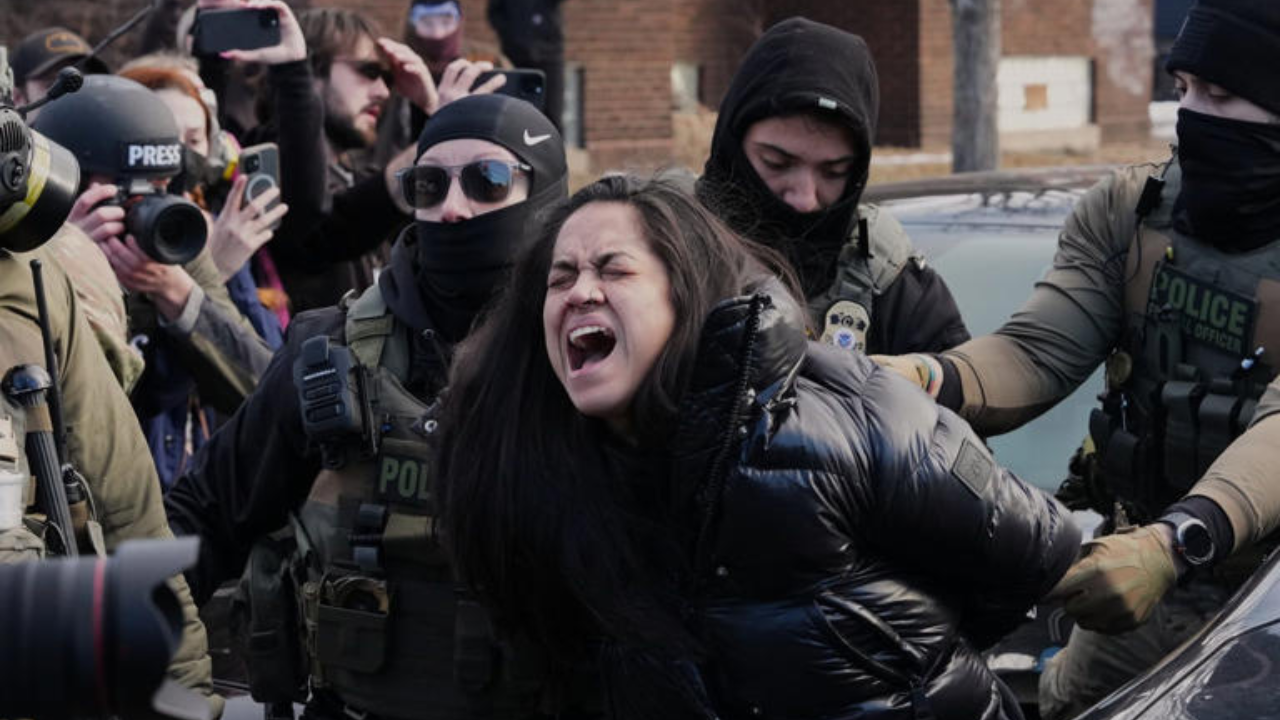
ICE officers forcibly removed a disabled woman from her car in Minneapolis days after an immigration agent fatally shot U.S. citizen Renee Good, intensifying scrutiny of federal enforcement tactics.
Federal immigration enforcement tactics are facing renewed scrutiny after ICE officers forcibly removed a disabled woman from her vehicle in Minneapolis, an incident that occurred less than a week after a U.S. citizen, Renee Nicole Good, was fatally shot by an immigration agent during a protest-related encounter. The two incidents have intensified public debate over the use of force, civil liberties, and accountability as immigration operations expand in American cities.
What Happened
Video circulating online shows ICE agents smashing the windows of a woman’s car, cutting her seatbelt with a knife, and dragging her from the vehicle as she screamed that she was disabled and attempting to reach a doctor’s appointment.
“I’m disabled, I’m trying to go to the doctor up there, that’s why I didn’t move,” the woman can be heard shouting as officers pulled her from the car.
According to accounts from the scene, the woman had been driving near an unfolding protest in Minneapolis and approached officers to ask if she could pass through to attend her appointment. Instead, agents surrounded the vehicle, broke its windows, forcibly removed her, and placed her under arrest.
Nearby protesters were also detained, with some appearing to be pushed to the ground as officers moved to disperse the demonstration.
Context: Rising Tensions in Minnesota
The arrest occurred amid heightened tensions following the killing of Renee Nicole Good, a 37-year-old U.S. citizen who was shot and killed by an immigration agent roughly a week earlier.
Good was inside her vehicle during an ICE operation when she allegedly used her 4×4 to block agents as protesters gathered nearby. Video recorded shortly before the shooting shows officers surrounding her car and shouting for her to exit.
As Good appeared to turn away and comply, an officer fired three shots, striking her in the head. Her vehicle then crashed into a telephone pole.
The agent who fired the shots has been identified as Jonathan Ross, a law enforcement officer with approximately ten years of experience.
Official Response
Homeland Security Secretary Kristi Noem publicly defended the agent involved in Good’s killing, stating that he “followed his training” and emphasizing that an investigation is ongoing.
Noem did not directly address the subsequent Minneapolis arrest of the disabled woman but has previously defended ICE operations as necessary for enforcing federal immigration law.
Family Reaction and Public Outcry
Good’s mother, Donna Ganger, told the Minnesota Star Tribune that her daughter lived in the Twin Cities with her partner and was not part of any violent protest.
“That’s so stupid,” Ganger said after learning details of the shooting. “She was probably terrified.”
Ganger described her daughter as compassionate and deeply caring.
“Renee was one of the kindest people I’ve ever known,” she said. “She’s taken care of people all her life. She was loving, forgiving and affectionate. She was an amazing human being.”
Unusual Criticism From Trump Allies
The aggressive ICE tactics have drawn criticism even from figures typically supportive of former President Donald Trump’s immigration agenda.
Far-right podcaster Joe Rogan condemned the actions on his show, questioning the direction of federal enforcement.
“Are we really going to be the Gestapo?” Rogan said. “‘Where’s your papers?’ Is that what we’ve come to?”
Such criticism highlights a rare fracture among Trump-aligned voices as images of forceful arrests spread online.
Analysis: Enforcement, Optics, and Accountability
The back-to-back incidents have amplified concerns over proportionality and restraint in immigration enforcement. While federal authorities maintain that agents are operating within the law, the visual impact of smashing car windows, detaining disabled civilians, and killing a U.S. citizen has fueled accusations of overreach.
Legal experts note that even lawful enforcement actions can undermine public trust when they appear indiscriminate or excessively forceful, particularly in protest settings involving U.S. citizens.
The events in Minneapolis are likely to intensify congressional, legal, and public scrutiny of ICE operations nationwide.
Conclusion
As investigations continue into the killing of Renee Good and the arrest of a disabled woman days later, Minneapolis has become a flashpoint in the broader national debate over immigration enforcement and civil liberties. Whether federal agencies adjust their tactics or face legal consequences may shape the future of ICE operations in American cities.