 By Trendsetter Tribune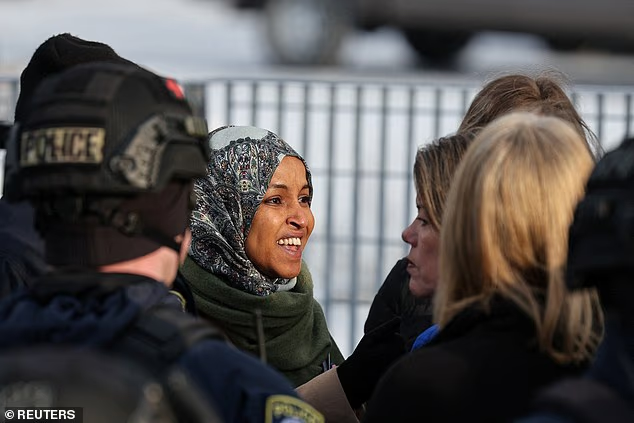
A confrontation between Democratic lawmakers and federal immigration officials in Minnesota has intensified political tensions following the fatal shooting of a woman by an ICE agent earlier this week. Rep. Ilhan Omar and two other members of Congress say they were unlawfully blocked from inspecting an ICE detention facility, raising questions about transparency, federal authority, and oversight at a moment of nationwide unrest over immigration enforcement.
The incident underscores a growing standoff between Democrats and the Trump administration as protests erupt over ICE tactics and the limits of congressional oversight are increasingly tested.
Federal law grants members of Congress the right to enter and inspect immigration detention facilities at any time without prior notice. The provision exists to ensure accountability and prevent abuse within facilities where detainees are held under civil—not criminal—authority.
In recent years, however, ICE has repeatedly attempted to restrict access, particularly during high-profile visits by Democratic lawmakers. The agency has accused Democrats of staging visits for political theater, while lawmakers argue ICE is deliberately evading scrutiny.
Tensions escalated sharply this week after an ICE agent fatally shot Renee Nicole Good during an encounter on a residential street in Minneapolis. The shooting sparked immediate protests across the Twin Cities and renewed criticism of ICE’s use of force and operational secrecy.
What Happened at the Whipple Federal Building
On Saturday morning, Reps. Ilhan Omar, Angie Craig, and Kelly Morrison attempted to enter the Whipple Federal Building in St. Paul, which houses an ICE detention facility. The lawmakers arrived around 9:30 a.m. expecting to tour the site.
According to the lawmakers, they had been invited by a former acting ICE director to inspect the facility. However, shortly after entering the building, they were informed that the invitation had been rescinded and that they were no longer permitted to remain inside.
Omar said officials told them they were being denied further access and asked to leave the building entirely.
The lawmakers disputed ICE’s authority to bar them, arguing that their presence was protected by federal law and required no invitation.
Lawmakers Push Back
Standing outside the facility, Omar accused ICE of violating federal law and obstructing congressional oversight.
She said the group was briefly able to observe conditions inside the detention center and estimated that roughly 20 people were being held at the time. Omar also claimed ICE officials told her detainees were not provided hygiene products because they were not held long enough to require them—an explanation she described as deeply troubling.
Rep. Angie Craig framed the incident as a broader breakdown of democratic accountability.
“We’re here because we’re members of Congress,” Craig said. “We have every right and responsibility, if we’re doing our jobs, to be here and see what the conditions are in that detention center.”
Craig also called on Republicans to break ranks with the Trump administration, saying the situation had gone “beyond the pale.”
Rep. Kelly Morrison questioned the legal justification ICE provided for denying entry, saying officials referenced funding tied to the “One Big Beautiful Bill Act,” an explanation she called incoherent and legally unsound.
“With the recent reaffirmation of the court case in December,” Morrison said, “they’re breaking the law.”
ICE and the Trump Administration’s Position
ICE has not publicly provided a detailed explanation for denying access in this specific incident. More broadly, the agency has argued that unannounced visits disrupt operations and compromise safety, particularly during periods of heightened protest.
The Trump administration has increasingly centralized control over sensitive investigations involving federal agents. Following the fatal shooting of Renee Good, the administration said only the FBI would handle the investigation, rejecting calls for state or joint oversight.
That decision prompted Minnesota officials to announce their own independent probe, setting up a jurisdictional clash between federal and state authorities.
Analysis: Oversight vs. Executive Control
The standoff highlights a core constitutional tension: Congress’s authority to oversee executive agencies versus the administration’s effort to shield law enforcement operations from scrutiny.
Legally, ICE’s position appears vulnerable. Federal statute explicitly allows members of Congress to enter immigration detention facilities without prior notice. Courts have previously rejected attempts by ICE to impose additional restrictions on congressional access.
Politically, however, the administration appears willing to test those limits, betting that public focus on protests and security concerns will blunt backlash.
For Democrats, the confrontation serves both an oversight function and a political one. By forcing the issue into public view, lawmakers are drawing attention to detention conditions, ICE accountability, and the broader implications of the shooting that triggered protests nationwide.
For Republicans, particularly those representing Minnesota or swing districts, the incident presents a dilemma: defend ICE and risk appearing dismissive of transparency concerns, or side with Democrats and anger the party’s base.
Broader Implications
The denial of access could set a precedent if left unchallenged. If ICE successfully limits congressional inspections during periods of controversy, oversight could become conditional on executive approval—a significant shift in the balance of power.
The episode also adds fuel to ongoing protests demanding ICE’s removal from Minnesota altogether. Activists argue the shooting of Renee Good reflects systemic problems within the agency, while supporters of ICE say agents are being unfairly targeted amid politically charged unrest.
As investigations into the shooting proceed on both federal and state tracks, pressure is likely to intensify on the administration to explain not only the use of force, but also why elected officials were prevented from exercising their legal oversight role.
Conclusion
Saturday’s confrontation outside the Whipple Federal Building was more than a procedural dispute—it was a flashpoint in a broader struggle over immigration enforcement, accountability, and executive power.
Whether ICE ultimately faces legal consequences for denying congressional access remains to be seen. But the clash has already deepened mistrust between federal agencies and Democratic lawmakers, ensuring that Minnesota remains at the center of the national debate over ICE, transparency, and the rule of law.