 By Trendsetter Tribune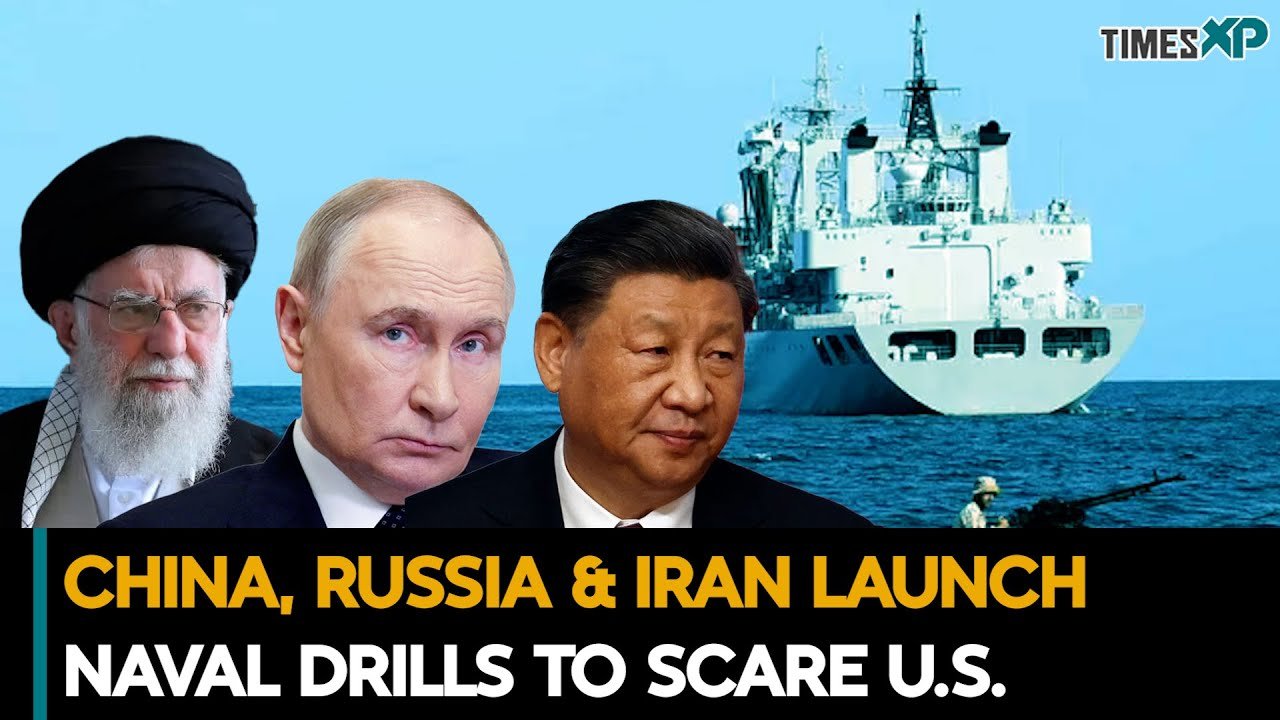
In a dramatic escalation of regional tensions, the navies of Iran, Russia, and China launched the “Maritime Security Belt 2026” joint exercises in the Strait of Hormuz today, Tuesday, February 17, 2026. The maneuvers coincide with the wrap-up of high-stakes nuclear negotiations in Geneva and serve as a direct counter-signal to the massive U.S. military buildup in the Persian Gulf.
For the first time in recent history, Iran temporarily closed the Strait of Hormuz to maritime traffic for several hours to conduct live-fire missile tests.
A High-Stakes Show of Force
The trilateral drills are positioned specifically to challenge the presence of the USS Abraham Lincoln and USS Gerald R. Ford carrier strike groups currently operating in the region.
- “Smart Control” of the Strait: Led by the Islamic Revolutionary Guard Corps (IRGC), the exercise involved the deployment of advanced cruise missiles and AI-guided drones. IRGC Commander Rear Admiral Alireza Tangsiri warned that the decision to permanently close the waterway rests with “senior leadership,” but emphasized his forces are ready.
- Russia’s “Multipolar” Vision: Nikolai Patrushev, a top aide to President Putin, stated the drills are part of a broader effort to build a “multipolar world order on the oceans” and reduce Western naval hegemony.
- Chinese Involvement: Beijing’s participation underscores its growing strategic reliance on Iran and its willingness to project power alongside Moscow and Tehran in critical energy chokepoints.
Geopolitical Timing: Geneva and Beyond
The timing of the drills is seen by many as a “negotiation by other means” as the Trump administration and Iranian diplomats finalize principles for a potential new nuclear framework.
| Event | Impact on Negotiations |
| Geneva Talks | Iranian FM Abbas Araghchi reported “good progress” and a “new window” for a deal today. |
| Strait Closure | Viewed as a “slap” (per Ayatollah Khamenei) to remind the U.S. of Iran’s ability to disrupt 20% of global oil flow. |
| U.S. Buildup | The 50+ fighter jets and two carrier groups provide the “Maximum Pressure” leverage sought by Washington. |
Key Military Assets in the Region (Feb 2026)
| Alliance | Primary Assets | Purpose |
| Iran-Russia-China | Guided-missile destroyers, IRGC fast-attack boats, coastal missile batteries, AI drones. | Demonstrating “sovereign control” and protection of BRICS trade routes. |
| United States | USS Abraham Lincoln, USS Gerald R. Ford, 50+ stealth fighters (F-35, F-22), A-10 “Warthogs.” | Deterrence and “Alternative Contingencies” if nuclear diplomacy fails. |
The “Will for Peace” Precedent
Patrushev also noted that today’s maneuvers follow the “Will for Peace 2026” BRICS naval exercise held in January off the coast of South Africa, signaling a more coordinated and permanent “strategic maritime dimension” for the BRICS bloc (including the UAE and South Africa).