 By Trendsetter Tribune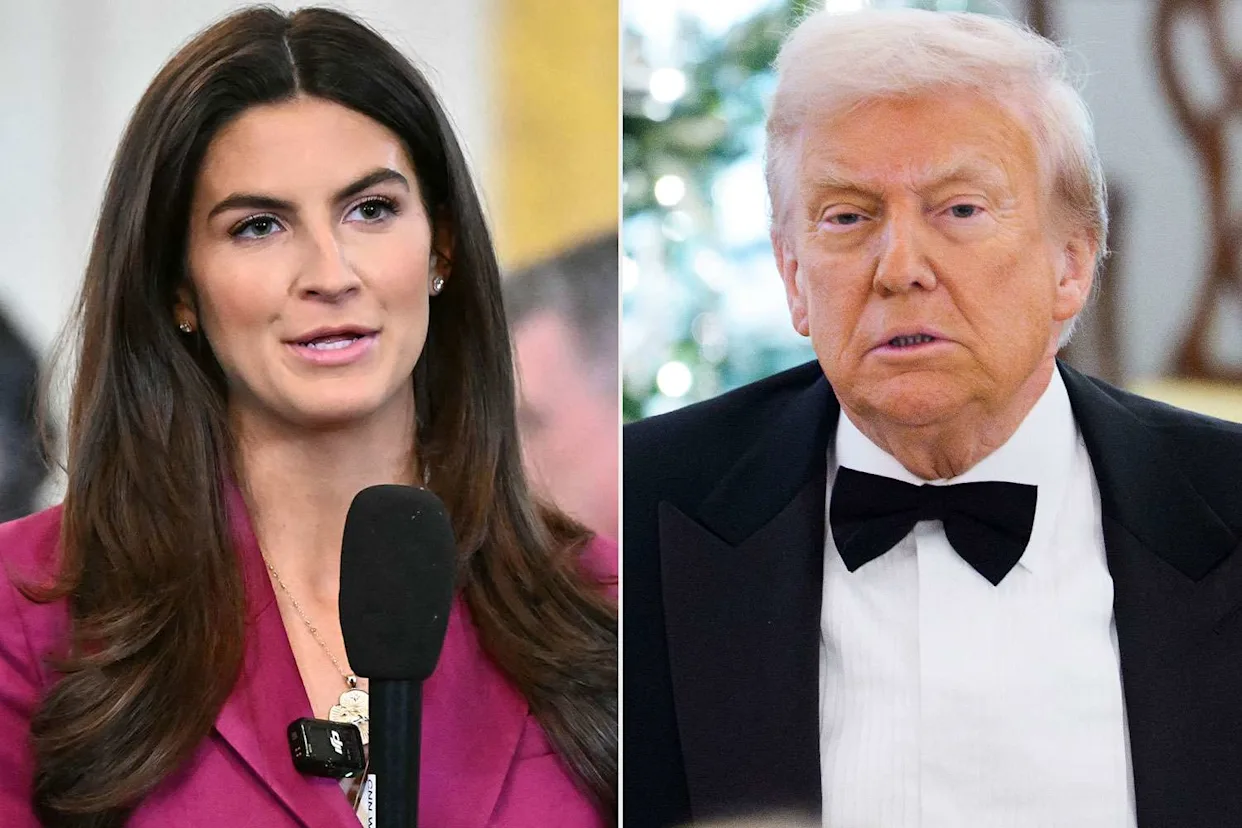
CNN anchor and senior White House correspondent Kaitlan Collins publicly corrected President Donald Trump after he revived false claims about winning Minnesota — remarks he made during a tense White House exchange over the federal investigation into the fatal shooting of Renee Good by an ICE agent.
The moment underscores how Trump continues to inject disproven election narratives into unrelated crises, even as families and state officials seek accountability in a high-profile law-enforcement case.
The controversy stems from the killing of Renee Good, who was fatally shot by an ICE agent earlier this week. Minnesota officials had been preparing for a joint federal-state investigation, a standard procedure in such cases.
However, plans were abruptly derailed after state authorities accused the FBI of blocking them from participating in interviews or accessing new evidence — raising concerns about transparency and oversight.
Against this backdrop, Trump held a Friday afternoon photo op with oil executives at the White House.
During the event, Collins questioned Trump about the unusual decision to exclude state and local law enforcement from the investigation.
Trump responded by launching into a broad attack on Minnesota officials, calling them “crooked” and insulting the state’s leadership. He then escalated the exchange by repeating false claims about the 2020 and 2016 elections.
Trump asserted that he had won Minnesota “all three times,” despite the state voting Democratic in every presidential election since 1972.
On Friday night’s edition of CNN’s The Source, Collins addressed Trump’s remarks directly.
She noted plainly that Trump did not win Minnesota in any of the three presidential elections in which he ran — correcting the record immediately after airing the exchange.
Collins emphasized that, regardless of Trump’s claims, Minnesota’s election results are well documented and uncontested.
She also confirmed that she would be speaking with Minnesota’s top law-enforcement official about the accusations Trump leveled against the state and the status of the investigation.
During the broadcast, Collins highlighted new video footage showing Becca Good — Renee Good’s wife — outside the vehicle prior to the fatal shooting, filming and confronting the ICE agent involved.
Later, Collins read from a statement Becca Good shared with Minnesota Public Radio and CNN, emphasizing the family’s plea for compassion rather than division.
In part, the statement read:
“We thank you for the privacy you are granting our family as we grieve. We thank you for ensuring that Renee’s legacy is one of kindness and love. We honor her memory by living her values: rejecting hate and choosing compassion, turning away from fear and pursuing peace, refusing division and knowing we must come together to build a world where we all come home safe to the people we love.”
Trump’s comments fit a familiar pattern in which he revives election falsehoods when challenged on accountability or institutional scrutiny.
By tying the ICE shooting investigation to claims of widespread corruption and alleged voter fraud, Trump reframed a law-enforcement controversy into a political grievance — a tactic that critics say distracts from the underlying facts of the case.
Collins’ on-air correction reflects a growing willingness among journalists to immediately rebut false claims rather than allow them to linger unchallenged.
- For the Investigation: Tensions between federal and state authorities may deepen, potentially complicating public trust in the outcome.
- For Political Discourse: Trump’s repeated election claims continue to test media norms and fact-checking standards.
- For the Family: The public spotlight intensifies even as Renee Good’s family calls for dignity, compassion, and unity.
As Minnesota officials push for transparency in the investigation into Renee Good’s death, President Trump’s decision to revive long-debunked election claims has added political volatility to an already sensitive case.
Kaitlan Collins’ response — calmly, directly, and publicly correcting the record — highlights the ongoing struggle between factual accountability and political rhetoric at the highest levels of government.
Follow our coverage for clear reporting, verified facts, and accountability journalism on law enforcement, presidential power, and the people affected when politics collides with tragedy.