 By Trendsetter Tribune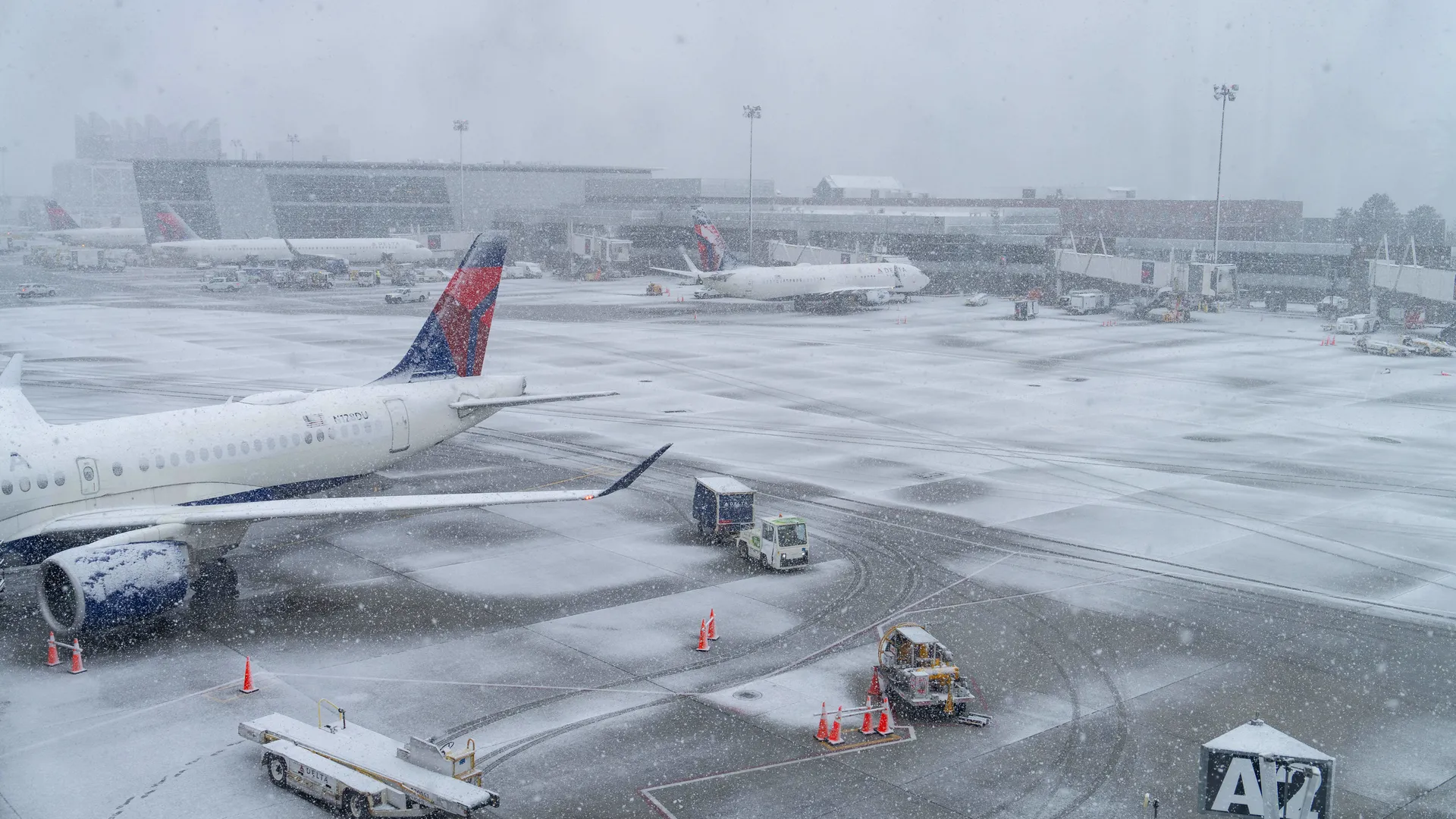
A sprawling winter storm stretching from New Mexico to Maine is set to make this weekend one of the most disruptive weather events in recent U.S. history, placing more than 180 million people under some form of weather alert and slamming air travel nationwide.
By Sunday, the storm had already triggered over 9,000 flight cancellations, according to FlightAware — putting it on track to become one of the worst weather-related aviation shutdowns ever. American Airlines alone canceled 37% of its flights, while about 85% of flights at New York’s LaGuardia Airport were grounded.
Airports in Dallas–Fort Worth, Charlotte, and Nashville are among the hardest hit, with Dallas leading the nation in cancellations. Nearly 3,300 flights were canceled Saturday and more than 5,800 on Sunday, with numbers still climbing.
Federal Closures and States of Emergency
Ahead of the storm, the Office of Personnel Management announced that all federal offices in the Washington, D.C. area will be closed Monday, placing nearly 279,000 federal employees on maximum telework or weather and safety leave.
At least 18 states and Washington, D.C. have declared states of emergency, including Texas, Tennessee, New York, Pennsylvania, and Virginia, as officials brace for ice, snow, and power outages.
Ice Threat Looms Over the South
While snow is expected in parts of the Midwest and Northeast, the biggest danger lies in the South, where up to an inch of ice could coat roads, power lines, and trees.
Cities at high risk include Dallas, Memphis, Nashville, Charlotte, Raleigh, Atlanta’s northern suburbs, and Washington, D.C. Forecasters warn that ice accumulation could paralyze travel for days and trigger widespread power outages, leaving residents without heat during dangerously cold temperatures.
FEMA Mobilizes Ahead of Impact
The Federal Emergency Management Agency has activated its National Response Coordination Center and staged emergency supplies across the region. In Louisiana alone, FEMA has positioned 250,000 meals, 400,000 liters of water, and dozens of generators, with 28 Urban Search and Rescue teams on standby.
Extreme Cold Adds to the Danger
Beyond the storm itself, extreme cold is gripping nearly half the country. Wind chills plunged to minus 40 degrees in Minneapolis and minus 30 in Chicago, where frostbite can develop in as little as 10 minutes.
Southern cities such as Dallas, Little Rock, and Memphis will remain bitterly cold even after the storm passes — a dangerous combination if power outages linger.
Bottom Line
With ice, snow, extreme cold, and massive travel disruptions converging at once, officials are urging people to avoid travel, stay off roads, and prepare for possible power outages. The effects of this storm are likely to be felt well into next week.