 By Trendsetter Tribune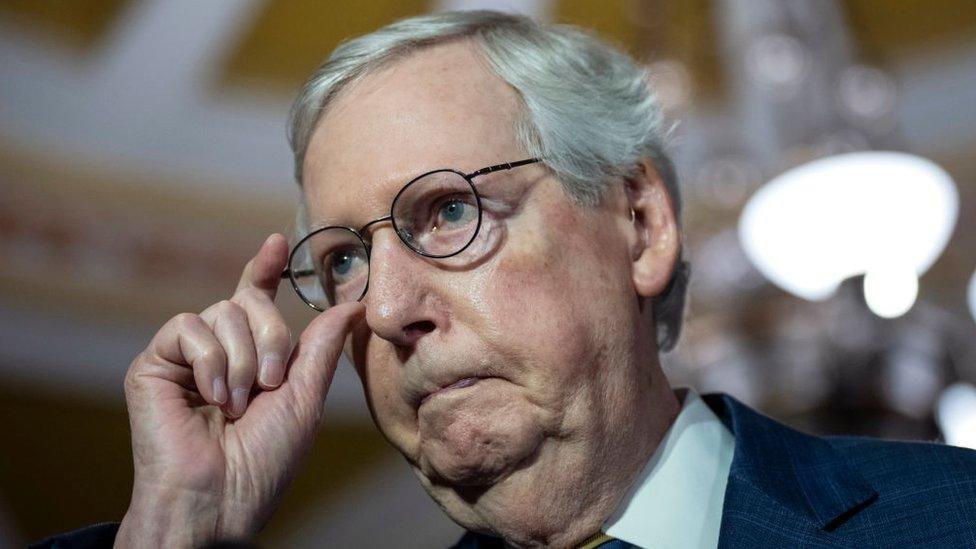
Former Senate Republican Leader Mitch McConnell cautioned that President Trump’s remarks about potentially seizing Greenland could undermine NATO trust and harm U.S. strategic interests.
Public discussion by U.S. leaders about using force to acquire foreign territory carries significant diplomatic consequences. Former Senate Republican Leader Mitch McConnell’s rare and forceful remarks highlight growing concern among senior lawmakers that President Donald Trump’s comments on Greenland could strain America’s alliances and weaken long-standing global partnerships.
McConnell’s Senate Floor Warning
Speaking on the Senate floor Wednesday, McConnell warned that rhetoric suggesting the United States could seize Greenland by force risks irreparable damage to relations with NATO allies. He described such an approach as an “unprecedented act of strategic self-harm.”
“Unless and until the president can demonstrate otherwise, then the proposition at hand today is very straightforward: incinerating the hard-won trust of loyal allies in exchange for no meaningful change in U.S. access to the Arctic,” McConnell said.
The Kentucky Republican emphasized that NATO was established after World War II to contain Soviet aggression and argued that undermining the alliance would weaken U.S. global influence rather than strengthen it.
Concerns Over Alliance Trust
McConnell cautioned that carrying out what he described as “ill-advised threats” would severely damage the credibility of the United States among its allies.
“Following through on this provocation would be more disastrous for the president’s legacy than withdrawing from Afghanistan was for his predecessor,” he said.
He also pointed to public opinion data indicating that only 17 percent of Americans support efforts to take control of Greenland, while 68 percent view the NATO alliance favorably.
Trump’s Comments on Greenland
McConnell’s remarks followed comments by President Trump suggesting that military force could be used if Denmark refuses to sell Greenland, a self-governing territory within the Kingdom of Denmark.
“I would like to make a deal the easy way, but if we don’t do it the easy way, we’re going to do it the hard way,” Trump told reporters at the White House.
Trump argued that U.S. action is necessary to prevent Russia or China from gaining influence over the mineral-rich Arctic territory.
“We are going to do something in Greenland, whether they like it or not,” Trump said, adding that the United States would not accept Russia or China as neighbors in the region.
White House Adviser Response
Senior White House adviser Stephen Miller reinforced the administration’s stance in a separate interview, stating that Greenland should belong to the United States and downplaying the likelihood of international resistance.
“The United States should have Greenland as part of the United States,” Miller said, adding that no country would mount a military challenge to such an effort.
“Nobody’s going to fight the United States militarily over the future of Greenland,” he said.
A Rare Republican Rebuttal
McConnell’s remarks stand out as one of the most direct critiques from a senior Republican figure regarding Trump’s foreign policy rhetoric during his current term. While McConnell did not directly challenge the administration’s strategic concerns about the Arctic, he emphasized that preserving alliances remains central to U.S. national security.
As debate continues, the comments underscore a broader tension within U.S. politics between unilateral action and alliance-based diplomacy in an increasingly competitive global landscape.