 By Trendsetter Tribune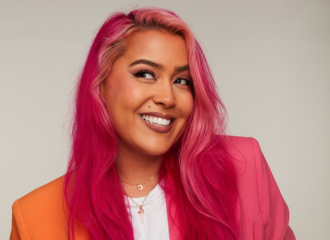
Megan Jayne Crabbe reflects on her recovery from anorexia, her rejection of diet culture, and how redefining her relationship with her body reshaped her identity and public voice.
Public conversations about body image and eating disorders often focus narrowly on physical transformation. Megan Jayne Crabbe, a writer and body-positivity advocate, says her experience challenges that framing, arguing that recovery was ultimately about reclaiming her voice, autonomy, and sense of self rather than changing how her body looked.
Background and Early Influences
Crabbe, now 31, says she became aware of dieting culture before the age of 10. As she entered puberty, she recalls becoming increasingly preoccupied with magazine content focused on body transformation.
According to her account, restricting food became a way to manage anxiety related to school and growing up. By age 14, she was diagnosed with anorexia nervosa and body dysmorphia.
“I was convinced I was fat and disgusting and needed to lose more weight,” Crabbe said, describing her mindset at the time.
Medical Intervention and Hospitalization
Crabbe says she concealed the severity of her condition for years until physical symptoms became impossible to ignore. She describes experiencing extreme fatigue, low blood pressure, dizziness, and hearing loss.
Medical professionals later hospitalized her, warning her parents that her body could fail. During this period, she received treatment that included tube feeding.
“At that time, when your eating disorder is telling you that control is everything, having that control removed is deeply distressing,” she said.
A Turning Point in Recovery
Crabbe identifies a key emotional moment during her treatment: seeing her father, whom she describes as typically reserved, break down in tears.
She says this prompted her to commit fully to recovery, adopting an “all-or-nothing” mindset similar to the one that had previously driven her illness.
She describes covering mirrors in her home and eating meals alone while rebuilding her relationship with food.
Post-Treatment Challenges
By age 17, Crabbe was declared recovered by clinicians. However, she later said that the psychological impact of diet culture persisted.
“I was sent back into the world in a larger body, and I didn’t know how to exist in it,” she said, explaining that she soon returned to restrictive dieting.
At 21, after reaching what she describes as a long-sought “goal weight” without feeling any sense of satisfaction, she began to question the cycle.
“That’s when something clicked,” she said. “I realized this wasn’t working.”
Discovery of the Body Positivity Movement
Crabbe says she then encountered online communities focused on body acceptance rather than weight loss. She describes seeing people of varied body types rejecting dieting, wearing what they wanted, and living without constant self-criticism.
Over time, she became one of the most visible voices in that space, appearing in popular media, sharing personal reflections online, and authoring books on self-empowerment.
She credits her progress to actively reshaping her environment, including setting boundaries with friends who focused on weight loss, disengaging from content that triggered shame, and reading feminist and health-equity literature.
Analysis: Redefining the Problem
Crabbe argues that her struggle was not rooted in personal failure but in broader cultural conditioning.
“I started to understand that the problem wasn’t me,” she said. “It was how we’re taught to see ourselves.”
She describes recovery as reconnecting with bodily cues such as hunger and fullness, and redefining movement as something done for enjoyment rather than punishment.
Conclusion
Today, Crabbe frames her body as a source of capability rather than conflict.
“I’m strong. I’m fit. I can do what I want,” she said, adding that food is now “a part of life, not an obsession.”
Her story reflects a broader shift in how recovery, health, and self-worth are being discussed — moving away from size-based judgments toward autonomy, sustainability, and well-being.