 By Trendsetter Tribune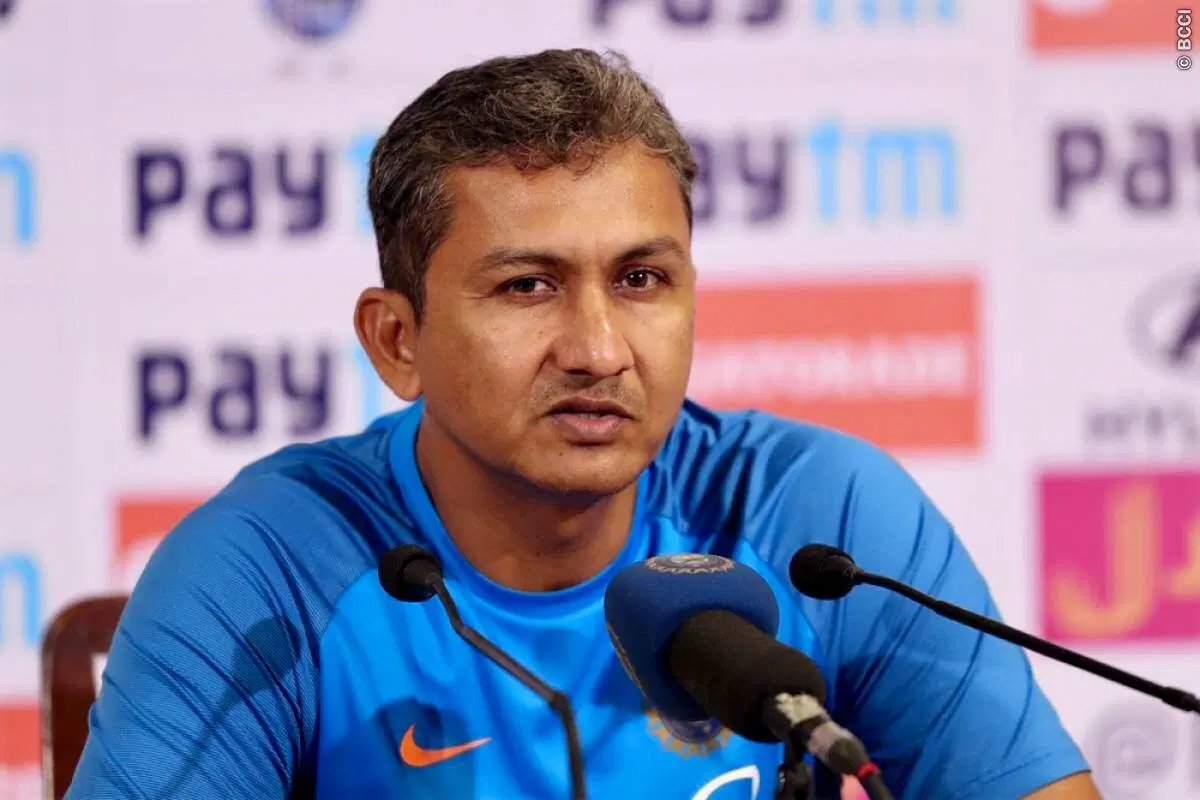
Former India cricketer Sanjay Bangar is facing backlash after saying he prefers using the “national language” instead of Tamil during commentary, reigniting India’s long-running language and identity debate.
Former India cricketer Sanjay Bangar has found himself at the center of a cultural firestorm after a single sentence uttered during live commentary ignited a fierce backlash across Indian social media.
The controversy erupted during the 1st ODI between India and New Zealand in Vadodara on Sunday, January 11, when Bangar responded to a discussion about on-field communication involving KL Rahul and Washington Sundar. What followed quickly escalated from a routine cricketing observation into a broader, emotionally charged debate over language, identity, and regional respect in Indian sport.
The Moment That Sparked the Backlash
During the first innings, former India fast bowler Varun Aaron, who was on commentary duty, pointed out that KL Rahul had been communicating with Washington Sundar in Tamil, noting that the all-rounder sometimes has difficulty understanding Hindi.
“I was highlighting how KL Rahul might have to speak to Washington Sundar in Tamil,” Aaron said on air. “KL had done just that. He spoke to him in Tamil and said that he was bowling like a medium pacer… What do you think, Sanjay? Should KL talk to Washington Sundar in Tamil a bit more?”
Aaron’s comment was widely seen as a light-hearted, practical observation about effective communication between teammates.
Bangar’s reply, however, struck a very different chord.
“I believe in the national language a bit more,” Bangar said.
Within minutes, the clip began circulating online—and so did the outrage.
Why the Comment Hit a Nerve
India has no officially designated national language, a fact that many critics were quick to point out. While Hindi is widely spoken and recognized as an official language of the Union, it is not the country’s sole linguistic identity. India officially recognizes 22 scheduled languages, with Tamil being one of the oldest living classical languages in the world.
For many viewers, Bangar’s remark appeared to dismiss not just Tamil, but the broader linguistic diversity that defines Indian society—and Indian cricket.
“What national language?” one user posted.
“Hindi isn’t everyone’s mother tongue,” another wrote.
“Cricket teams don’t win with language politics,” read a viral comment.
The backlash was especially strong from fans in southern India, where resistance to Hindi imposition has deep historical and political roots.
Cricket Meets Culture
Indian cricket has long been celebrated as a unifying force in a deeply diverse country. Dressing rooms routinely feature players speaking multiple languages—Hindi, Tamil, Telugu, Kannada, Marathi, Punjabi, English—often switching seamlessly depending on who they are addressing.
Former players and coaches have frequently emphasized that communication in the language a teammate understands best is a strength, not a weakness.
That’s why many viewers felt Bangar’s comment cut against the grain of modern Indian cricket culture, where inclusivity and adaptability are increasingly valued.
“This isn’t about politics,” one fan wrote. “It’s about respect and teamwork.”
Social Media Erupts
The reaction online was swift and unforgiving. Screenshots of Bangar’s quote flooded X, Instagram, and Facebook, accompanied by accusations of linguistic elitism and cultural insensitivity.
Some users demanded an apology. Others called on broadcasters to address the remark publicly. A few went further, arguing that such views should disqualify former players from national commentary roles altogether.
While Bangar has not yet issued a public response or clarification, the silence has only fueled further speculation and criticism.
Defenders Push Back
Not everyone agreed that Bangar’s comment was offensive. Some supporters argued that he may have been referring broadly to Hindi as a common link language, rather than deliberately dismissing Tamil or any other regional tongue.
Others accused critics of overreacting and politicizing a throwaway remark made during live commentary.
“He didn’t insult Tamil,” one defender wrote. “People are reading too much into it.”
But critics countered that intent is secondary to impact—especially when speaking on a national broadcast watched by millions.
A Larger Debate Rekindled
The Bangar controversy taps into a much larger and older debate in India: Should Hindi be treated as a default national language, or should linguistic plurality be treated as equal footing?
That debate has resurfaced repeatedly in recent years, often triggered by remarks from public figures that appear to elevate one language over others. Sports, usually seen as neutral ground, has increasingly become a stage where these cultural tensions play out.
“Cricket doesn’t exist in a vacuum,” said a media analyst. “It reflects the country’s social realities. When commentators speak, people listen—and react.”
What This Means for Indian Cricket Broadcasting
Broadcasters now face renewed pressure to ensure that commentary teams are culturally sensitive, especially in a country as linguistically complex as India.
Many fans argue that the episode should prompt introspection—not cancellation.
“This is an opportunity to educate, not just attack,” one viewer commented. “Language diversity is one of India’s strengths. Cricket should reflect that.”
Sanjay Bangar and Varun Aaron fighting over language in commentary 😭 pic.twitter.com/Yafw2DtH1D
— ` (@justKohlitweetz) January 11, 2026
Conclusion
What began as a simple discussion about on-field communication quickly spiraled into a national conversation about language, respect, and representation. Sanjay Bangar’s “national language” remark may have lasted only a few seconds on air—but its impact has lingered far longer.
In an era where cricket is more than just a sport, words matter. And for many fans, the message they heard was clear: effective teamwork comes from understanding—not enforcing uniformity.
Whether Bangar clarifies his statement or not, the episode has already left its mark, reminding India once again that language remains one of the country’s most powerful—and sensitive—fault lines.