 By Trendsetter Tribune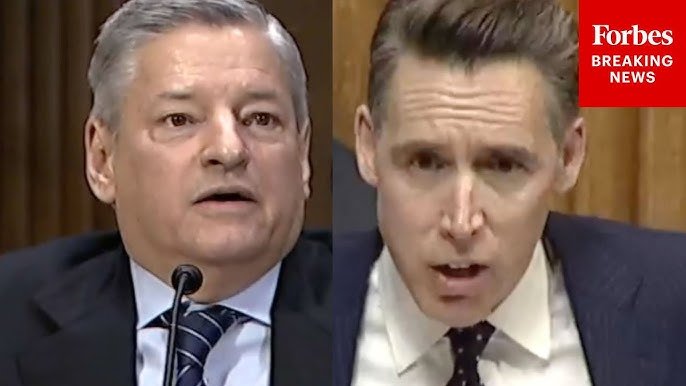
The high-stakes battle over the future of Hollywood moved to Washington on Tuesday, February 3, 2026, as Netflix co-CEO Ted Sarandos faced a grueling two-hour Senate subcommittee hearing. While ostensibly about the antitrust implications of Netflix’s proposed $83 billion acquisition of Warner Bros. Discovery, the session frequently devolved into a sharp ideological interrogation led by Republican lawmakers.+2
The hearing highlighted a growing political rift: while Democrats expressed concern over job losses and market consolidation, Republicans focused on a “coordinated agenda” they claim the streamer is pushing on American families.
The “Transgender Ideology” Clashed
Senator Josh Hawley (R-MO) led the charge, accusing Netflix of using its platform to “socially engineer” children. Citing a report from the Oversight Project (formerly of the Heritage Foundation), Hawley alleged that roughly 50% of Netflix’s children’s programming promotes “transgender ideology.”+1
- Sarandos’s Defense: Sarandos repeatedly called the figure “inaccurate,” asserting that Netflix has “no political agenda of any kind.” He emphasized that the platform offers “millions of hours” of content to meet a wide variety of global tastes.+1
- The Parental Control Pivot: When Hawley claimed he couldn’t trust the platform for his own children, Sarandos pointed to Netflix’s “state-of-the-art” parental tools, suggesting parents simply block any titles they find offensive.
- Employee Activism: Sen. Eric Schmitt (R-MO) added to the pressure, highlighting that 99% of Netflix employee donations went to Democrats in 2024, using it to argue that the company is “overwhelmingly woke.”
The Billionaire Bidding War: Netflix vs. Skydance
The hearing took place against the backdrop of a fierce corporate rivalry. While the Warner Bros. board has accepted Netflix’s $83 billion offer, a rival $108.4 billion hostile bid from Paramount Skydance remains on the table.+1
Skydance CEO David Ellison—son of Oracle billionaire Larry Ellison, a close ally of President Donald Trump—is pitching his bid as a “cleaner” regulatory path.
- The CNN Factor: Netflix’s deal would spin off “Global Networks” (including CNN, TBS, and TNT), whereas Ellison’s bid would acquire the entire company.
- Political Leverage: Some analysts believe the GOP’s focus on Netflix’s “wokeness” is intended to give the Trump administration political cover to block the Netflix deal on antitrust grounds, potentially clearing the way for the Ellison-led takeover.
Antitrust Red Flags
Subcommittee Chair Sen. Mike Lee (R-UT) raised traditional competition concerns, questioning if the merger would create a monopoly that entrenches Netflix’s dominance.
| Concern | Netflix Position |
| Market Power | Sarandos argued the “real” competition is tech giants like YouTube, which currently leads in U.S. TV viewing time. |
| Hollywood Jobs | Sen. Cory Booker (D-NJ) feared massive layoffs. Sarandos countered that Netflix “needs these people” and plans to increase production spend to $26 billion this year. |
| Theatrical Window | Sarandos pledged under oath to maintain a 45-day theatrical window for Warner Bros. films. |
What’s Next?
While the Senate cannot block the deal, the hearing was a clear signal to the Department of Justice (DOJ) and FTC, which are currently reviewing the merger. With President Trump stating he will be “personally involved” in the regulatory process, the fate of the Netflix-Warner Bros. deal may hinge as much on cultural politics as it does on antitrust law.