 By Trendsetter Tribune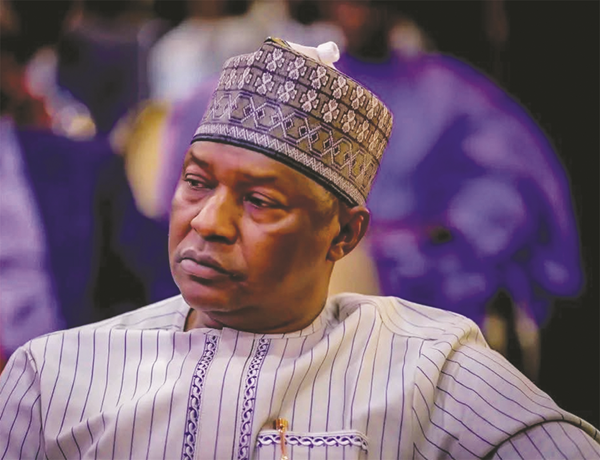
Newly expanded legal scrutiny of former Nigerian Attorney General Abubakar Malami includes weapons found at his property and the controversial illegal rendition of separatist leader Nnamdi Kanu from Kenya, deemed unlawful by a High Court.
Abubakar Malami, Senior Advocate of Nigeria and former Attorney‑General of the Federation (AGF), now finds himself at the center of one of Nigeria’s most expansive legal entanglements in recent years. What began as money‑laundering charges has now grown to include the discovery of weapons at one of his properties and a sweeping interim court forfeiture of 57 assets valued at more than N213 billion.
This case has also rekindled scrutiny of Malami’s past actions, particularly his role in the international rendition of Indigenous People of Biafra (IPOB) leader Nnamdi Kanu, a transfer widely criticized by legal experts and human rights advocates as unlawful and unconstitutional.
Money Laundering Charges and EFCC Prosecution
In late 2025, the Economic and Financial Crimes Commission (EFCC) formally arraigned Malami, his son Abubakar Abdulaziz Malami, and associate Hajia Bashir Asabe on 16 counts of money laundering. Prosecutors allege that the trio concealed and laundered significant sums between 2015 and 2025, using shell companies and complex transactions to acquire luxury properties in Abuja, Kebbi, Kano and Kaduna.
The EFCC claims these alleged activities violated Nigeria’s Money Laundering (Prevention and Prohibition) Act and constituted a prolonged pattern of illicit enrichment during and after Malami’s tenure as the nation’s chief law officer.
Interim Forfeiture of 57 Properties
In a significant legal escalation, a Federal High Court in Abuja granted an interim forfeiture of 57 properties linked to Malami and his family. The assets, valued at about N213.2 billion, include residential estates, hotels, commercial buildings, schools, filling stations, and large tracts of land across multiple states.
Justice Emeka Nwite granted the order after the EFCC argued that the properties were “reasonably suspected” to be proceeds of unlawful activities. The court directed the publication of the forfeiture order in a national newspaper and gave interested parties 14 days to show cause why the assets should not be permanently seized by the Federal Government.
The matter has been adjourned to late January 2026 for a compliance report, a key procedural step before any final forfeiture order can be made.
CRIMINALS, Bandits, Scumbags, Motor pack boys, Vagabonds, Born Troways PRETENDING TO BE LEADERS pic.twitter.com/CC483qCWAP
— Charly Boy Area Fada 1 (@AreaFada1) January 17, 2026
Discovery of Weapons and New Investigation
Investigators also uncovered arms and ammunition at one of Malami’s residences, prompting a new inquiry. The EFCC handed over the weapons to Nigeria’s Department of State Services (DSS), which is now investigating the matter, as arms offenses fall outside the anti‑graft agency’s remit.
While the exact quantity and nature of the weapons remain undisclosed, the discovery has intensified public scrutiny and added another layer of legal exposure for the former justice minister.
Nnamdi Kanu’s Illegal Rendition and Link to Malami
The legal spotlight has also turned back to Nnamdi Kanu, leader of the Indigenous People of Biafra (IPOB). In June 2021, Kanu — a British‑Nigerian citizen — was apprehended in Kenya and transferred to Nigeria to face terrorism and treason charges. However, a High Court in Kenya ruled in June 2025 that his arrest and transfer were unlawful and unconstitutional, describing the operation as an extraordinary rendition — a form of kidnapping — and a violation of his fundamental rights.
Kenyan judges found that Kanu’s detention and deportation were conducted without due process, extradition hearings, or legal authority, contravening both the Kenyan Constitution and international human‑rights protections. The court awarded damages for the violation, underscoring that the operation against him did not meet legal standards.
Though Malami and the Nigerian government publicly framed Kanu’s transfer as lawful cooperation, the Kenyan ruling directly challenges that narrative and frames the incident as an unlawful abduction. Human rights advocates and international lawyers have described the conduct as state‑sponsored kidnapping disguised as extradition, a serious breach of international norms.
Timeline and Trial Status
Malami and his co‑defendants were initially remanded to Kuje Correctional Centre in Abuja following the money‑laundering arraignment but were later granted bail under stringent conditions. The Federal High Court set February 17, 2026 as the date to formally commence the trial on the N8.7 billion charge.
Public debate around the case has been fierce, with civil society groups urging due process, while others argue that Malami should not benefit from procedural leniency given his former position as the nation’s top legal official.
Broader Implications: Accountability, Sovereignty, and the Rule of Law
The Malami case highlights deep tensions within Nigeria’s legal and political landscape, including:
- Accountability vs. impunity: A former chief law officer now defending serious criminal allegations challenges public confidence in governance.
- International law ramifications: The Kenyan court’s finding that Kanu’s rendition was unlawful raises questions about Nigeria’s respect for foreign sovereignty and human‑rights obligations.
- Asset recovery precedent: Courts’ willingness to seize high‑value properties could signal stronger enforcement of anti‑corruption laws, though critics caution against politicization.
Observers note that these proceedings occur amid broader scrutiny of how political power and legal authority intersect in Nigeria, especially when high‑profile figures face prosecution.
Conclusion: Legal Consequences and Continuing Controversy
From money‑laundering charges and weapons discoveries to the revived spotlight on the illegal rendition of Nnamdi Kanu, Abubakar Malami’s legal troubles have grown into a multifaceted investigation with national and international implications. The ongoing trial, asset forfeitures, and international legal judgments underscore significant challenges for Nigeria’s judicial system and its commitment to the rule of law.