 By Trendsetter Tribune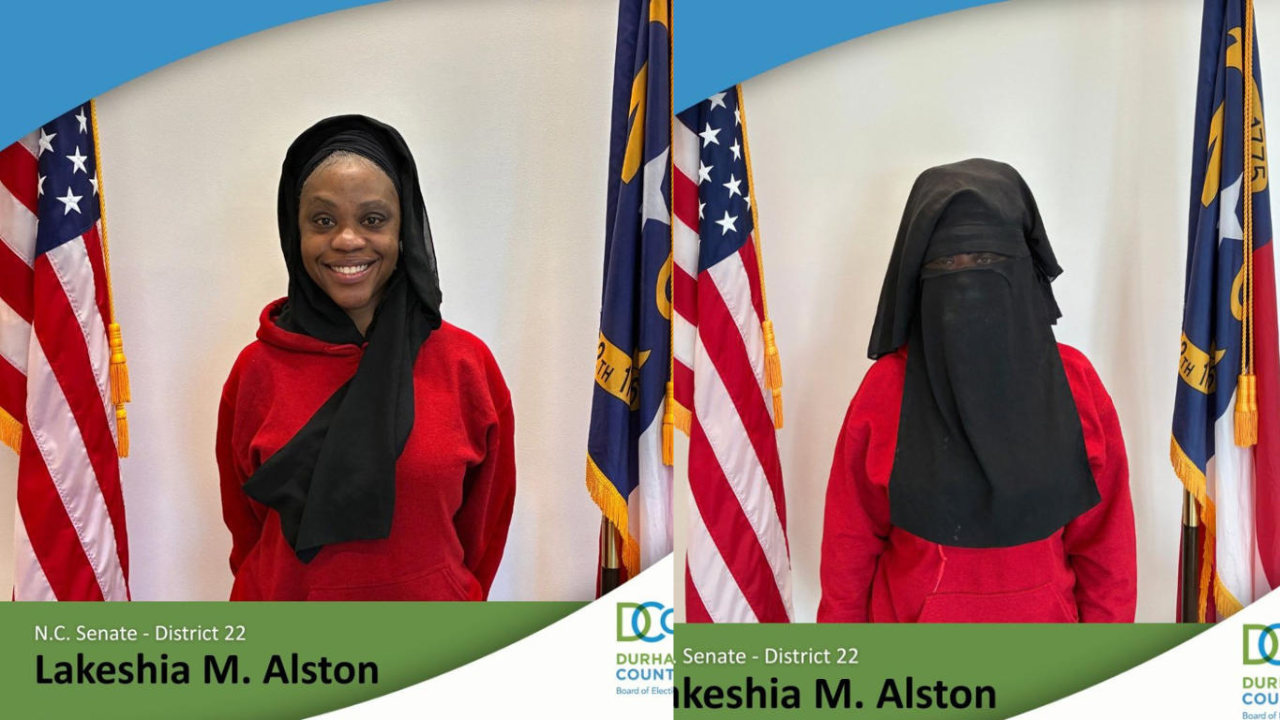
A little-known candidate’s sudden appearance on a Republican primary ballot in North Carolina has ignited accusations of political manipulation, reopening a long-simmering debate over semi-closed primaries and party-switching laws in the state.
LaKeshia M. Alston, a 39-year-old Durham resident and self-described recent Republican convert, is running as the only Republican candidate for North Carolina’s Senate District 22 — despite a long history of Democratic voting and activism in one of the bluest districts in the state.
Background / Context
Senate District 22, centered in Durham County, is a Democratic stronghold where Republicans rarely field competitive candidates. In the 2024 general election, Democratic incumbent Sophia Chitlik won reelection with 86% of the vote, defeating a Libertarian challenger.
As of March 2024, voter registration figures underscore the district’s partisan imbalance:
- Democrats: approximately 124,500
- Unaffiliated voters: about 86,000
- Republicans: fewer than 23,400
Against that backdrop, Alston’s emergence as the GOP’s sole primary candidate — filed just two days before the party registration deadline — immediately raised eyebrows among conservative activists.
Who Is LaKeshia Alston?
Alston drew widespread attention when the Durham County Board of Elections announced her candidacy on December 17. The post included two striking photos: one showing her wearing a niqab, covering her face except for her eyes, and another depicting her in a hijab, with her hair covered.
Little is publicly known about Alston’s policy positions. She has said she “converted” to Republicanism following what she described as a political awakening, previously telling conservative media outlets that her views had changed.
However, public voting records show a more complicated history. While Alston voted in a Republican primary in October 2025, records indicate she voted for Democrats in 2024, reinforcing skepticism among state GOP activists.
Republican Backlash and Allegations
Conservatives across North Carolina have accused Alston of acting as a “placeholder” candidate, designed to prevent a credible Republican challenger from entering the race and to protect Democratic dominance in the district.
“Nothing about this appears to be organic, genuine, or grassroots,” one conservative wrote on Facebook. “It looks like a deliberate attempt to manipulate the primary and undermine the Republican Party from within.”
The suspicion centers on North Carolina’s semi-closed primary system, which allows unaffiliated voters to participate in either party’s primary — a system critics say can be exploited in heavily Democratic areas.
Alston is technically running against two Democrats — Chitlik and former Durham city councilmember DeDreana Freeman — but only one of them will advance from the Democratic primary, while Alston would automatically advance as the GOP nominee.
Legal Requirements and Loopholes
North Carolina law requires candidates to be affiliated with their party for at least 90 days before filing for office — a threshold Alston appears to have met.
Still, critics argue the rule fails to address strategic party-switching in districts where one party overwhelmingly dominates.
The controversy has renewed calls among Republicans to overhaul the state’s primary system altogether.
Calls to Close the Primaries
Republican leaders outside Durham have seized on the situation as evidence that reform is needed.
“I am calling on all NC General Assembly members in the Legislature and Senate to pass an immediate bill to close primaries in NC,” wrote Robert Burns, the Republican mayor of Monroe, on X.
Burns later elaborated on Facebook, arguing that partisan elections are being undermined as Democratic voters increasingly register as unaffiliated to influence Republican contests.
Response From the Candidate
Attempts to reach Alston for comment were unsuccessful. She did not respond to phone calls or emails seeking clarification on her candidacy, policy positions, or party affiliation history.
Analysis: Symbol or Strategy?
Whether Alston is a genuine convert or a tactical spoiler, the episode highlights vulnerabilities in North Carolina’s election system — particularly in districts where one party has overwhelming control.
For Republicans, the fear is not just losing another safely Democratic seat, but normalizing a strategy that could discourage serious challengers and erode party credibility in future cycles.
For Democrats, the controversy illustrates the unintended consequences of electoral rules designed to encourage voter participation but vulnerable to strategic abuse.
Conclusion
As North Carolina heads toward the March primaries, Alston’s candidacy has already accomplished one thing: forcing a public reckoning over party identity, electoral safeguards, and the limits of political opportunism.
Whether the episode leads to legislative reform or fades as an anomaly may depend on how voters — and lawmakers — interpret the line between legal maneuvering and bad faith politics.