 By Trendsetter Tribune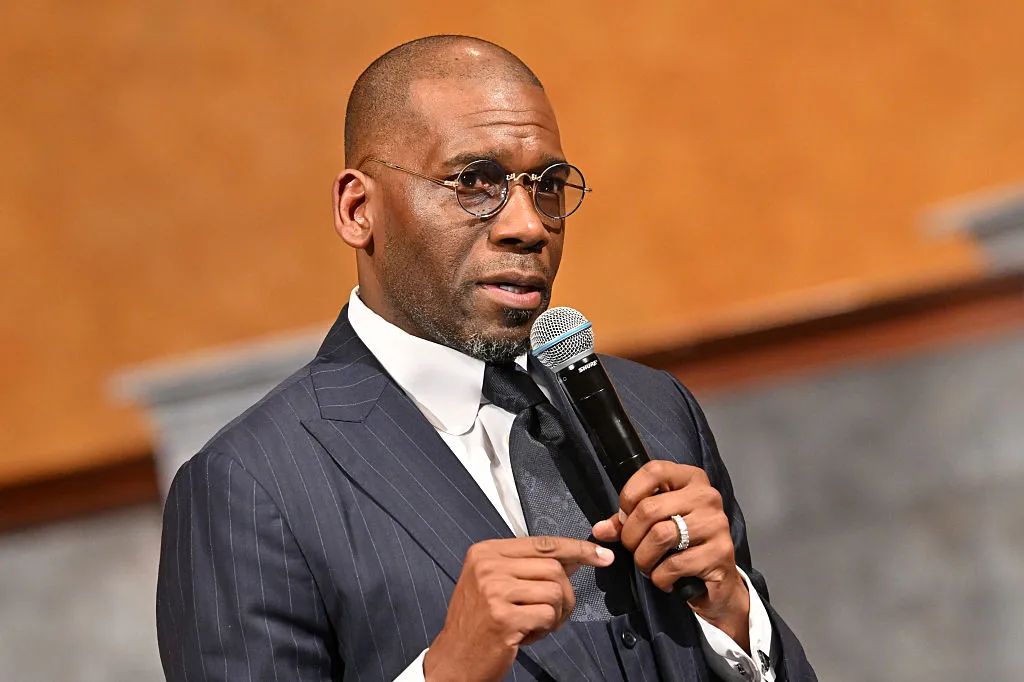
Pastor Jamal Bryant is pushing back after online critics took aim at a gown worn by his wife, Dr. Karri Turner — and he’s making it clear he’s not here for the outrage.
Speaking during New Birth Missionary Baptist Church’s New Year’s Eve service, the Atlanta pastor addressed the viral commentary head-on. He said many people ignored the purpose and success of the event where Turner wore the dress — a major fundraiser benefiting the United Negro College Fund.
“The internet went crazy about a dress my wife had on,” Bryant said. “They didn’t say anything about the $4 million raised for the United Negro College Fund… the largest fundraiser for UNCF and HBCUs in the country.”
“The dress wasn’t see-through”
Bryant rejected claims that Turner’s dress was inappropriate, explaining that critics misunderstood what they were seeing.
“The dress was not see-through. The dress was flesh-colored,” he said — adding that the outrage said more about the critics than about his wife.
He also made it clear that there was no question about whether he approved of the look:
“I bought the dress. And I like it. I don’t care whether you like it or not. She ain’t married to y’all. She married to me! Mind your business!”
Bryant emphasized that Turner wore the gown to a gala fundraiser — not a worship service — and said context matters.
Redirecting attention to bigger issues
After the clip circulated on social media, Bryant shared it on Instagram and noted that the matter was already “handled.” He used the moment to push attention back toward issues he believes deserve more concern — including Black unemployment, health care access, immigrant protections, and equal education opportunities.
He also highlighted the outcomes from New Birth’s New Year’s Eve service:
- More than 100 new members joined the church
- Over 1,000 children are currently engaged in youth programs
Bryant continues to be active in national conversations around economic justice and corporate accountability, including his work connected to the “We Ain’t Buying It” campaign, which addresses corporate rollbacks of diversity, equity, and inclusion efforts.