 By Trendsetter Tribune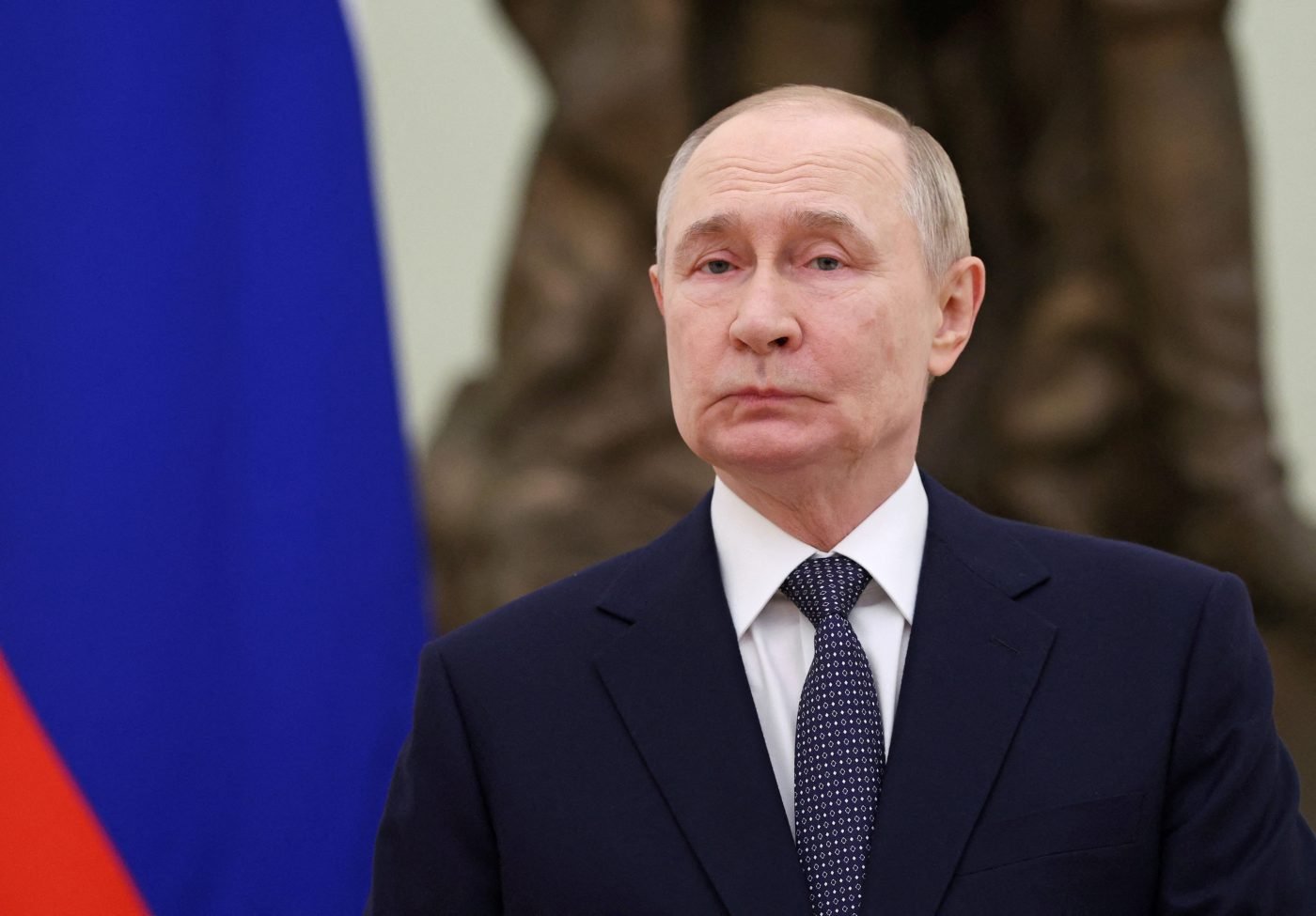
Russian President Vladimir Putin has weighed in on President Donald Trump’s renewed interest in Greenland, framing the idea not as political theater but as part of a long-standing and deliberate American strategy in the Arctic. Putin’s comments position the issue as a serious geopolitical matter, underscoring intensifying global competition for influence, resources, and military advantage in the polar region.
His remarks come as Arctic territory grows increasingly central to great-power rivalry amid climate change, new shipping routes, and expanding military footprints.
Putin Pushes Back on the “Shock Factor”
Putin dismissed the notion that Trump’s comments about Greenland should be viewed as impulsive or unserious.
He argued that while the idea may appear surprising at first glance, it only does so because many observers are unaware of its historical context. According to Putin, U.S. interest in Greenland is neither new nor symbolic, but rooted in long-standing strategic planning.
“The United States has serious plans regarding Greenland,” Putin said, adding that these ambitions extend back more than a century.
A History of American Interest in Greenland
Putin outlined a timeline intended to demonstrate the depth of U.S. involvement and intent:
- 1860s: U.S. administrations explored the possibility of annexing Greenland and Iceland, though Congress ultimately declined to act.
- 1910: A proposed territorial exchange involving the U.S., Germany, and Denmark would have transferred Greenland to American control, but the agreement collapsed.
- World War II: The U.S. established military bases on Greenland, solidifying its strategic presence in the region.
- Post-war period: Washington formally offered to purchase Greenland from Denmark.
Putin presented these moments as evidence that Greenland has long been viewed in Washington as a critical strategic asset rather than a diplomatic curiosity.
The Arctic as a Strategic Battleground
Beyond Greenland itself, Putin framed the issue within the broader context of Arctic competition.
He said the United States is pursuing a systematic strategy to advance its geopolitical, military-political, and economic interests across the Arctic. This includes control of emerging shipping lanes, access to natural resources, and the positioning of military infrastructure as ice melt reshapes the region.
From Moscow’s perspective, Greenland is a linchpin in Arctic dominance due to its location between North America and Europe and its proximity to Russia’s northern frontier.
Reading Between the Lines: Russia’s Concerns
Putin’s remarks were notable not only for their historical framing, but for what they implied about Russia’s own strategic anxieties.
By portraying U.S. ambitions as methodical and long-term, Putin implicitly warned that any renewed American push toward Greenland would be viewed in Moscow as a serious escalation rather than rhetorical posturing.
Russia has dramatically expanded its Arctic military presence over the past decade, reopening Soviet-era bases, deploying advanced weapons systems, and asserting claims over Arctic shipping routes. Putin’s comments suggest the Kremlin sees Greenland as a potential flashpoint in an increasingly crowded and militarized region.
Implications for Denmark and NATO
Although Putin did not directly address Denmark or NATO, his remarks carry implications for both.
Greenland is an autonomous territory within the Kingdom of Denmark, a NATO member. Any shift in Greenland’s status would reverberate across the alliance, potentially altering the balance of power in the North Atlantic.
Putin’s framing places pressure on European allies by highlighting how Arctic competition increasingly intersects with alliance politics, sovereignty concerns, and U.S.-Russia tensions.
Conclusion
Putin’s response to President Trump’s Greenland ambitions was less a rebuttal than a reframing. By grounding the issue in history, he sought to strip away any perception of novelty and instead cast it as part of a long-running American strategy in the Arctic.
As climate change accelerates access to the region and global competition intensifies, Greenland is no longer just a distant territory—it is becoming a central piece on the geopolitical chessboard. Putin’s message was clear: Moscow is watching closely, and it does not see the Arctic as neutral ground.
PRESIDENT PUTIN ON PRESIDENT TRUMP’S AMBITIONS FOR GREENLAND
— J. C. Okechukwu (@jcokechukwu) January 10, 2026
The United States' plans to annex Greenland may only surprise at first glance and lead to the mistaken belief that these are merely extravagant remarks by President Trump. In fact, the U.S. had such plans as early as… pic.twitter.com/f5lsXmN2zI