 By Trendsetter Tribune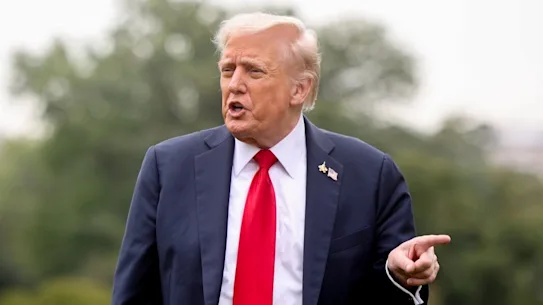
WASHINGTON — Only hours after the U.S. Supreme Court struck down his “Liberation Day” tariff regime, President Donald Trump signed a new executive order on Friday afternoon, February 20, 2026, imposing a 10% temporary global tariff. The move is a direct attempt to preserve his trade agenda while the administration navigates the legal fallout of the 6–3 SCOTUS defeat.
During an impromptu press conference in the Brady Briefing Room, a defiant President lashed out at the justices who ruled against him before unveiling his “Game Two” strategy.
The Pivot: Section 122 of the Trade Act
Since the Supreme Court ruled that the International Emergency Economic Powers Act (IEEPA) does not allow for unilateral taxation, the President has pivoted to a different, albeit more restrictive, legal authority: Section 122 of the Trade Act of 1974.
- The Authority: Section 122 allows a President to impose a temporary import surcharge (up to 15%) for up to 150 days to address “large and serious” balance-of-payments deficits.
- The “Stop-Gap” Nature: Unlike the previous IEEPA tariffs, these duties will expire automatically in mid-July 2026 unless Congress votes to extend them—a tall order given the current political climate.
- Over and Above: The President clarified that this 10% global levy is “over and above” existing sector-specific tariffs (such as those on steel, aluminum, and lumber) that were issued under different laws and remain in effect.
Trump Unfiltered: “Fools” and “Lap Dogs”
The President did not mince words regarding the Supreme Court majority, particularly the two appointees who voted against him, Neil Gorsuch and Amy Coney Barrett.
| The President’s Target | Remarks from Feb 20 Press Conference |
| Gorsuch & Barrett | Called their decision an “embarrassment to their families” and labeled them “fools and lap dogs for the RINOs.” |
| The Majority | Alleged, without providing evidence, that the court has been “swayed by foreign interests” and “undue influence.” |
| The Dissenters | Praised Justices Thomas, Alito, and Kavanaugh for their “strength and wisdom,” calling Kavanaugh’s dissent “genius.” |
| State of the Union | Suggested the six justices who ruled against him are “barely” invited to next week’s State of the Union address. |
Economic Uncertainty: The $175 Billion Question
While the new 10% tariff provides some “continuity” for the administration, the ruling has triggered an immediate crisis over the $133 billion to $175 billion already collected under the invalidated IEEPA authority.
- The Refund Surge: Legal experts predict a “tsunami” of claims from American businesses seeking to recoup duties paid since early 2025.
- The “Mess” Ahead: The Supreme Court did not provide a specific mechanism for refunds, meaning the Treasury Department and U.S. Customs and Border Protection face a logistical nightmare that the President warned could be “litigated for the next five years.”
- Market Reaction: Markets remained volatile as investors weighed the temporary relief of a lower tariff (10% vs. the previous 20–40% on some goods) against the chaos of a potential federal refund crisis.
The “Great Certainty” Claim
Despite the legal defeat, President Trump insisted the ruling actually brought “great certainty” to the world. He argued that by clarifying which laws can be used, the Court unintentionally made his ability to regulate trade “more powerful and more crystal clear.”
“In actuality, the Supreme Court’s decision today made a president’s ability to both regulate trade and impose tariffs more powerful… I don’t think they meant that. I’m sure they didn’t.” — President Donald Trump, Feb 20, 2026