 By Trendsetter Tribune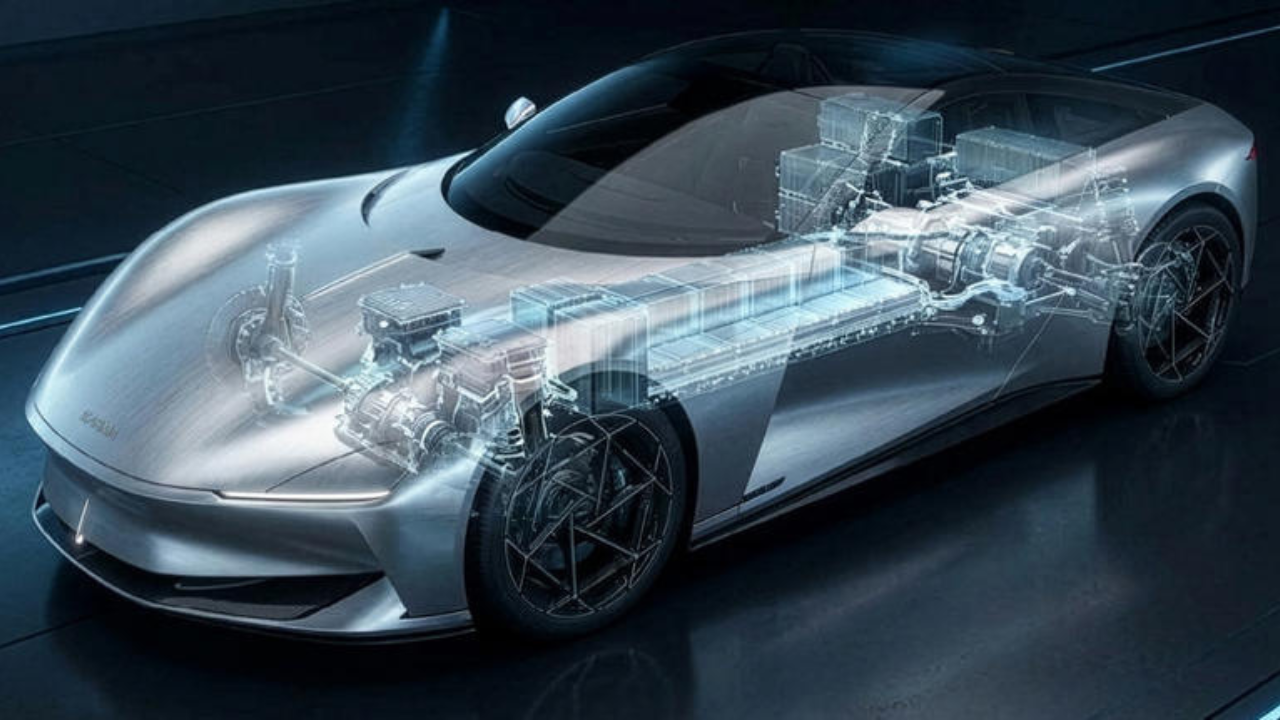
SAN JOSE, CA — The long-promised “holy grail” of electric vehicle technology is finally moving out of the laboratory and into American pilot production. On Wednesday, February 4, 2026, Silicon Valley battery pioneer QuantumScape inaugurated its “Eagle Line” in San Jose—a highly automated production suite designed to prove that solid-state cells can be manufactured at a scale suitable for the automotive industry.
The milestone is part of a broader 2026 surge in solid-state activity as global automakers shift from theoretical research to real-world “demonstration fleets.”
The “Eagle Line” Breakthrough
QuantumScape’s new facility is the first to utilize the Cobra process, a proprietary heat-treatment method for mass-producing ceramic separators.
- The Goal: To produce “B-sample” cells for automotive partners (most notably Volkswagen’s PowerCo) to test in actual vehicles.
- The Performance: These cells are designed to offer significantly higher energy density and faster charging than current lithium-ion packs, with the company aiming for 95% energy retention after 1,000 cycles.
- The Strategy: QuantumScape is moving toward a licensing model, allowing major manufacturers to integrate their “blueprint” into existing gigafactories.
The 2026 Competitive Landscape
QuantumScape isn’t the only player hitting the pavement this year. Several major partnerships have reached “road-ready” status in the first quarter of 2026:
| Company / Partnership | Status as of Feb 2026 | Application / Goal |
| Factorial & Karma | Announced a US-based production program for the 2027 Karma Kaveya supercar. | 1,000+ HP; 0–60 mph in <3 seconds using quasi-solid-state tech. |
| Stellantis & Factorial | Launching a demonstration fleet of vehicles equipped with FEST® solid-state cells. | Targeting 18-minute fast charging (15% to 90%) and 375Wh/kg density. |
| Toyota | Certified by Japan’s METI for mass production; building a large-scale facility with Idemitsu Kosan. | Aiming for a 621-mile range and 10-minute charging by 2027–2028. |
| Samsung SDI | Reshuffling KRW 10 trillion in assets (selling Samsung Display stake) to fund all-solid-state production. | Launching pilot lines in the US focused on ESS and EV battery commercialization. |
The “Semi-Solid” Bridge
While “all-solid-state” batteries are the ultimate goal, 2026 is becoming the year of the semi-solid-state (or quasi-solid) battery. These “hybrid” batteries use a solid-liquid mix that is easier to manufacture on existing lithium-ion lines.
- China’s FAW began testing a 500 Wh/kg semi-solid-state battery this month, claiming a range of over 600 miles (1,000 km) in prototype vehicles.
- Donut Lab, a Finnish startup, created a stir at CES 2026 in January by claiming to have a production-ready all-solid-state battery for motorcycles, though the claim has faced skepticism from industry giants like SVOLT.
Reality Check: When Can You Buy One?
Despite the excitement, experts urge consumers to remain grounded. While 2026 is the year of pilot production and test fleets, mass-market availability remains a few years away.
“The shift in 2026 is not a sudden breakthrough, but steady progress. These are no longer confined to research labs, but they are not about to make today’s EVs obsolete overnight.” — Industry Analyst Report, Feb 2026
Current Estimates for Mass Production:
- Limited High-End/Supercars: 2026–2027
- Mainstream Premium EVs: 2028–2029
- Broad Mass Market Adoption: 2030+
Why It Matters
Solid-state batteries replace the flammable liquid electrolyte of current batteries with a solid material, theoretically offering:
- Safety: Significantly reduced risk of fire and thermal runaway.
- Range: Up to double the energy density in the same physical footprint.
- Speed: The ability to charge as quickly as a gas station fill-up (under 10 minutes).