 By Trendsetter Tribune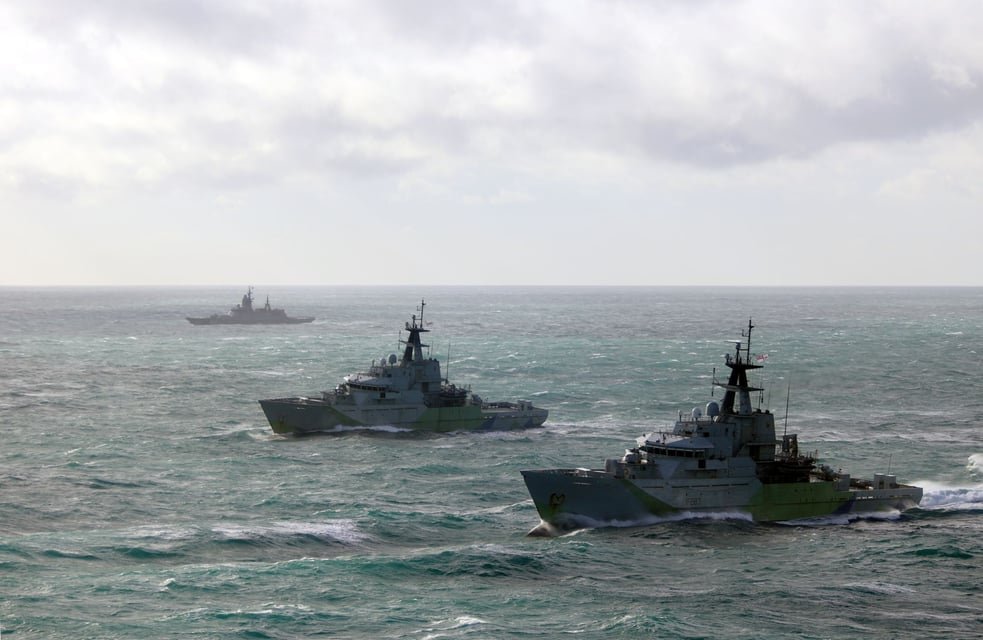
The Royal Navy has once again moved to closely monitor Russian naval activity near the UK, intercepting Russian vessels transiting the English Channel and reinforcing London’s message that it is watching Moscow’s movements closely.
Earlier this week, UK warships and aircraft were activated during a two-day operation to shadow Russian naval vessels as they sailed toward the North Sea. The mission was carried out in coordination with NATO allies and involved Portsmouth-based patrol ships HMS Mersey and HMS Severn, supported by a Wildcat helicopter from 815 Naval Air Squadron.
According to the Ministry of Defence, HMS Mersey first intercepted the Russian corvette Boikiy and its accompanying oil tanker, MT General Skobelev, as they entered the English Channel. The vessels had previously been monitored by NATO allies through the Bay of Biscay before UK forces assumed responsibility.
Near the Isle of Wight, HMS Mersey and HMS Severn operated together alongside the Wildcat helicopter, using advanced sensors to gather intelligence, track movements, and maintain situational awareness. HMS Severn continued shadowing the Russian ships into the North Sea before handing over monitoring duties to a NATO partner as the vessels proceeded north.
Minister for the Armed Forces Al Carns MP said the operation was a clear signal to Moscow.
“With this operation, our sailors have once again sent a message to Putin – we know exactly what his navy is doing,” Carns said. “Every time a Russian ship comes near the UK, the Navy is ready to track, deter, and defend.”
Royal Navy personnel involved in the operation emphasized readiness and cooperation with allied forces. Lieutenant Commander Dan Wardle, commanding officer of HMS Mersey, described the mission as another demonstration of the Navy’s ability to protect British maritime interests while working seamlessly with NATO partners.
Aircrew from 815 Naval Air Squadron echoed that sentiment. Lieutenant Commander Ross Gallagher highlighted the squadron’s rapid response capabilities and praised both engineers and aircrew for maintaining constant surveillance and delivering timely intelligence throughout the operation.
The Russian vessels were returning from a deployment in the Mediterranean and were monitored by NATO warships throughout their journey.
In a separate but related operation, the Royal Navy also tracked Russian-linked tanker activity in the Mediterranean. HMS Dagger, part of the Royal Navy Gibraltar Squadron, monitored the tanker Grinch as it passed through the Strait of Gibraltar. The vessel is reportedly part of Russia’s so-called “shadow fleet” — ships accused of helping Moscow bypass sanctions on oil exports. French forces later boarded the tanker, with the UK providing tracking and intelligence support.
Defence Secretary John Healey MP said countering the shadow fleet is a priority for the government, stressing that disrupting these operations helps limit funding for Russia’s war in Ukraine.
The latest interception follows similar activity just two weeks earlier, when HMS Mersey and a Wildcat helicopter tracked the Russian destroyer Severomorsk and accompanying vessels as they moved through the North Sea, the Strait of Dover, and the English Channel.
Together, the operations underline the UK’s heightened naval posture and its ongoing commitment to monitoring Russian military and commercial shipping near British waters, while reinforcing close cooperation with NATO allies amid continued tensions with Moscow.