 By Trendsetter Tribune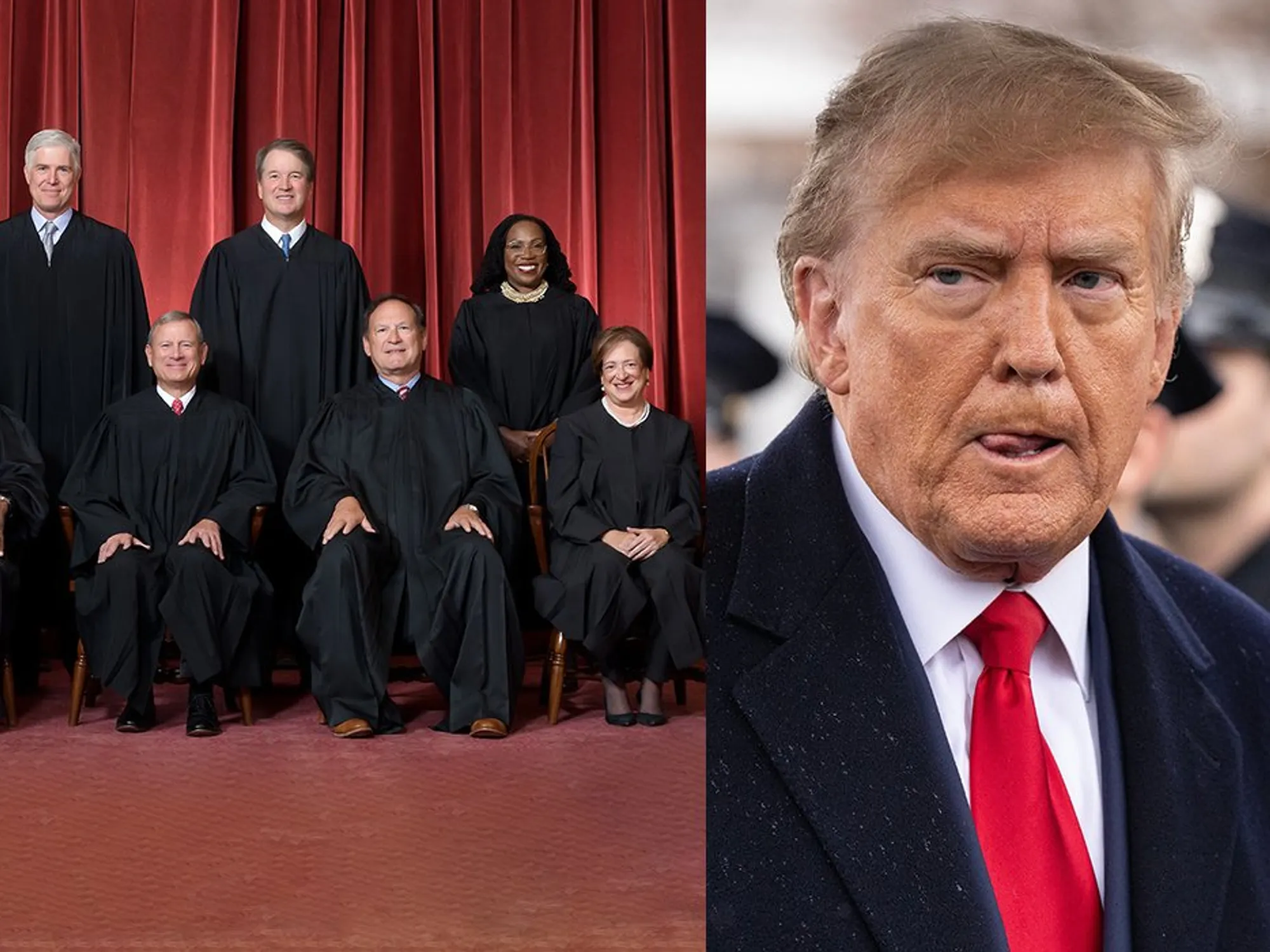
WASHINGTON — In a major blow to the administration’s core economic agenda, the U.S. Supreme Court ruled Friday, February 20, 2026, that President Donald Trump’s sweeping “Liberation Day” global tariffs were issued unlawfully. The 6–3 decision marks the most significant legal defeat for the President’s second-term policies to date.
Writing for the majority, Chief Justice John Roberts was joined by the court’s three liberal justices and Trump appointees Neil Gorsuch and Amy Coney Barrett. Justices Clarence Thomas, Samuel Alito, and Brett Kavanaugh dissented.
The Ruling: “Congress Alone” Has the Power
The case centered on whether the International Emergency Economic Powers Act (IEEPA) of 1977 granted the President the authority to unilaterally impose duties on nearly all imports by declaring a national emergency.
- The Majority Opinion: Chief Justice Roberts wrote that while IEEPA gives the President broad power to “regulate” imports during emergencies, it does not explicitly authorize the power to tax. “The Framers gave ‘Congress alone’ the power to impose tariffs during peacetime,” Roberts wrote. “The President must ‘point to clear congressional authorization’… He cannot.”
- The Dissent: Justice Kavanaugh argued that as a matter of “text, history, and precedent,” the tariffs were lawful, suggesting the court should not interfere with the President’s foreign policy leverage.
The “Game Two” Plan: What Happens Now?
The ruling immediately invalidates billions of dollars in active levies, including the 10%–50% “reciprocal” tariffs and duties tied to the fentanyl crisis.
| Financial & Legal Impact | Details |
| Revenue Loss | The government had collected an estimated $175 billion under the invalidated IEEPA authority. |
| Massive Refunds | The ruling opens the door for thousands of U.S. businesses to file for refunds on duties already paid, a process likely to trigger years of litigation. |
| Alternative Authorities | The decision does not stop tariffs imposed under other laws (like Section 232 or 301). The administration has hinted it will pivot to these “slower” tools—what Trump calls “Game Two”—to maintain the tariff framework. |
Reactions: From “Complete Mess” to “Victory for Consumers”
The President responded on Truth Social shortly after the ruling, warning that the decision would create a “complete mess” and undermine ongoing trade negotiations.
- The Administration: Treasury officials say contingency plans are in place, but analysts at the Penn-Wharton Budget Model note the loss of revenue could complicate the funding for the $2,000 “Tariff Dividend” promised to Americans.
- Pro-Business Groups: Organizations like the Chamber of Commerce welcomed the ruling, arguing it restores constitutional order and provides relief to small businesses that were on the “brink of catastrophe” due to rising import costs.
- Global Markets: International stock markets saw a sharp “relief rally” on Friday morning, as the threat of an escalating trade war with allies like Canada and Mexico momentarily receded.
The “Liberation Day” Legacy
The tariffs, first announced in April 2025, were a central plank of the “Liberation Day” economic plan. By striking them down, the Supreme Court has set a firm limit on the use of emergency powers to reshape the global economy without direct Congressional consent.