 By Trendsetter Tribune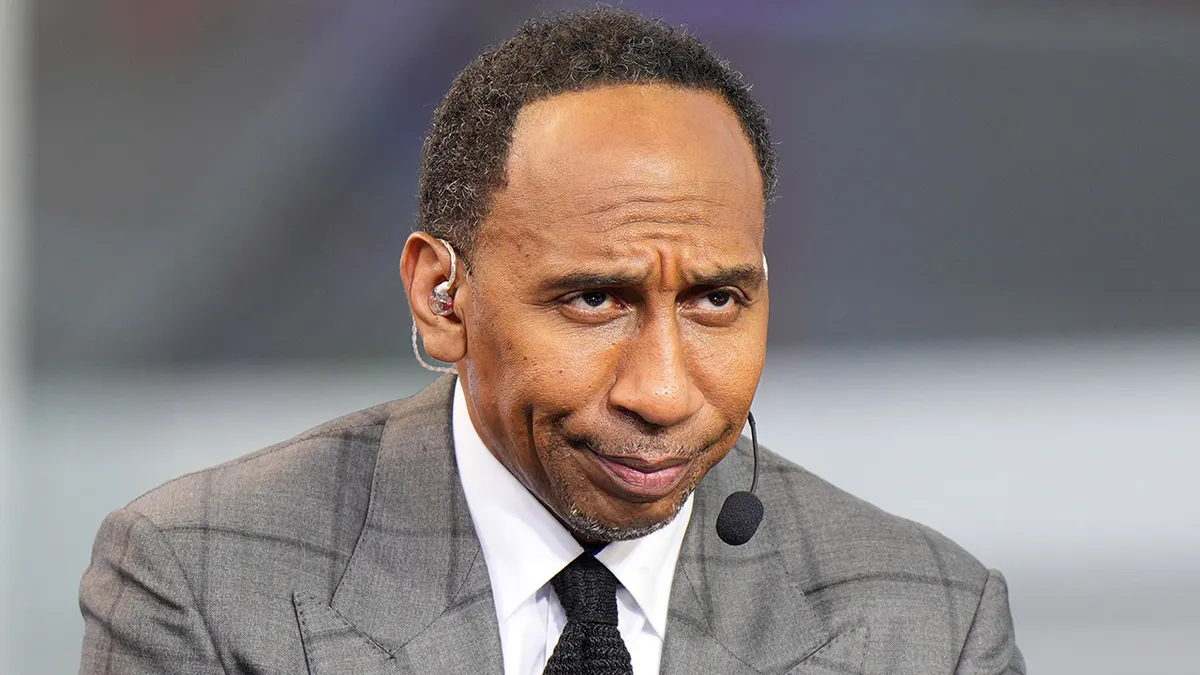
ESPN personality Stephen A. Smith is facing intense criticism after describing the fatal shooting of Minnesota resident Renee Nicole Good by an ICE agent as “completely justified.” His remarks quickly ignited backlash across social media and political circles, placing Smith at the center of a broader national debate over law enforcement accountability, media framing, and the limits of commentary from high-profile public figures. Smith now says his comments were misrepresented — and that the controversy reflects deeper political and ethical tensions surrounding the case.
The shooting of Renee Nicole Good during an ICE operation in Minnesota has triggered protests, congressional scrutiny, and national outrage. Good, a poet and mother of three, was killed during an immigration enforcement action that federal officials say escalated after she allegedly attempted to strike ICE agents with her vehicle.
The incident has drawn condemnation from lawmakers, activists, and celebrities, with critics questioning both the use of lethal force and the broader conduct of ICE operations. Federal officials, including Department of Homeland Security Secretary Kristi Noem, have defended the agent involved, framing the shooting as a response to an imminent threat.
Into this volatile environment stepped Stephen A. Smith, whose legal analysis of the incident — delivered on his widely watched show — immediately reverberated far beyond the sports world.
What Stephen A. Smith said
Smith originally addressed the shooting on his self-titled program, stating that, from a legal standpoint, the ICE agent’s actions were justified.
“I saw the video on numerous occasions and seeing what transpired from a lawful perspective as it pertains to a law enforcement official, don’t expect him to be prosecuted,” Smith said. “He was completely justified.”
However, Smith also expressed discomfort with the outcome, drawing a sharp distinction between legality and morality.
“From a humanitarian perspective, however, why did you have to do that?” he continued. “If you could move out the way, that means you could have shot the tires. That means you could have got a few feet away after you shot the tires… You didn’t have to do that.”
Despite these caveats, a headline highlighting Smith’s use of the phrase “completely justified” went viral, fueling accusations that he was endorsing the killing or aligning himself with hardline law enforcement rhetoric.
Smith’s response to the backlash
Smith addressed the controversy directly on his show, arguing that his remarks were selectively framed and stripped of context.
“The headline was misleading,” Smith said, referring to coverage that emphasized his legal justification comment. “Even though I said what was said in the headline, that wasn’t all of what I said.”
He suggested that the backlash was driven in part by political actors eager to portray him as sympathetic to right-wing positions.
“They want to paint a picture that I agree with their ideals. I don’t agree with them,” Smith said. “I’m talking about legality when I’m talking about justification, nothing else. Everything else about it is wrong and ethically inhumane.”
Smith also emphasized the importance of controlling his own narrative, adding, “Thank God I got my own platforms to address bull s**t like this.”
The government’s position
Federal officials have stood firmly behind the ICE agent involved in the shooting. DHS Secretary Kristi Noem said agents ordered Good to exit her vehicle and alleged that she attempted to ram officers.
“It was an act of domestic terrorism,” Noem said, a characterization that has itself drawn sharp criticism from civil rights advocates and Democratic lawmakers.
The Justice Department and FBI are leading the investigation, while state officials in Minnesota have expressed concerns about transparency and access to evidence.
Analysis: legality vs. morality
Smith’s comments highlight a fault line that frequently emerges in cases involving police or federal use of force: the gap between what is legally permissible and what the public views as morally acceptable.
Legal standards often give law enforcement wide latitude when officers claim fear for their lives, especially when vehicles are involved. Critics argue that these standards incentivize lethal responses and leave little room for accountability, even in cases involving civilians who are unarmed.
Smith attempted to navigate that divide, acknowledging the legal reality while questioning the necessity of lethal force. But in a media environment driven by headlines and viral clips, nuance is often the first casualty.
Implications for public discourse
The backlash against Smith underscores how fraught the conversation around ICE, policing, and federal authority has become. For many critics, focusing on legal justification without centering the loss of life feels dismissive or callous. For others, acknowledging legal standards is essential to understanding why prosecutions in such cases are rare.
Smith’s experience also illustrates the risks faced by high-profile commentators who wade into politically charged territory outside their usual domain. Even carefully qualified statements can be interpreted as endorsements — or condemnations — depending on how they are framed and received.
Conclusion
Stephen A. Smith’s attempt to clarify his remarks has done little to quiet the controversy surrounding his comments on the ICE shooting of Renee Nicole Good. While Smith insists he was speaking strictly from a legal perspective and condemns the humanitarian outcome, the episode reflects a broader national struggle to reconcile law, morality, and accountability in cases of state violence.
As investigations continue and public pressure mounts, the debate is unlikely to fade — and neither is the scrutiny of those who choose to weigh in on it.