 By Trendsetter Tribune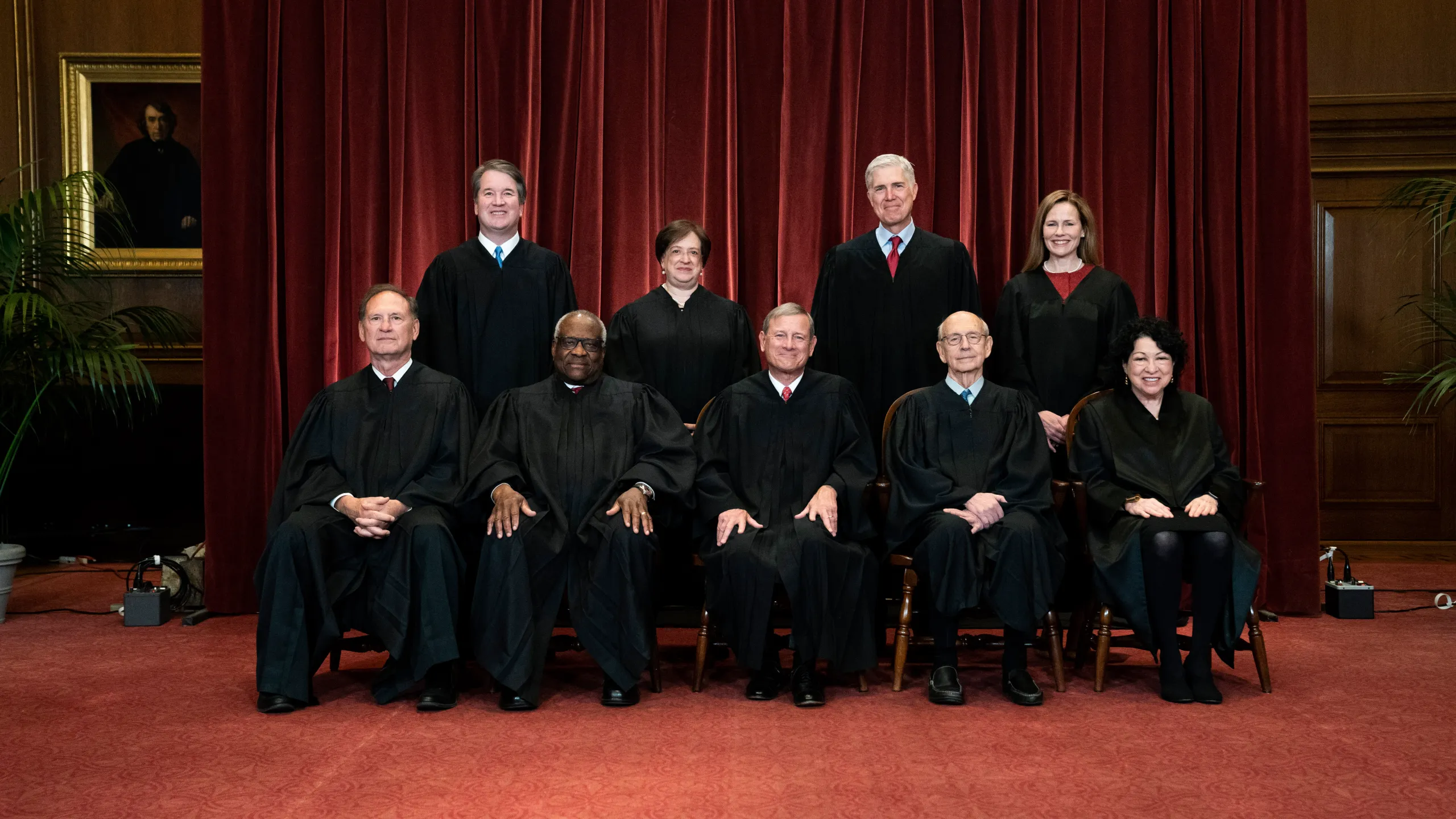
U.S. Supreme Court justices signaled clear skepticism this week toward President Donald Trump’s attempt to remove a sitting Federal Reserve governor, a case that could have lasting consequences for the independence of the nation’s central bank and the scope of presidential authority.
During oral arguments on Wednesday, justices from across the ideological spectrum questioned whether the White House followed appropriate legal and procedural standards when it sought to remove Federal Reserve Governor Lisa Cook. Several members of the court appeared uneasy with the administration’s argument that the president can dismiss a Fed governor without a formal investigation or hearing.
Justice Brett Kavanaugh warned that allowing such broad discretion could produce long-term institutional instability. He suggested that if the court set such a precedent, future presidents might routinely remove central bank officials appointed by prior administrations, relying on minor or disputed allegations as justification. According to Kavanaugh, that kind of cycle could undermine continuity and fairness within the federal government.
Justice Amy Coney Barrett also pressed the administration on its lack of process, asking why no formal hearing was held to evaluate the allegations against Cook. Government attorneys responded that sufficient steps had already been taken, but the exchange highlighted deeper concerns about due process and accountability.
Trump’s effort to remove Cook last summer marked the first time in U.S. history that a president attempted to fire a sitting Federal Reserve governor. Cook, who was appointed in 2022 and holds a 14-year term, remains on the Fed’s rate-setting board after a lower federal court blocked her dismissal.
The administration alleges that Cook committed mortgage fraud by misrepresenting properties on loan applications to secure favorable terms. Cook’s legal team has strongly disputed those claims, arguing that the government selectively focused on limited documents while ignoring others that accurately reflected her financial disclosures. Her lawyers maintain the issue was an inadvertent clerical error rather than misconduct and emphasize that no formal investigation preceded the firing attempt.
The case unfolds against the backdrop of a broader confrontation between the Trump administration and the Federal Reserve over interest rates. Trump has repeatedly criticized Fed leadership for refusing to implement aggressive rate cuts, arguing that lower borrowing costs would stimulate faster economic growth. Federal Reserve officials, however, have held firm that monetary policy decisions must be guided by inflation and employment data, not political pressure.
Several justices expressed concern about how a ruling in Trump’s favor could weaken the Federal Reserve’s long-standing independence. The Fed operates with a unique structure designed by Congress to shield it from political influence, allowing policymakers to make decisions based on economic evidence rather than electoral considerations.
Legal experts say the Supreme Court could resolve the dispute narrowly by ruling that the administration failed to follow adequate procedures in Cook’s case. Alternatively, the court could issue a broader decision that explicitly reinforces the Federal Reserve’s independence and limits the president’s authority over its leadership.
Such a ruling would have implications far beyond this case. Economists widely agree that an independent central bank plays a crucial role in maintaining market stability, controlling inflation, and preserving investor confidence. Any erosion of that independence could ripple through financial markets and alter how U.S. monetary policy is shaped in the future.
Following the hearing, Cook said in a statement that the case ultimately concerns whether interest rates will continue to be set through evidence-based judgment or become subject to political influence from the executive branch.