 By Trendsetter Tribune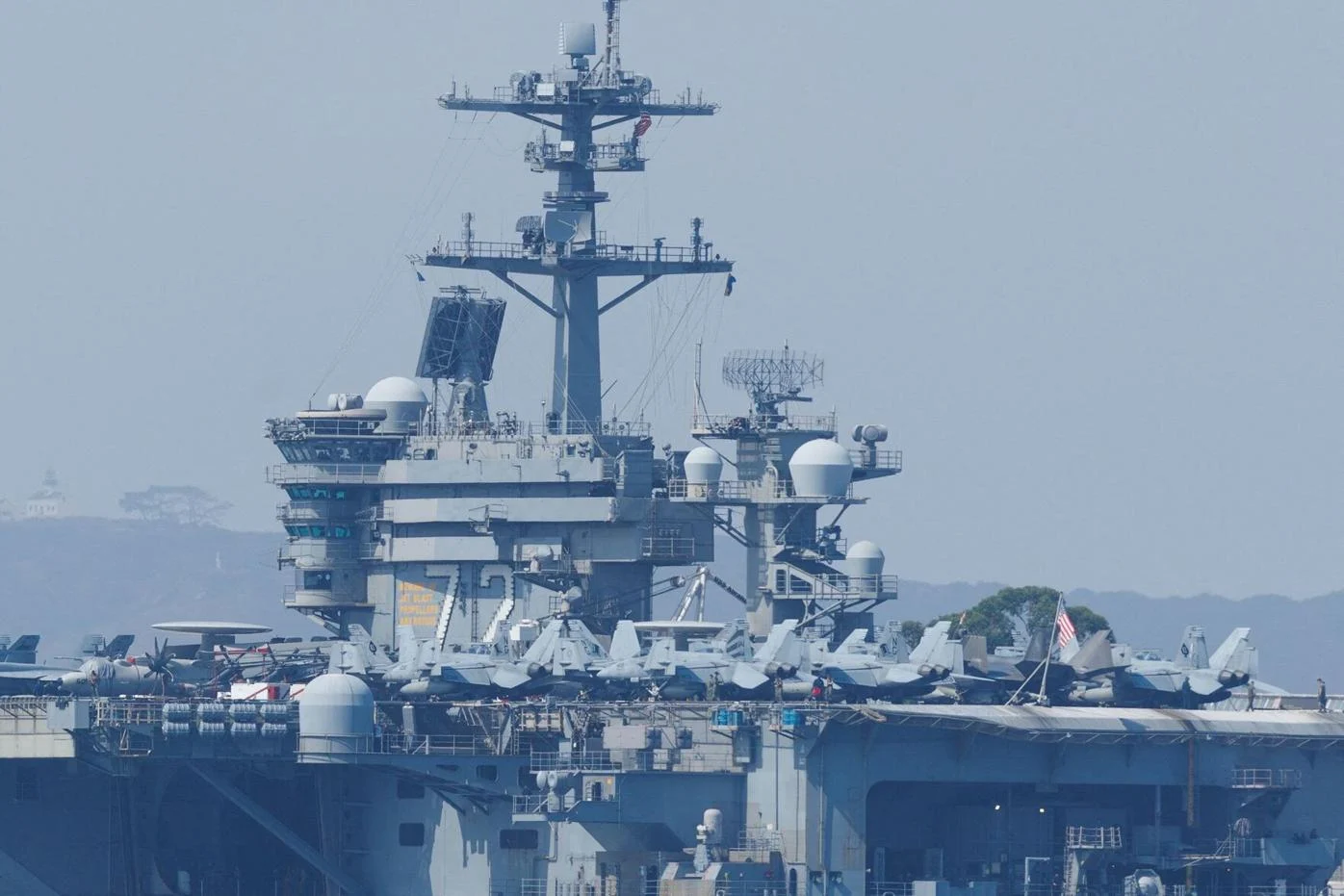
In a significant escalation in the Arabian Sea, the U.S. military shot down an Iranian drone on Tuesday after it reportedly “aggressively approached” the USS Abraham Lincoln aircraft carrier.
The incident, which occurred approximately 500 miles off the southern coast of Iran, has injected fresh uncertainty into a region already on edge. Here are the critical details of the encounter and its diplomatic fallout.
The Encounter: Minutes from a Carrier Deck
U.S. Central Command (CENTCOM) confirmed that an Iranian Shahed-139 drone was intercepted while maneuvering toward the Nimitz-class carrier. According to Navy Capt. Tim Hawkins, the drone continued its approach despite “de-escalatory measures” taken by U.S. forces.+1
- The Response: An F-35C Lightning II fighter jet, launched from the Lincoln, destroyed the drone in what was described as an act of self-defense.
- The Damage: CENTCOM reported no injuries to American personnel and no damage to U.S. equipment.
- The Context: This incident follows a separate flare-up hours earlier in the Strait of Hormuz, where Iranian Revolutionary Guard Corps (IRGC) boats allegedly harassed the U.S.-flagged tanker M/V Stena Imperative.
Escalation in the “Armada” Era
The shoot-down comes amid a massive U.S. military buildup ordered by President Donald Trump. Describing the naval presence as a “massive armada,” the administration has utilized military pressure as a cornerstone of its strategy to force Tehran back to the negotiating table.+1
Rising Tensions Timeline:
- Last Month: Iran conducts a violent crackdown on nationwide anti-government protests, the deadliest since 1979.
- Last Week: Trump warns that “bad things” would happen if a deal is not reached.
- Today: Iranian President Masoud Pezeshkian expresses a cautious willingness for “fair and equitable negotiations,” just as military kinetic action occurs.
The Diplomatic Crossroads
Despite the exchange of fire, diplomatic channels haven’t fully closed. White House Press Secretary Karoline Leavitt stated that talks scheduled for Friday in Istanbul—or potentially Oman—are still on the table. However, the “intent” of the Iranian drone remains a point of contention.+1
While the U.S. views it as a provocation, semi-official Iranian agencies like Fars News claimed the drone was merely on a surveillance mission in international waters.
| Entity | Stated Position |
| U.S. CENTCOM | Drone was “acting aggressively” with unclear, threatening intent. |
| Iranian Media | Drone was performing a routine mission in international airspace. |
| White House | Military action was necessary; diplomacy remains the preferred path. |
Why It Matters
This is the first time a U.S. aircraft carrier has been directly approached by an Iranian combat-class drone in this manner since the current administration’s “maximum pressure” campaign was reinstated. With oil prices rising over $1 per barrel following the news, the global economy is watching closely to see if this is an isolated incident or the start of a broader maritime conflict.