 By Trendsetter Tribune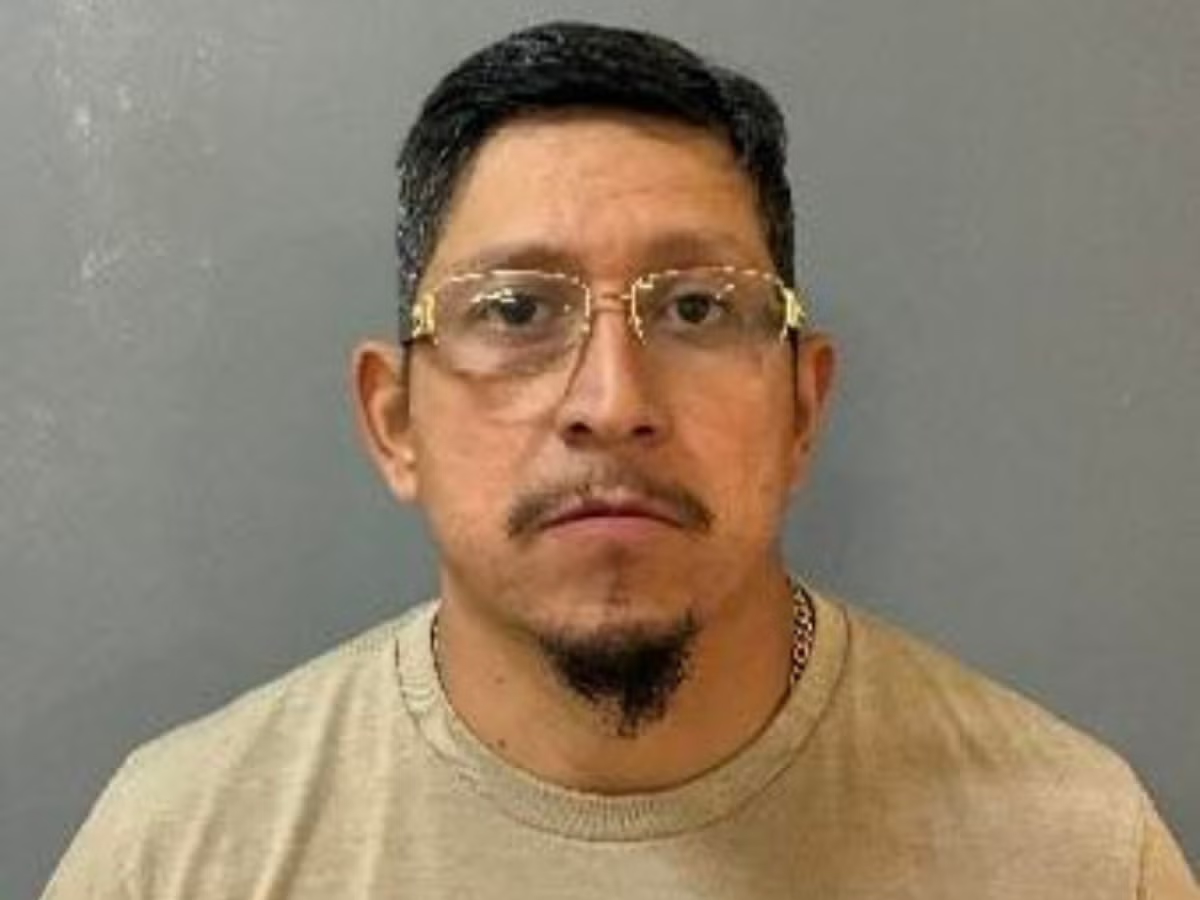
A West Texas homeowner has been charged with murder after fatally shooting an armed intruder during a late-night home invasion, raising questions about how Texas self-defense laws are applied.
A late-night home invasion in West Texas has taken an unexpected legal turn after the homeowner who fired the fatal shots was arrested and charged with murder — a rare outcome in a state known for expansive self-defense protections.
The case is already drawing attention because it challenges common assumptions about Texas’ Castle Doctrine and Stand Your Ground laws, which are often seen as shielding homeowners from prosecution when defending their property.
Background: What Happened During the Home Invasion
Police were called to a residence in Howard County late Friday night after reports of gunfire inside the home.
When officers arrived, they found 36-year-old Phillip Samuel Lozano Jr. dead inside the residence. Investigators say Lozano had forced his way into the home and was armed at the time of the confrontation.
The homeowner, Joel Adrian Florez, 43, allegedly fired multiple shots during the encounter. Lozano was pronounced dead at the scene from gunshot wounds.
What Happened Next: Arrest and Murder Charge
Despite the apparent home-invasion scenario, authorities arrested Florez at the scene. He is currently being held at the Howard County Detention Center on a murder charge.
The decision to file charges immediately has surprised many observers, particularly given Texas law’s strong legal presumptions in favor of homeowners who use deadly force against unlawful intruders.
Officials have not released detailed information explaining what evidence led to the arrest.
Analysis: Why Castle Doctrine Didn’t Stop the Charges
Texas law generally presumes a person is legally justified in using deadly force if someone unlawfully and forcibly enters their home and poses a threat.
However, that presumption is not automatic and can be overridden under certain circumstances, including:
- Evidence suggesting the intruder was retreating
- Questions about whether the homeowner provoked the encounter
- Disputes over whether the threat was immediate
- Forensic or witness evidence contradicting self-defense claims
The decision to pursue murder charges suggests investigators believe one or more of these factors may apply, though authorities have not publicly clarified which elements influenced their determination.
Unanswered Questions in the Case
Several key questions remain unresolved as the investigation continues:
- Did Florez and Lozano know each other prior to the incident?
- Was the intruder actively threatening the homeowner at the moment shots were fired?
- Were there witnesses, surveillance footage, or forensic findings that complicate the self-defense claim?
Law enforcement has declined to comment further while the case remains active.
Implications: A Rare Test of Texas Self-Defense Law
Cases like this are uncommon in Texas, where prosecutors typically decline to file charges when homeowners act against intruders inside their homes.
Legal experts note that when charges are brought, it often signals significant factual disputes that may ultimately be resolved by a jury rather than dismissed early in the process.
The case could become a high-profile example of how Texas self-defense laws are applied in practice, not just in theory.
Conclusion: A Legal Battle Just Beginning
Joel Adrian Florez remains in custody as the legal system works to determine whether the shooting was a lawful act of self-defense or a criminal homicide.
As investigators release more details, the case is likely to spark continued debate over the limits of self-defense, even in states with some of the strongest protections for homeowners.
For now, what appeared to be a straightforward home-defense scenario has evolved into a complex legal fight with potentially serious consequences.