 By Trendsetter Tribune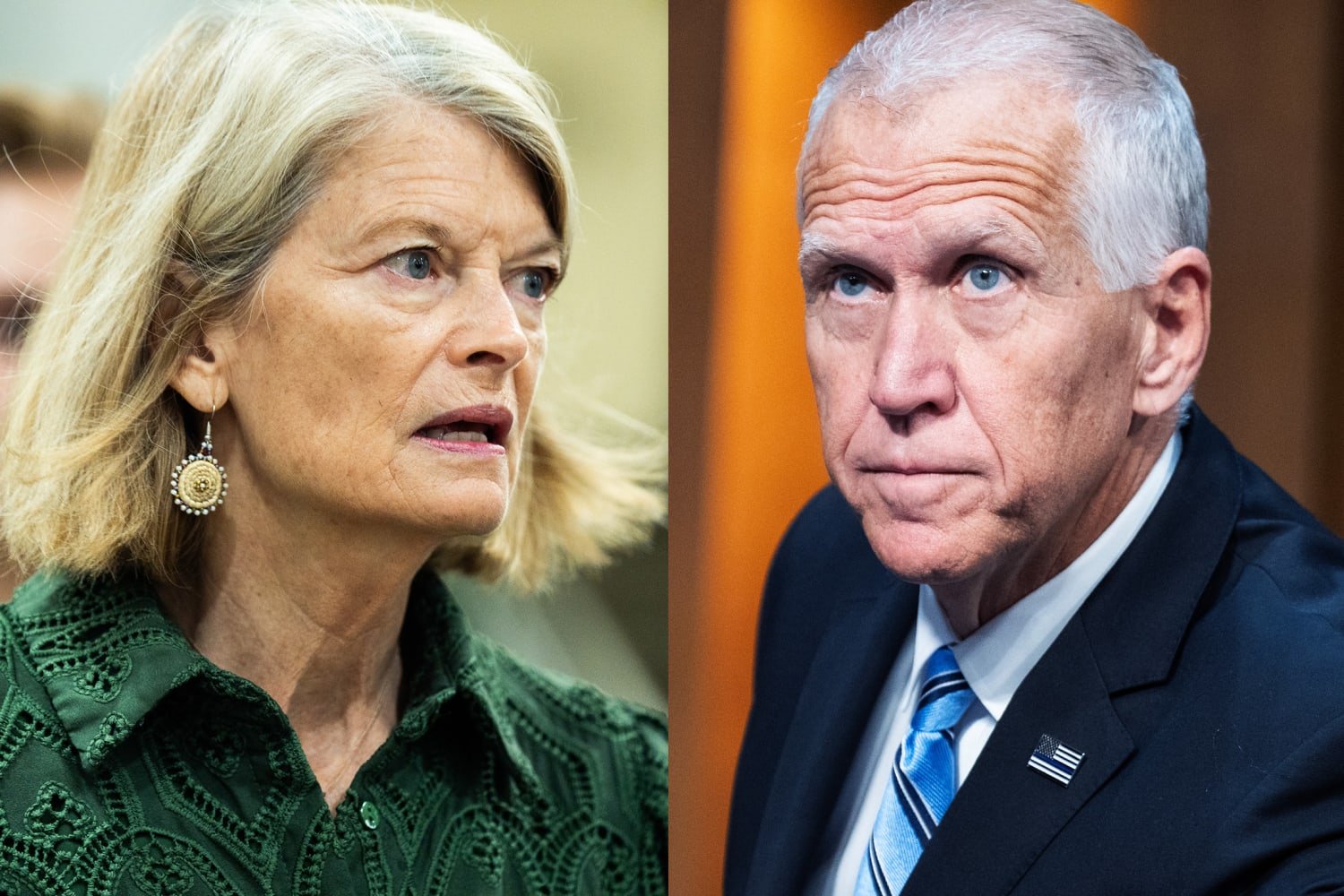
WASHINGTON — While much of the nation’s attention remains fixed on the Supreme Court’s tariff ruling, a separate and equally significant “rebellion” is brewing in the upper chamber. As of Saturday, February 21, 2026, North Carolina Senator Thom Tillis and Alaska Senator Lisa Murkowski have emerged as the faces of a Republican revolt against the administration’s efforts to exert political control over independent federal agencies.
The infighting, which boiled over during a closed-door GOP lunch earlier this week, has effectively stalled several key administration priorities.
The Flashpoint: The Federal Reserve & The DOJ
The revolt was triggered by a Department of Justice (DOJ) investigation into Federal Reserve Chair Jerome Powell, which critics—including several prominent Republicans—have labeled an “unprecedented attempt at political coercion.”
- The Tillis Ultimatum: Senator Tillis, a key member of the Senate Banking Committee, has vowed to block all future Trump nominees for the Federal Reserve until the administration ceases its “intimidation tactics” against Powell.
- The Murkowski Rebuke: Senator Murkowski joined the pushback, calling the DOJ’s probe “nothing more than an attempt at coercion” and calling for a separate investigation into the DOJ’s conduct.
- The “Lame Duck” Debate: The defiance of these senior senators has reignited discussions within the party about the President’s “lame-duck” status and whether the GOP leadership can maintain a unified front through the 2026 midterms.
The Tariff Fracture: Thune vs. The Rebels
The Senate rebellion mirrors a chaotic week in the House, where a small group of Republicans recently “tanked” a leadership-backed rule to protect the President’s trade agenda.
| The “Rebel” Bloc | Leadership Response |
| Sen. Thom Tillis (R-NC) | Senate Majority Leader John Thune (R-SD) has attempted to play peacemaker, but reportedly faced “stiff resistance” during Tuesday’s group discussion. |
| Sen. Lisa Murkowski (R-AK) | Speaker Mike Johnson (R-LA) characterized the House-side rebellion as a “frustrating obstacle” in a week where “unanimity” was required but not achieved. |
| Sen. Rand Paul (R-KY) | Joined with Democrats on February 11 to terminate the national emergency used for Canada tariffs, further complicating the administration’s legal defense. |
The “2026 Primary” Pressure
The infighting is being exacerbated by the upcoming 2026 primary cycle. In Texas, the rift is particularly visible, with U.S. Rep. Chip Roy (a frequent leadership critic) challenging Attorney General Ken Paxton for his state-level office, citing a need for “independence” from federal interference.
Meanwhile, in South Carolina, Senate Majority Leader Shane Massey took to the floor this week to warn his colleagues about the “public suspicions of bad behavior” and “corruption” that could arise from electing political insiders to the state’s highest court—a sentiment that many see as a local reflection of the national GOP’s “loyalty vs. ethics” debate.
Why It Matters
This “revolt” represents a significant shift in the GOP power dynamic. For the first time since the 2024 election, senior Republican senators are successfully using their “advice and consent” powers to check executive authority.
“This is about whether the Fed will be able to continue to set interest rates based on evidence… or whether instead monetary policy will be directed by political pressure.” — Sen. Thom Tillis, Feb 2026