 By Trendsetter Tribune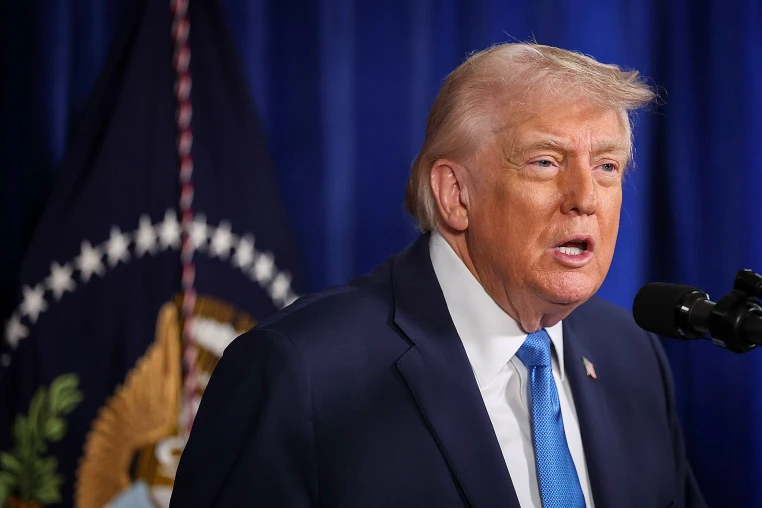
President Trump has been briefed on potential military options involving Iran as nationwide protests intensify and U.S. officials weigh sanctions, cyber actions, and diplomatic pressure.
President Donald Trump has been briefed on potential military options targeting Iran, a senior U.S. official confirmed Sunday, as unrest across the country continues to challenge the Islamic Republic’s ruling system.
Speaking at the White House on Friday, Trump outlined what he suggested could trigger U.S. involvement, warning that if Iranian authorities began killing civilians, the United States would respond forcefully.
“If they start killing people like they have in the past, we would get involved,” Trump said. “That doesn’t mean boots on the ground, but it does mean hitting them very hard where it hurts.”
In a separate message posted on social media, Trump voiced support for demonstrators, writing that Iran may be “looking at freedom like never before,” while adding that the U.S. was prepared to help.
The remarks come as nationwide protests in Iran entered their third week, fueled by economic collapse and growing opposition to the country’s theocratic leadership. U.S.-based human rights groups estimate that at least 538 people have been killed in protest-related violence, with more than 10,600 arrests reported, though activists warn the true figures may be significantly higher.
The New York Times and The Wall Street Journal, citing unnamed U.S. officials, reported that Trump has been presented with military response options but has not made a final decision. According to the Wall Street Journal, additional briefings are expected in the coming days.
U.S. officials emphasized that no American forces have been repositioned in preparation for a strike. However, they acknowledged that Washington possesses a wide range of capabilities, including cyber operations. One official also confirmed that the administration supports Elon Musk’s decision to allow Starlink satellite internet access in Iran, a move that could help protesters bypass state-imposed communication blackouts.
The U.S. already maintains sweeping sanctions on Iran and has expanded them in recent weeks. Energy Secretary Chris Wright said Sunday that the administration supports actions aimed at pressuring Tehran but declined to comment on whether the U.S. would move to intercept Iranian oil shipments suspected of black-market trading.
Iranian officials have rejected Western accusations, insisting the protests are being driven by foreign interference. Iran’s parliamentary speaker, Mohammad Bagher Qalibaf, warned that U.S. or Israeli military action would prompt retaliation across the region, including against American bases and naval assets.
Supreme Leader Ayatollah Ali Khamenei also dismissed U.S. threats, saying Washington’s past efforts against Iran had failed and would fail again.
The U.S. maintains a substantial military presence in the Middle East, including thousands of troops in Iraq and major installations in Qatar and Bahrain. Those bases have previously been targeted by Iran-backed militias.
Some U.S. lawmakers have urged caution. Senator Tim Kaine of Virginia warned that military intervention could strengthen Iran’s leadership by allowing it to blame domestic unrest on foreign aggression, arguing that sanctions and diplomatic pressure have been more effective tools.
The protests began in late December following the collapse of Iran’s currency, which now trades at more than 1.4 million rials to the dollar, and have since evolved into direct challenges to Iran’s ruling system.