 By Trendsetter Tribune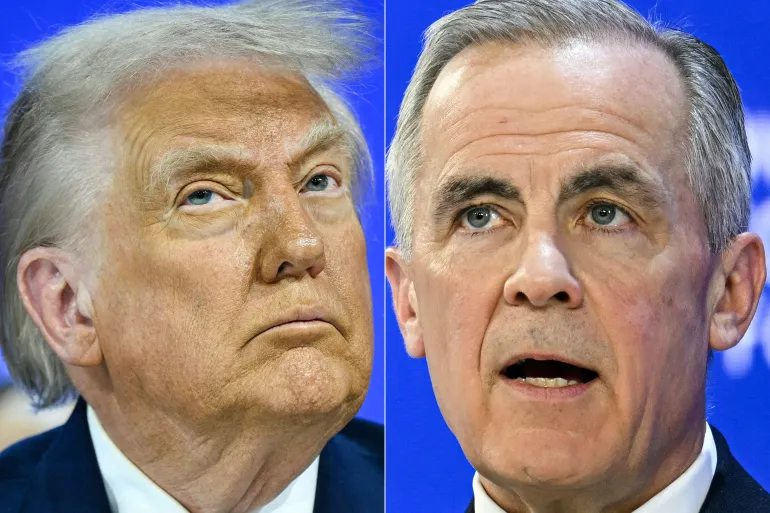
President Donald Trump has escalated his war of words with Canada, threatening to slap 100% tariffs on all Canadian exports to the United States if Ottawa moves forward with a trade deal involving China.
In a series of social media posts, Trump mocked Canadian Prime Minister Mark Carney, repeatedly calling him “Governor Carney,” and warned that opening Canada further to Chinese trade would be a grave mistake. Trump claimed China would “eat Canada alive” and said any deal with Beijing would trigger immediate, sweeping tariffs on Canadian goods entering the U.S.
The warning appears to target a limited trade agreement reached last week between Canada and China, which includes reduced trade barriers, expectations that China will cut tariffs on Canadian canola, and Canada allowing a capped number of Chinese electric vehicles into its market at a reduced tariff rate. The deal also includes visa-free travel for Canadians to China.
Carney has not publicly responded to Trump’s latest threat, but tensions between the two leaders have been rising. At the World Economic Forum in Davos, Carney warned against coercion by great powers — comments widely seen as a swipe at Trump’s use of tariffs as leverage. Trump, in turn, accused Canada of ingratitude and claimed the country “lives because of the United States,” a statement Carney has rejected.
The tariff threat has raised eyebrows in both countries. Most Canadian goods currently enter the U.S. tariff-free under the USMCA, and industry leaders warn that a blanket 100% tariff would severely disrupt supply chains, especially in autos, energy, metals, and agriculture. The U.S. imports about 4 million barrels of oil per day from Canada, along with major volumes of auto parts, fertilizer, and aluminum.
Canadian and U.S. business groups have downplayed the likelihood of Trump following through, noting his history of issuing dramatic tariff threats that later fade. Still, relations between Washington and Ottawa have deteriorated since Trump’s return to the White House, pushing Canada to diversify trade ties toward Europe and Asia — including China.
For now, Trump’s warning adds another layer of uncertainty to North American trade, even as markets and allies question whether the threat is real policy — or familiar pressure tactics.