 By Trendsetter Tribune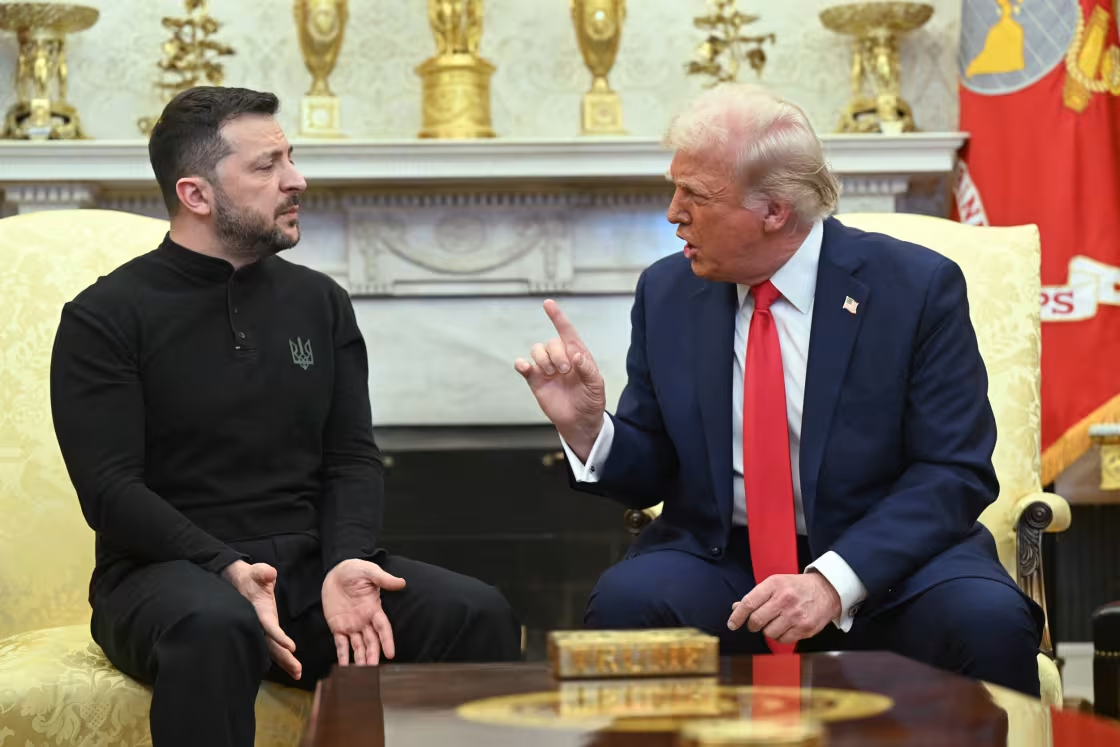
Over the weekend, the future of Ukraine — both immediate and long-term — was at the center of hours-long conversations between President Trump and Ukrainian President Volodymyr Zelensky at Mar-a-Lago. Before and after those talks, Trump also spoke directly with Russian President Vladimir Putin, underscoring just how central the U.S. role remains in the effort to end the war.
Following the meeting, Trump and Zelensky presented a largely optimistic outlook at their joint press conference, emphasizing “progress” in year-long negotiations. But beneath the polished remarks lies a politically fraught and morally complex process that has exposed tensions, power imbalances, and deep unease among allies.
A Difficult Dynamic
Observers noted the stark contrast in body language among the three principal figures at the heart of this war. Ukraine — the victim of the largest act of cross-border aggression in Europe since World War II — finds itself negotiating under duress. Putin remains unyielding and confident, while Trump appears both fascinated by Putin’s strength and dismissive of Zelensky’s moral appeals.
Zelensky’s integrity and determination, qualities admired globally, seem to unsettle Trump, who is more accustomed to transactional negotiations than wartime leadership rooted in sacrifice. Still, the Ukrainian president has learned to absorb the personal slights, focusing instead on what his nation desperately needs: survival.
At the press conference, Trump repeated a stark reality: if Ukraine and Russia fail to reach an agreement, the fighting will continue. The implication was unmistakable — U.S. support is not guaranteed. Twice already, Trump has suspended aid when Zelensky resisted demands for major concessions.
Europe Steps In — But Only So Much
Even without full U.S. backing, Ukraine is not entirely isolated. NATO and the European Union have slowly awakened to the threat that a revanchist Russia poses to continental security.
Yet the shadow of nuclear escalation looms large. Putin’s willingness to invoke nuclear rhetoric has had a chilling effect on Washington across administrations, limiting the kind of decisive military support that could fundamentally shift the battlefield.
Europe cannot fully substitute for U.S. weapons systems, intelligence support, and logistics. But it can provide enough political and military assistance to sustain Ukraine’s resistance and maintain pressure until circumstances inside Russia potentially change.
The Long Game — And Its Global Ripples
Should Russia eventually face internal reckoning and move beyond Vladimir Putin’s grip, the geopolitical shockwaves would stretch far beyond Europe. Authoritarian leaders in China, North Korea, Iran and elsewhere would be forced to confront the fragility of their own power structures.
Such an outcome would reshape global politics without requiring the massive military deployments associated with regime-change campaigns of the past. The democratic movements in places like Venezuela, Taiwan, Iran, Belarus, and Cuba would see renewed hope.
The stakes, therefore, extend well past Ukraine’s borders. They reach into the heart of the international order built after World War II — and into debates about whether the United States still has the resolve to lead it.
What Comes Next
For now, the negotiations continue — uneasy, uneven, and laden with personal and geopolitical tension. Trump remains the mediator who admires Putin’s strength while pressuring Ukraine to compromise. Zelensky remains the wartime president holding together a nation under relentless attack.
The outcome is uncertain.
But one thing is clear: the choices made in these rooms — away from the cameras and public statements — will shape not only Ukraine’s fate, but the future of global security.