 By Trendsetter Tribune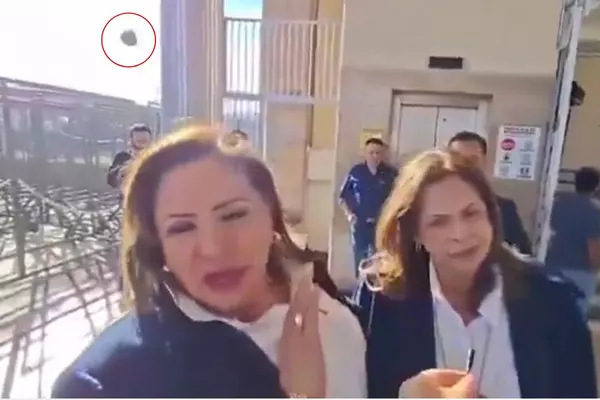
A Honduran lawmaker was injured after an explosive device was thrown at her head during a television interview, underscoring the increasingly volatile political climate in the country following a disputed presidential election. The attack, which unfolded in broad daylight and in front of cameras, has raised alarm about political violence, media safety, and the rule of law in Honduras.
The incident is not just an isolated act of violence. It reflects deeper tensions in a nation already grappling with political polarization, fragile institutions, and public mistrust in democratic processes.
Background / Context
Honduras has experienced recurring bouts of political instability over the past decade, often marked by contested elections, street protests, and allegations of corruption and intimidation. The most recent flashpoint followed the 30 November presidential election, which produced a razor-thin margin and a prolonged vote-counting process that stretched on for weeks.
That delay fueled widespread accusations of electoral manipulation from opposition figures and intensified political rhetoric across party lines. In this charged atmosphere, politicians, journalists, and civil society actors have increasingly found themselves exposed to threats and harassment.
Violence against political figures is not unprecedented in Honduras, but attacks carried out so publicly — and seemingly intended to cause serious harm — remain rare and deeply concerning.
What Happened
On Thursday, 8 January, Gladys Aurora López, a deputy from the opposition National Party, was speaking with reporters during a televised interview when an explosive device was suddenly hurled in her direction.
According to her party, the device detonated just centimetres away from López, narrowly missing her head. The explosion caused injuries to her back and sent shockwaves through the interview scene, forcing journalists and bystanders to scatter.
Local media reported that López survived the attack and was taken for medical treatment shortly afterward. Authorities later confirmed that she is in stable condition, and her injuries are not believed to be life-threatening.
The type of explosive used has not been officially disclosed, and details about how the device was deployed remain unclear. No immediate arrests were announced.
Immediate Reaction
The National Party swiftly condemned the attack, calling it an act of political violence and demanding a full investigation to identify and prosecute those responsible.
In a statement, party officials described the incident as an assault not only on López but on democratic participation and freedom of expression in Honduras. They urged security agencies to take immediate steps to protect public officials and media workers amid rising tensions.
Journalists present at the scene expressed shock at the brazenness of the attack, noting that it occurred in a public setting during a routine interview — a moment typically considered safe and controlled.
Analysis — What the Attack Signals
A dangerous escalation
Throwing an explosive device at a politician during a televised interview represents a significant escalation in political intimidation. Unlike threats or vandalism, this was a direct attempt to cause bodily harm, carried out in a way that guaranteed maximum visibility.
Such acts risk normalizing violence as a political tool, particularly in a country where trust in institutions is already fragile.
The symbolism of the target
Gladys Aurora López is a prominent figure within the National Party, which has been central to the post-election dispute. While authorities have not identified a motive, the timing and target suggest the attack may be linked to broader political grievances rather than personal animosity.
If political affiliation proves to be the motive, it would deepen concerns that electoral disputes in Honduras are spilling beyond rhetoric into physical violence.
Media and public safety concerns
The attack also raises serious questions about the safety of journalists and interview settings. Television interviews are often conducted in open or semi-public spaces, and this incident exposes how vulnerable such environments can be in times of unrest.
If political interviews become potential flashpoints for violence, media coverage — already under pressure in Honduras — could face further constraints.
Broader Political Implications
Impact on the post-election environment
The incident is likely to intensify scrutiny of the government’s handling of post-election security. Critics may argue that authorities have failed to de-escalate tensions or adequately protect political actors during a sensitive period.
Calls for impartial investigations and security reforms are expected to grow louder, particularly if suspects are not quickly identified.
Chilling effect on political engagement
Violence of this nature can discourage participation in public life, especially among opposition figures and women in politics. The message implicit in such attacks is one of intimidation: speaking out publicly carries real physical risk.
That chilling effect could further weaken democratic debate at a time when Honduras needs dialogue and institutional credibility.
International attention
Incidents involving explosives and televised attacks tend to draw international concern, particularly from human rights organizations and regional observers. Honduras may face renewed pressure to demonstrate its commitment to political pluralism and the protection of elected officials.
What Happens Next
Authorities have not yet released details about suspects or whether surveillance footage or eyewitness accounts are being used to track down the perpetrator. The National Party has called for a thorough and transparent investigation, emphasizing that impunity would only encourage further violence.
Medical updates suggest López is recovering, but it remains unclear when she will resume public duties.
Meanwhile, security around political events and media appearances may be tightened in the coming days, especially as post-election disputes continue to simmer.
Conclusion
The attack on Gladys Aurora López marks a troubling moment in Honduras’ already tense political landscape. An explosive device thrown during a live interview is not just an attack on one politician — it is a direct challenge to public discourse, press freedom, and democratic norms.
As the country navigates the aftermath of a disputed election, how authorities respond to this incident will send a powerful signal. A swift, credible investigation could help restore confidence and deter further violence. Failure to act decisively, however, risks pushing Honduras deeper into a cycle of fear, polarization, and instability.
Moment Honduran congresswoman is smashed in the head and seriously injured by 'explosive device' https://t.co/KWfW3aTRQJ
— Daily Mail (@DailyMail) January 9, 2026