 By Trendsetter Tribune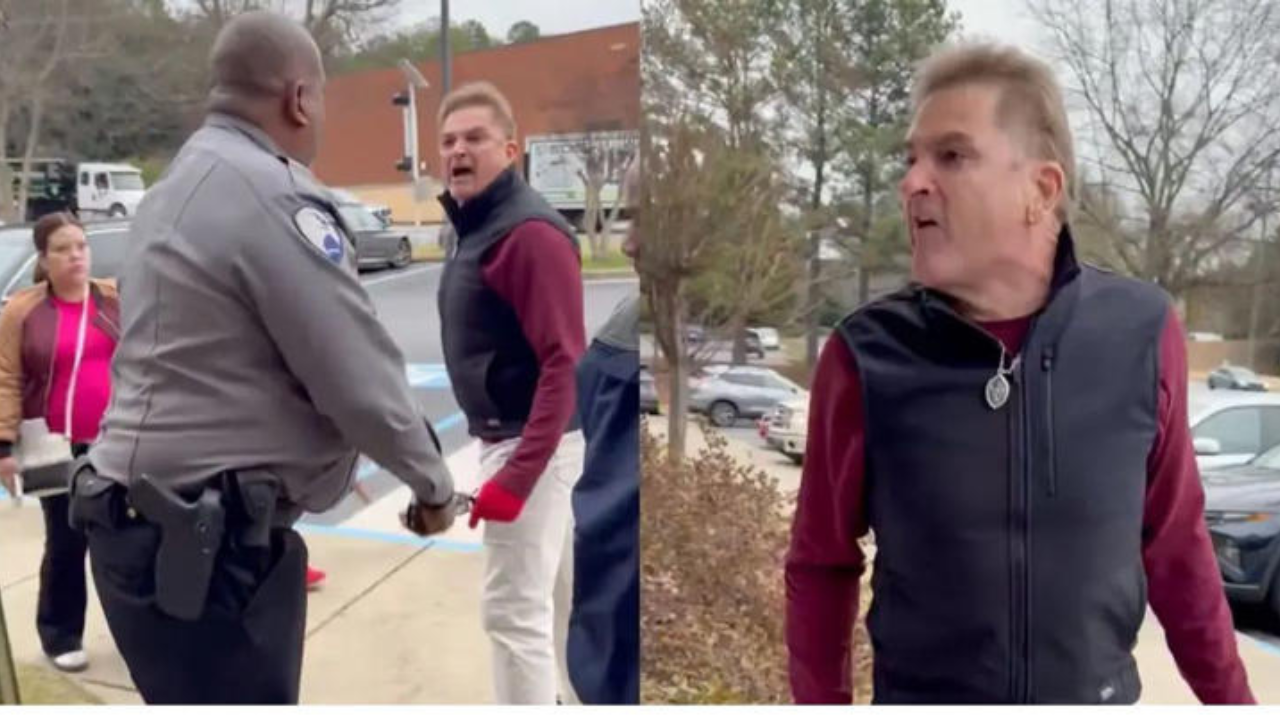
A viral video showing a Black security guard being subjected to racist abuse by a white man has reignited debate over public harassment, bystander inaction, and the limits of free speech. The incident, which unfolded in a public setting and was captured on video, has drawn widespread condemnation online while also exposing how racial confrontations increasingly play out on social media.
A video posted to X (formerly Twitter) on January 14 shows a visibly agitated white man verbally confronting a Black man who appeared to be working as a security guard. The white man repeatedly threatened physical violence, at one point saying he would “kick” the guard, while pacing and shouting.
Despite being physically larger than the man confronting him, the security guard did not initiate physical contact. As the confrontation escalated, the guard briefly raised his fists and responded verbally, but remained largely restrained as the man continued shouting.
At one point, the white man challenged the guard to fight, yelling, “Want to do it now?” before continuing his tirade.
Use of racist language
During the exchange, the white man directed racial slurs at the security guard, declaring himself a citizen while using explicitly racist language. He appeared to justify his behavior by repeatedly shouting “free speech,” invoking the First Amendment as he continued the verbal attack.
The man eventually moved several steps away from the guard while continuing to shout insults.
Bystander reaction
The video suggests that several bystanders were present during the incident, though they are not clearly visible. Few appeared to intervene. Some voices can be heard reacting with discomfort, while others appeared to treat the situation casually.
Toward the end of the clip, some bystanders could be heard laughing, which one social media user later interpreted as amusement at the aggressor’s rant rather than support for it.
Online response and backlash
The video has been viewed more than 800,000 times, generating strong reactions across social media platforms. While a small number of users praised the white man’s behavior, describing him as a “patriot,” the overwhelming response condemned the harassment and praised the security guard’s restraint.
Many commenters highlighted the guard’s professionalism and composure under provocation. Others criticized what they described as a display of insecurity and racial hostility by the aggressor.
Several users also focused on the lack of bystander intervention, questioning why no one stepped in to de-escalate the situation or support the guard.
Legal context: Free speech has limits
Although the white man repeatedly cited “free speech,” legal experts note that constitutional protections do not apply in all situations. The First Amendment protects individuals from government punishment for speech in many contexts, but it does not shield language intended to provoke violence or constitute harassment.
Speech classified as “fighting words” — language likely to incite an immediate violent response — can fall outside constitutional protection and may result in criminal charges such as disorderly conduct or harassment, depending on jurisdiction.
The man seen going on a racist tirade has been identified as Robert J. Burke. Author of Schizophrenia: My Life After Being Diagnosed with Schizophrenia.
— Robbie Harvey (@therobbieharvey) January 16, 2026
The incident happened at a social security office in Norcross, GA. According to staff this isn’t the first time Burke has… pic.twitter.com/TnCyCjRBb6
Broader implications
The incident reflects broader concerns about public confrontations escalating into viral moments, often without intervention. It also underscores ongoing debates around race, civility, and accountability in shared spaces.
As videos like this circulate widely online, they continue to shape public discussion about how society responds — or fails to respond — to harassment and racism in real time.
Conclusion
The viral confrontation has sparked outrage not only over the racist abuse directed at a security guard but also over the apparent normalization of such behavior in public settings. While the incident did not turn physical, it has left a lasting impact online, raising renewed questions about free speech, public responsibility, and the power of restraint in the face of provocation.