 By Trendsetter Tribune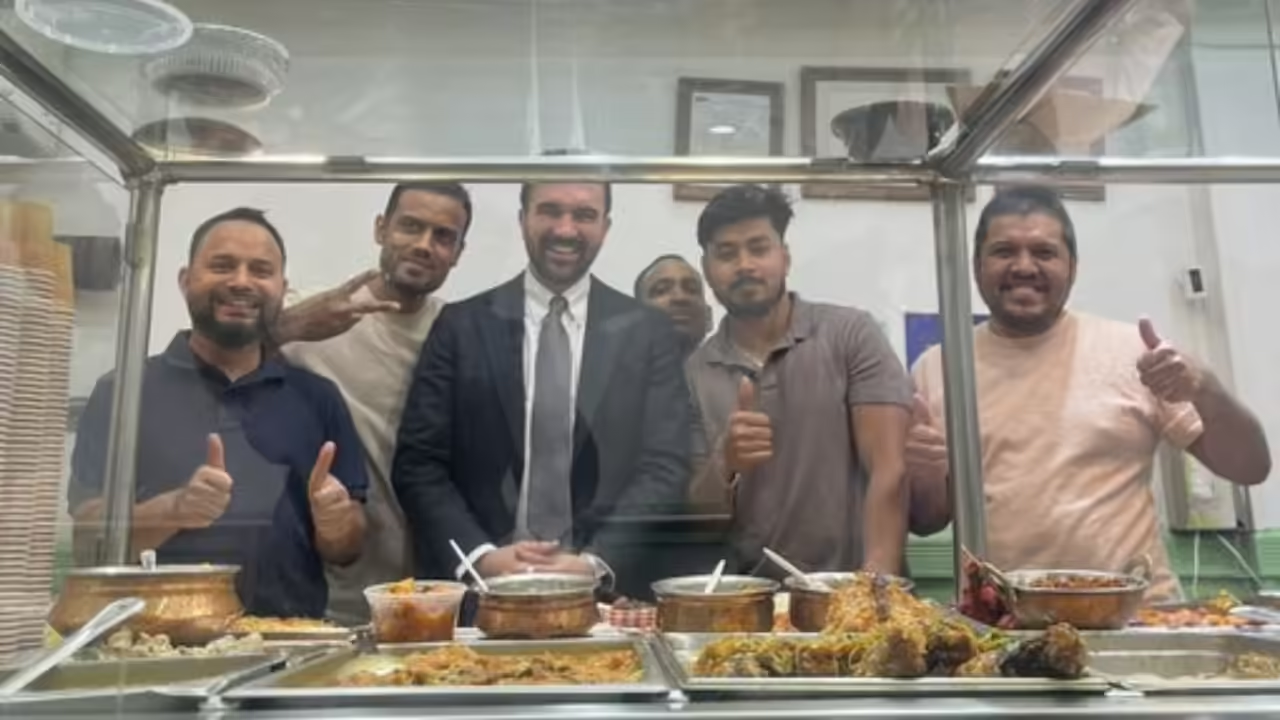
When New York City’s first Muslim and South Asian mayor, Zohran Mamdani, marked his second day in office with a Bengali dinner in Queens, it wasn’t just a casual food stop.
It was a quiet but powerful signal.
In a city where food is culture, politics, identity, and memory all at once, where a mayor eats can say as much as where they govern. Mamdani’s choice — a Bangladeshi restaurant in Astoria — reflects not only his personal roots, but also the immigrant backbone of New York City itself.
Background / Context
New York has always been a city defined by migration. Neighborhoods like Jackson Heights and Astoria aren’t just residential areas — they are living maps of global movement, especially from South Asia, the Middle East, and Latin America.
Zohran Mamdani’s election already broke historic barriers. As the city’s first Muslim and South Asian mayor, expectations are high that his leadership will reflect the lived experiences of communities that have often felt overlooked.
Food, in this context, becomes more than indulgence. It becomes representation.
What Happened
To close out his second day as mayor, Mamdani visited Boishakhi, a Bangladeshi restaurant on 36th Avenue in Astoria, Queens.
He shared a photo from the visit on social media, smiling over a plate of chicken roast and aloo bhortha — the Bengali take on mashed potatoes, rich with mustard oil and green chili.
For many New Yorkers of Bengali origin, this wasn’t just a restaurant sighting. It was recognition.
Boishakhi is known for traditional Bangladeshi comfort food. One of its standout dishes is kacchi biryani, a celebratory staple where raw marinated meat is layered with rice and slow-cooked on dum, allowing flavors to deepen and fuse.
The menu goes beyond biryani:
- dal puri
- chicken roast polao
- tehari
- classic desserts like rosogolla
The restaurant also serves Asian fusion and Pakistani dishes, reflecting the blended culinary identity common in immigrant-run kitchens.
This wasn’t Mamdani’s first food-forward moment. During the 2025 mayoral campaign, he was frequently spotted at neighborhood favorites across Queens — including Afghan and Nepali spots like Sami’s Kabab House and Laliguras Bistro.
Analysis — Why a Mayor’s Food Choices Matter
At first glance, this may look like lifestyle fluff. But in New York, food is political — even when it’s unintentional.
Food as cultural signaling
Mamdani didn’t choose a luxury Manhattan restaurant or a carefully staged photo-op venue. He went to a deeply local, immigrant-owned spot.
That choice signals comfort with — and belonging to — the communities that power the city from the ground up.
Immigrant food as civic identity
Bangladeshi restaurants like Boishakhi aren’t trendy destinations for most food media. Yet they are central to daily life for thousands of New Yorkers.
By spotlighting them, even indirectly, Mamdani reinforces the idea that:
- immigrant neighborhoods are not peripheral
- cultural authenticity matters
- everyday places deserve civic recognition
Authenticity vs. performance
Politicians often stage food moments. What makes Mamdani’s different is consistency.
His campaign trail already included similar stops. This wasn’t a sudden pivot now that he holds office — it’s a continuation of a personal pattern.
That consistency makes the moment feel lived-in rather than manufactured.
The unspoken contrast
Past mayors often highlighted high-end dining or symbolic stops in “iconic” neighborhoods.
Mamdani’s choices quietly shift that lens — from elite representation to everyday participation.
Implications
For immigrant communities
Representation doesn’t always come through speeches. Sometimes it arrives through familiarity.
Seeing the mayor eat food that mirrors home cooking sends a message: your culture isn’t niche — it’s New York.
For city politics
Mamdani’s food trail hints at how he may govern — locally rooted, community-oriented, and attentive to overlooked spaces.
That approach could influence:
- neighborhood-level policymaking
- small business engagement
- cultural preservation initiatives
For New York’s food culture
Restaurants like Boishakhi rarely receive citywide attention unless a crisis hits or a celebrity shows up.
Moments like this elevate immigrant kitchens without turning them into spectacle — a delicate balance that matters in a city already struggling with gentrification pressures.
Conclusion
Zohran Mamdani’s Bengali dinner in Astoria wasn’t about optics — but it became symbolic.
In choosing Boishakhi, he highlighted the immigrant foodscape that feeds New York every day. Not polished. Not curated. Just real.
If leadership is about understanding the people you serve, then paying attention to where a mayor eats isn’t trivial at all. It’s one of the clearest signals of who they see — and who they don’t.