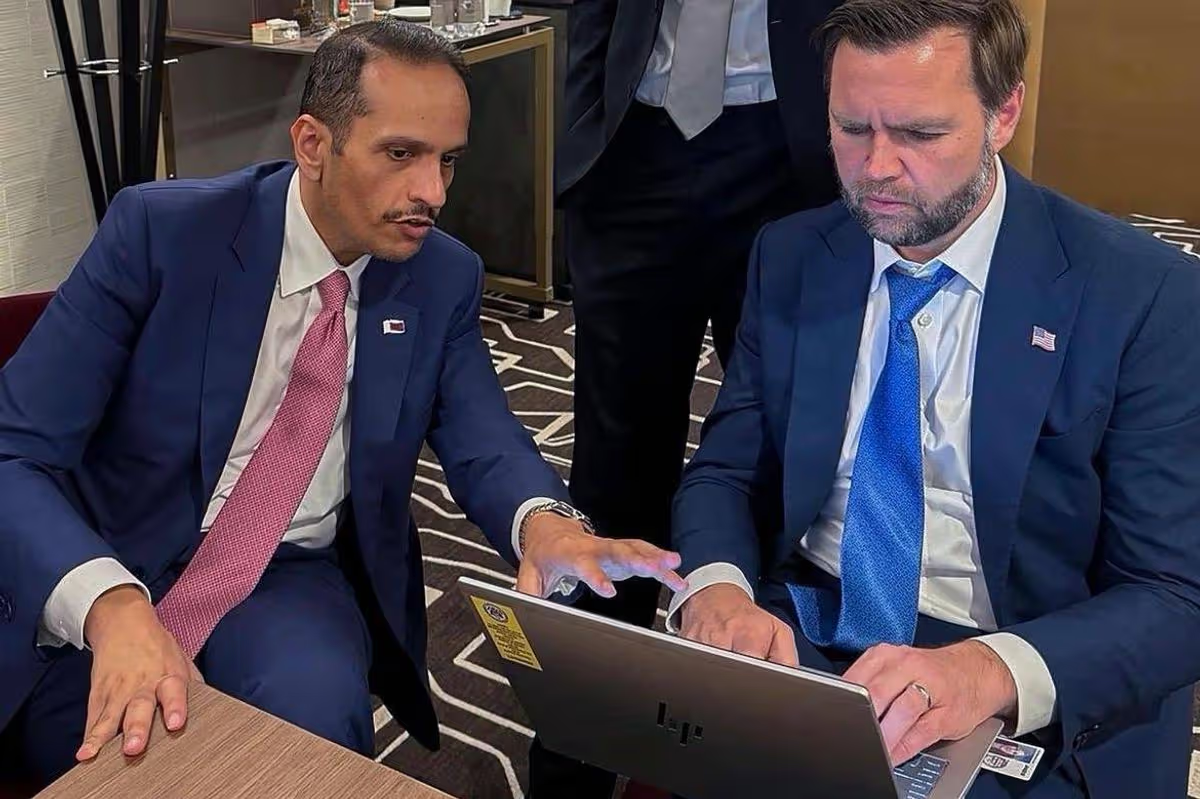
A viral photograph published by Qatari Prime Minister Sheikh Mohammed bin Abdulrahman Al Thani during high-level diplomatic talks in Switzerland has ignited an intense online debate regarding operational security and federal cyber protocols.
The image captures Vice President JD Vance operating a laptop, with the Qatari Prime Minister and U.S. negotiator Jared Kushner looking over his shoulder. The context of the meeting involves rapid-fire multilateral negotiations aimed at de-escalating conflicts in the Middle East. However, sharp-eyed observers on social media quickly bypassed the geopolitics to focus entirely on the hardware, asserting that the Vice President committed a critical security infraction on camera.

- One (1) 23.5 lb bag of ORIJEN Amazing Grains Original Dry Dog Food
- Nutrient-dense, grain free* dry dog food formula tailored to support your dog’s immune function, digestion, skin and coa…
- Dry dog food made with the most succulent and nutrient-rich parts of the prey, containing 85 percent** animal protein an…
Anatomy of the Accusation
Social media users and defense technology watchdogs have raised alarms by pointing to specific visual elements on and around the laptop screen:
- The CAC Login Controversy: Commentators claim that a Common Access Card (CAC)—the standard smart card used to authenticate identity and access secure U.S. Government (USG) systems—is visible in the reader, but that it belongs to an aide or a different official rather than the Vice President himself.
- Foreign National Visual Access: Critics argue that allowing a foreign head of government—even an ally like Qatar’s Prime Minister, who is acting as a mediator—to have direct visual sight of an active, logged-in USG terminal violates fundamental data spill protocols.
- The Setting: Because the high-level meeting took place in a neutral, non-secure environment in Switzerland (with a commercial coffee machine visible in the background), security purists argue the machine should have been equipped with a privacy filter or kept entirely out of sight of un-cleared individuals.
The Reality of Diplomatic Tech Deployments
While the image looks highly suspect to those familiar with rigid, domestic military and defense security rules, international diplomatic missions frequently operate under entirely different technical parameters:
- DOG TOYS FOR AGGRESSIVE CHEWERS: Tough dog toys designed for long-lasting durability, tested by German Shepherds, Pit Bu…
- DOG TOYS FOR LARGE DOGS MILK FLAVORED: This dog chew toy is equally suitable for large and medium-sized dogs, featuring …
- ALLIGATOR SHAPE & TEETH CLEANING: The large dog toys feature a cartoon alligator design that attracts the dog’s attentio…
| Point of Contention | Standard Diplomatic Protocol |
| Whose Card Is It? | Vice Presidents and Cabinet-level officials are frequently assigned dedicated technical aides who manage, authenticate, and log into unclassified communication terminals on their behalf. If the card belongs to a tech-logistics officer, it often reflects standard operational procedure for a traveling executive. |
| Unclassified vs. Classified Networks | It is highly improbable that a Vice President would open a classified network (SIPRNet) terminal in an open room with foreign dignitaries present. The laptop in question is almost certainly tied to an unclassified network (NIPRNet) or a commercial internet line used solely for reviewing public drafts, press releases, or translated texts. |
| The Nature of Joint Drafting | During intense, fast-moving multinational negotiations, leaders frequently view a single screen together to collaborate on the specific, line-by-line wording of joint communiqués or ceasefire framework drafts before they are signed. |
The Security Takeaway
While the photo does not indicate a breach of a classified system, it highlights a recurring headache for government communications teams in the digital age.
Public relations photos published by foreign governments frequently capture raw, behind-the-scenes details that standard White House photographers are trained to avoid or blur out. Even if the laptop was entirely unclassified, the visual of a foreign leader looking over a USG terminal serves as a stark reminder of how difficult it is to maintain total operational security during public, high-pressure global summits.
Trendsetter Tribune